Can I Remove Mold Myself?
Often, yes — for a small spot. The EPA says if the moldy area is under about 10 square feet (a 3 ft by 3 ft patch), in most cases you can clean it yourself, once the water source is fixed and you wear an N-95 respirator, gloves, and goggles. Call a pro if it is bigger, the water was sewage or a flood, or the mold is in your HVAC.
Check your situation
This is a cleanup-scope guide based on EPA guidance — not a health diagnosis, an inspection, or a lab test. It can't tell you whether mold is present, how much is hidden, or what species it is. If you have health concerns, the EPA advises consulting a health professional before cleanup.
The EPA rule, in one line
There is one number that decides most of this: about 10 square feet. Per the EPA's guide Mold Cleanup in Your Home, if the moldy area is less than about 10 square feet — about a 3 ft x 3 ft patch (roughly a bath towel) — in most cases a homeowner can handle the cleanup. Above that, the EPA points you to professional remediation, because bigger jobs need containment to stop spores from spreading through the house. Even a small job is only a do-it-yourself job once you have fixed the water source and you are wearing the right protective gear.
The size rule is the start, not the whole answer. A handful of situations move a job to a professional no matter how small the patch looks, and a few more are worth getting checked before you decide. The table below is the same logic the tool above runs — use whichever you prefer.
The decision, at a glance
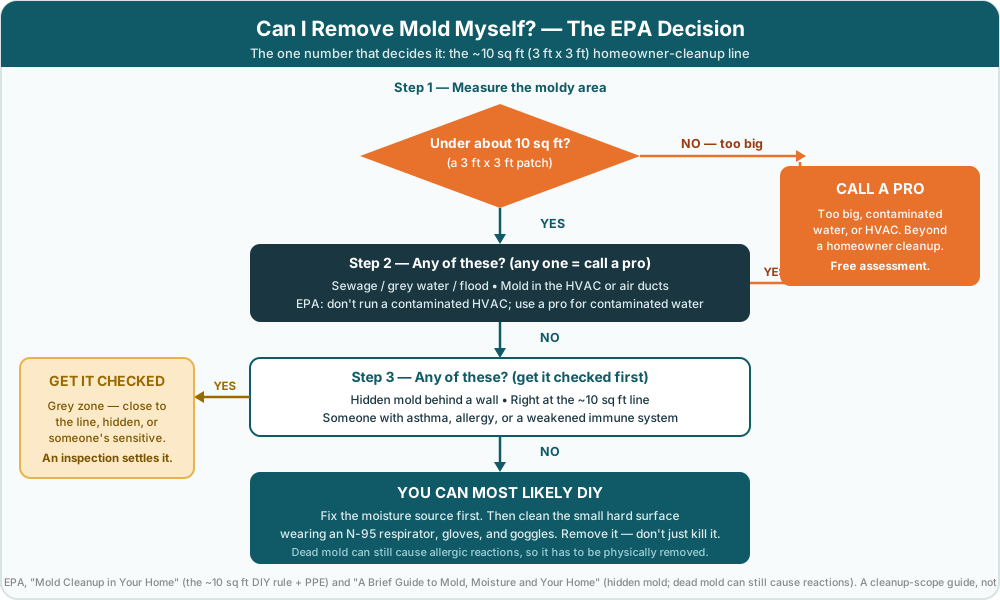
| Your situation | What to do | Why (EPA basis) |
|---|---|---|
| Under ~10 sq ft (3 ft x 3 ft), hard surface, clean water, fixed source, no one sensitive | You can most likely DIY | EPA: an area under about 10 sq ft can, in most cases, be cleaned by a homeowner. |
| Larger than ~10 sq ft (bigger than a 3 ft x 3 ft patch) | Call a professional | EPA directs homeowners to professional remediation guidance above ~10 sq ft. |
| Water from sewage, grey water, or a flood / extensive water damage | Call a professional | EPA: contaminated water and flood situations should be handled by a pro with that experience. |
| Mold in the HVAC system or air ducts | Call a professional | EPA: do not run a contaminated HVAC — it can spread mold through the building; consult a pro. |
| Right at the ~10 sq ft line, or hidden mold suspected behind a wall | Get it checked first | EPA: investigating hidden mold can be difficult and may need a professional. |
| Someone in the home has asthma, allergies, or a weakened immune system | Get it checked first | EPA: if you have health concerns, consult a health professional before cleanup. |
| Mold on porous material (drywall, carpet, ceiling tile) | Get it checked first | EPA: porous/absorbent materials often must be thrown out, not surface-cleaned, so confirm what can be saved. |
If you can DIY: the safe path
When your situation lands on the green path, here is the EPA's small-cleanup method. Protective gear matters even for a small spot, because cleaning disturbs the mold and puts spores into the air.
Protective gear (the EPA's three items)
- N-95 respirator. EPA, 'A Brief Guide to Mold, Moisture and Your Home' (What to Wear When Cleaning Moldy Areas): wear an N-95 respirator to avoid breathing in mold spores while cleaning.
- Long rubber or household gloves. EPA Brief Guide: wear gloves that extend to the middle of the forearm; for water-and-detergent cleaning, ordinary household rubber gloves are fine.
- Goggles without ventilation holes. EPA Brief Guide: wear goggles that do not have ventilation holes to protect the eyes from mold and spores.
The steps
- Fix the moisture problem first. EPA: fix the water or moisture problem before you clean up the mold, or it will come back.
- Put on your N-95, gloves, and goggles. EPA, 'A Brief Guide to Mold, Moisture and Your Home': the N-95 respirator, gloves, and no-vent goggles recommended for a homeowner cleanup.
- Scrub mold off hard surfaces with detergent and water, then dry completely. EPA: mold on hard surfaces can be removed with commercial products, soap and water, or a bleach solution; dry the area completely.
- Throw out porous items that stayed wet and can't be fully dried and cleaned. EPA: absorbent or porous materials such as ceiling tiles and carpet may have to be thrown away if they become moldy, because mold can fill the empty spaces and crevices of porous materials.
- Remove the mold even if it looks dead or dry. EPA, 'A Brief Guide to Mold, Moisture and Your Home': dead mold may still cause allergic reactions in some people, so it is not enough to simply kill the mold — it must be removed.
One honest correction the bottle of bleach will not give you: killing mold is not the same as removing it. Per the EPA, dead mold can still cause allergic reactions, so it has to be physically removed — not just sprayed and left. For more on cleaning a small spot the right way, see our guide to black mold and what to do about it and how to handle mold on drywall.
When it is not a DIY job
Some jobs are not stubborn small spots — they are bigger, contaminated, or hidden, and the EPA is clear that those belong with a professional. If your area is over about 10 square feet, if the water came from sewage or a flood, or if mold is riding your HVAC system, do not run the system and do not try to clean it yourself. A licensed Phoenix remediation crew contains the area so spores do not spread, removes the material safely, and confirms the moisture source is fixed so it does not come back. If you are not sure how much is really there — especially behind a wall — a hands-on mold inspection answers that before you decide. When it is time for removal, here is what professional mold remediation actually involves.
Sources (4): EPA — Mold Cleanup in Your Home (2024); EPA — A Brief Guide to Mold, Moisture and Your Home (2024); EPA — Should You Have the Air Ducts in Your Home Cleaned? (2024); CDC — Mold: About, Cleanup & Health (2024).