How Long Does It Take for Mold to Grow?
There is no exact hour, but the EPA gives one firm number: dry water-damaged areas and items within 24-48 hours to prevent mold growth. Past that window, mold can begin on damp porous materials within days — faster when it is warm and humid. Tell us your situation below and we will show you where you are on the risk window.
Find your risk window
This is an educational timeline based on EPA and CDC guidance — not a diagnosis, an inspection, or a lab test. It can't tell you whether mold is actually present, how much, or what species it is. The only firm number is the EPA 24-48 hour drying window; everything else varies with material, temperature, and humidity.
The one firm number: the EPA 24-48 hour window
Almost everything about mold timing is a range, but there is one number you can hold onto. Per the EPA's guide A Brief Guide to Mold, Moisture and Your Home: "It is important to dry water-damaged areas and items within 24-48 hours to prevent mold growth." That is the whole game after a leak or flood — if you can dry the water-damaged area and items completely inside that window, you can most likely keep mold from ever getting started.
After 48 hours, the picture stops being a clean line and becomes a hedged range, because real-world timing depends on three things: the material that got wet, the temperature, and the humidity. Porous materials like drywall, carpet, and insulation soak up and hold water, so mold can begin sooner on them; warm, humid conditions speed it up; cool, dry conditions slow it down. Nobody can give you an exact "mold appears at hour X" — anyone who does is guessing. The timeline below is the same logic the tool above runs.
The mold-growth timeline, at a glance
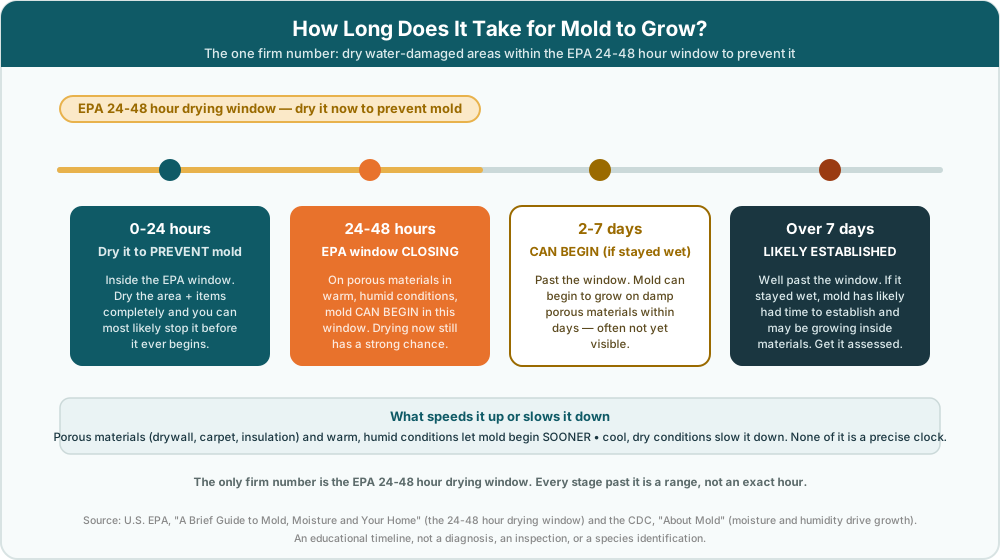
| Time since the water event | What's happening | Why (EPA / CDC basis) |
|---|---|---|
| 0-24 hours | Dry it to prevent mold | EPA: dry water-damaged areas and items within 24-48 hours to prevent mold growth. |
| 24-48 hours | EPA window closing | On porous materials in warm, humid conditions, mold can begin to grow within this window. |
| 2-7 days (stayed wet) | Can begin on porous materials | Past the EPA window; mold can begin to grow on damp porous materials within days, faster when warm and humid. |
| Over 7 days (stayed wet) | Likely established | Well past the window; if it stayed wet, mold has likely had time to establish. Get it assessed. |
Why material, heat, and humidity move the clock
The 24-48 hour rule is the anchor, but two things shift how soon mold can begin once you are past it. The material matters most: porous, absorbent materials such as drywall, carpet, and insulation hold water and let mold grow into the spaces inside them, so growth can begin sooner — and per the EPA, porous materials that stay wet often have to be thrown out rather than cleaned. Non-porous surfaces like concrete and sealed tile resist that, though mold can still grow on the surface, in grout lines, or on any organic dust sitting on them.
The other factor is warmth and humidity. The CDC notes that mold grows where there is moisture, and the EPA suggests keeping indoor humidity below about 60% to control it. Warm, damp conditions favor faster growth — which is exactly why a Phoenix monsoon roof leak or an AC condensate overflow that sits warm and wet is a situation to dry fast. None of this is a precise stopwatch; it is the difference between "you have a little more time" and "move now."
What to do, based on where you are
If you are still inside the 24-48 hour window, the move is simple: dry everything completely, now. Pull wet materials away from walls, run fans and a dehumidifier, and don't stop at the surface — moisture trapped inside a wall or under flooring is what restarts the clock. If it is more water than you can dry quickly, water-damage restoration crews dry it properly so mold never gets a foothold. If you are past the window and materials stayed wet, dry it anyway to stop further growth, then have it looked at — a mold inspection finds growth that has started behind or inside materials before it spreads, and if anything has taken hold, professional mold removal handles it so it doesn't keep coming back. For the health and cleanup side of what you find, see our guides to mold on drywall and black mold.
Sources (3): EPA — A Brief Guide to Mold, Moisture and Your Home (2024); EPA — Mold Cleanup in Your Home (2024); CDC — About Mold (2024).