Mold and Chronic Fatigue: What the Evidence Actually Says
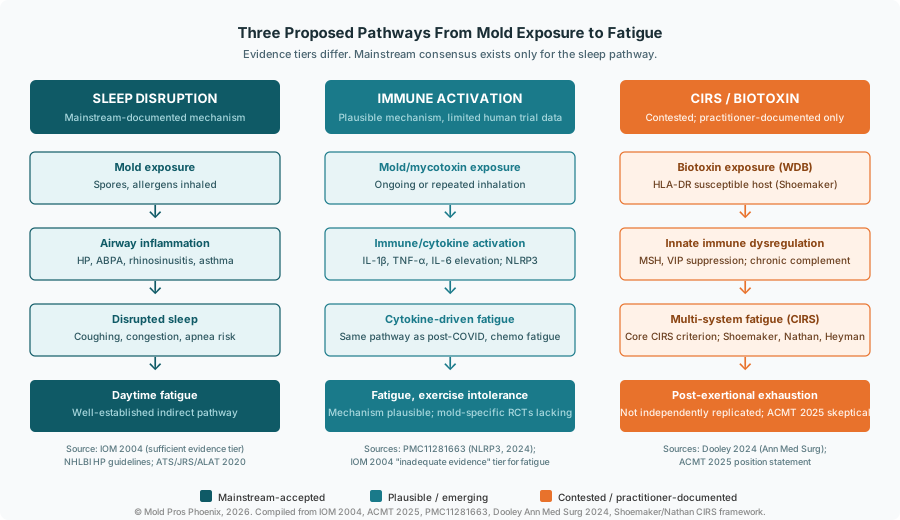
The 2004 Institute of Medicine review placed fatigue from indoor mold exposure in the “inadequate evidence” tier — meaning too few studies exist to draw a conclusion, not that the connection was disproven. A cohort of credentialed physicians (the CIRS/biotoxin medicine community) treat severe fatigue as a central mold-related complaint. The immune-activation mechanism that drives cytokine fatigue is well-established for post-viral illness and chemotherapy; whether indoor mold reliably triggers the same process is an open research question. A separate, mainstream-accepted pathway — mold-driven respiratory disease disrupting sleep — is not in dispute.
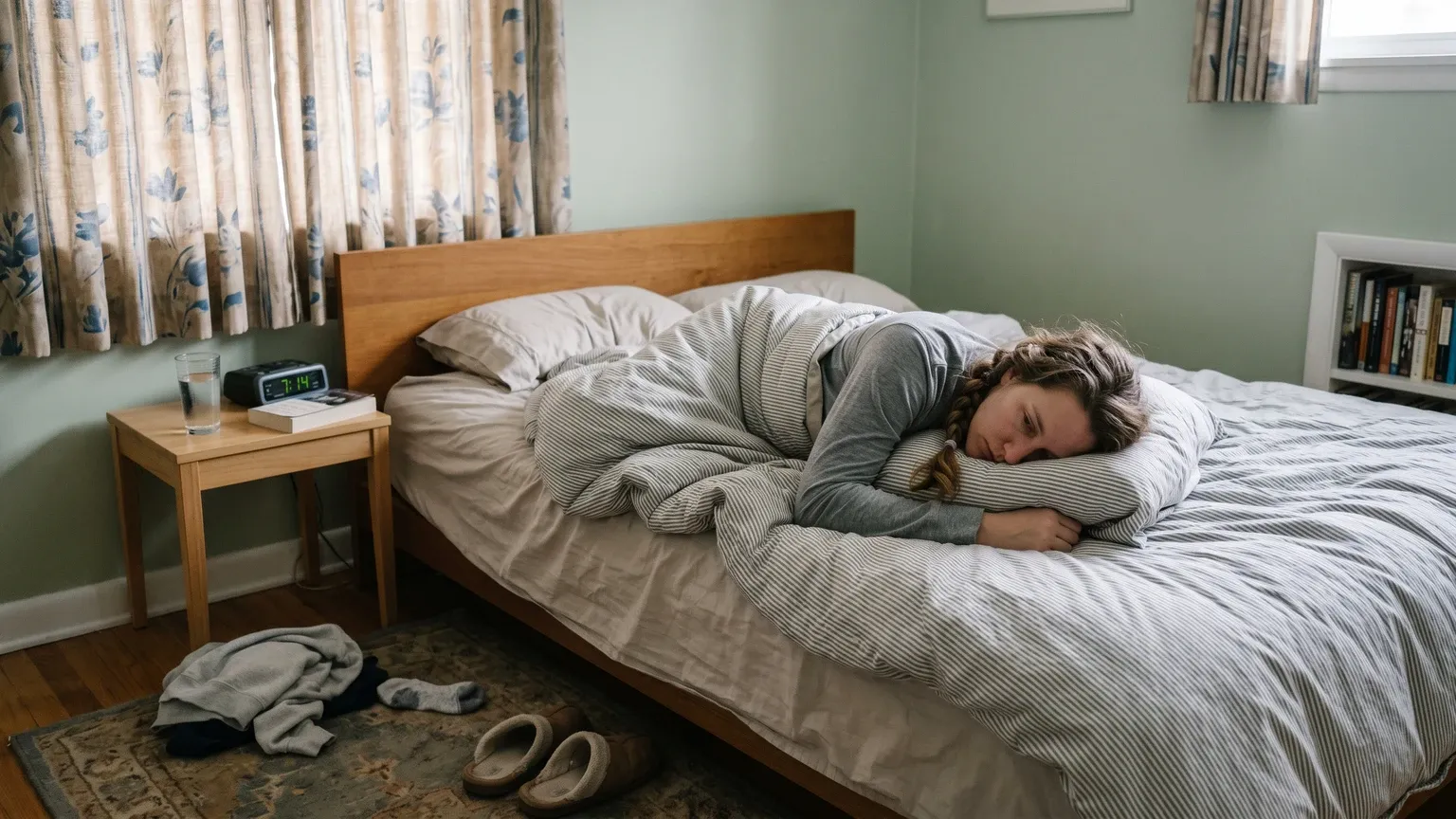
What does mold-related fatigue actually look like?
When patients describe fatigue they connect to mold exposure, the pattern is recognizable. It is not ordinary tiredness. The specific features that come up repeatedly in both clinical accounts and patient communities are:
Post-exertional malaise. A simple walk, a work call, or a single flight of stairs leaves the person needing hours of recovery. Exertion makes things worse, not better.
Unrefreshing sleep. Eight hours in bed, and waking feels no different from five. Some people describe waking more tired than when they went to sleep.
Exercise intolerance. The ability to sustain physical activity at a previously normal level drops sharply, often in a way that tracks with exposure.
Cognitive slowdown alongside physical fatigue. Thinking feels slow, finding words takes effort, and holding a train of thought requires more work than it should. (That overlap with cognition is the subject of a separate guide on mold and brain fog — this guide stays on the energy and exhaustion side of the picture.)
This cluster resembles the clinical picture of ME/CFS (myalgic encephalomyelitis/chronic fatigue syndrome). That resemblance is part of why both patients and some physicians suspect a mold connection, and it is why the research questions are genuinely difficult to separate.
Where the CDC and IOM 2015 ME/CFS report actually stand
The CDC describes ME/CFS as a serious biological illness affecting multiple body systems. Per CDC guidance, about 1 in 4 people with ME/CFS are confined to bed at some point in their illness, and an estimated 3.3 million Americans are affected. More than 9 in 10 remain undiagnosed.
The 2015 IOM report “Beyond Myalgic Encephalomyelitis/Chronic Fatigue Syndrome” was a landmark document. It established that ME/CFS is a genuine biological disease (not a psychosomatic condition), identified post-exertional malaise as its hallmark feature, and called for the diagnostic name “systemic exertion intolerance disease” to better capture the biology. What the 2015 report did not do was evaluate mold as a trigger. Its focus was validating ME/CFS as a real disease and defining its biology — it was not an assessment of environmental causes.
The CDC does not list mold exposure as a recognized cause or trigger of ME/CFS. The triggers CDC discusses are viral infections (Epstein-Barr, Ross River virus, Coxiella burnetii), post-COVID illness, and physical or emotional stress. Mold does not appear on that list. This is not the same as a finding that mold cannot trigger ME/CFS-like illness — it means the question has not been studied to the standard required for CDC guidance.
The IOM 2004 mold review: what “inadequate evidence” actually means
The Institute of Medicine 2004 report “Damp Indoor Spaces and Health” is the most authoritative U.S. review of indoor mold and health. Understanding what its evidence categories mean is essential to reading any claim about mold and fatigue honestly.
The IOM’s highest tier (“sufficient evidence of an association”) covered upper respiratory tract symptoms, cough, wheeze, asthma symptoms in sensitized people, and hypersensitivity pneumonitis. Those associations are not in dispute.
Fatigue as a systemic symptom from indoor mold exposure fell into the “inadequate or insufficient evidence” category. The IOM’s own definition of this tier: available studies were of insufficient quality, consistency, or statistical power to permit a conclusion about whether an association exists. That is not a finding that the connection is false. It is a finding that the research base is too thin to draw any conclusion in either direction.
The distinction matters because “inadequate evidence” is frequently misread, by both sides of this debate, as either “disproven” or “proven but suppressed.” Neither reading is accurate. It means we do not yet have the studies to know.
The CIRS practitioner position on fatigue
Within the CIRS (Chronic Inflammatory Response Syndrome) framework developed by Ritchie C. Shoemaker, MD, fatigue is the first and most prominent of 13 symptom clusters required for the diagnosis. Adults need eight or more clusters present to meet the case definition; fatigue and weakness is cluster one.
The CIRS framework proposes a specific mechanism: in people with certain HLA-DR/DQ immune-response gene variants (Shoemaker estimates roughly 24% of the population), inhaled biotoxins from water-damaged buildings trigger a sustained, dysregulated innate immune response. Cytokines remain chronically elevated. Neuropeptides — particularly MSH (melanocyte-stimulating hormone) and VIP (vasoactive intestinal peptide) — are suppressed. The result is a multi-system illness with fatigue as a core feature.
Neil Nathan, MD, who treats what he calls the “sensitive patient” — people who react strongly to almost any treatment — identifies fatigue as one of the most common presenting complaints in his water-damaged-building case series. Andrew Heyman, MD, who holds a position at The George Washington University, has co-authored clinical work with Shoemaker on the same framework.
The 2024 Dooley review in Annals of Medicine and Surgery (PMC11623837) analyzed 14 studies and concluded that the Shoemaker Protocol is the only treatment in the published literature with documented clinical efficacy for CIRS. The caveat that review acknowledged: most of the underlying evidence comes from Shoemaker’s own research group, and large, independent, blinded randomized controlled trials have not been done.
The ACMT (American College of Medical Toxicology) 2025 position statement takes a harder skeptical line: “there is no documented evidence that inhalation exposure to fungi or mycotoxins in indoor environments causes a chronic toxic encephalopathy.” The ACMT’s position does not specifically address fatigue as a separate outcome, but it signals where mainstream toxicology sits on the systemic CIRS claim.
UCLA Health has explicitly noted that CIRS is “not considered an established medical diagnosis.” It is an active clinical and research framework, not a mainstream consensus diagnosis.
The mechanism sanity-check: does immune activation driving fatigue make biological sense?
Setting the CIRS-versus-mainstream debate aside for a moment, the underlying mechanism deserves examination on its own terms.
Cytokine-driven fatigue — the idea that sustained immune activation produces exhaustion — is one of the best-established mechanisms in clinical medicine. It is how:
- Post-COVID fatigue works: persistent immune activation, microglial activation, and elevated cytokines (IL-6, IL-1β, TNF-α) produce the exhaustion that characterizes Long COVID. This mechanism is extensively documented in the peer-reviewed literature.
- Chemotherapy fatigue works: cytokines released by the immune response to dying cancer cells and the chemotherapy drugs themselves drive profound fatigue, sometimes lasting months after treatment ends.
- Autoimmune fatigue (in lupus, rheumatoid arthritis, and multiple sclerosis) works: inflammatory cytokines correlate with fatigue severity in ways that are measurable and partly reversible with anti-inflammatory treatment.
The NLRP3 inflammasome, a key innate immune sensor activated by mycotoxins, is the same pathway implicated in post-COVID neuroinflammation and autoimmune fatigue (PMC11281663, 2024). Mycotoxins activating this pathway is not a speculation — it is documented in mechanistic biology. What remains not established is whether the levels of mycotoxin exposure in a typical residential mold situation are sufficient to drive sustained NLRP3 activation in most people, and whether individual susceptibility (genetic or immune) determines who crosses that threshold.
The honest summary: the mechanism by which mold could cause fatigue through immune activation is biologically coherent and draws on well-established pathways. What the research base does not yet have is a large, controlled human study showing that residential mold exposure reliably produces that mechanism at population scale.
Sleep disruption: a separate, well-established pathway
This pathway does not require any contested mechanism. It works like this:
Mold exposure triggers or worsens airway disease. The IOM 2004 “sufficient evidence” tier covers hypersensitivity pneumonitis, asthma symptoms in sensitized asthmatics, upper respiratory symptoms, cough, and wheeze specifically. Related conditions like allergic bronchopulmonary aspergillosis and allergic fungal sinusitis are recognized mainstream diagnoses with their own peer-reviewed evidence base — they are not listed at that specific IOM tier, but they are unambiguously accepted mold-linked airway conditions.
Airway disease disrupts sleep. Nasal congestion creates mouth breathing. Nighttime coughing interrupts sleep architecture. Airway inflammation increases the risk of sleep-disordered breathing and obstructive sleep apnea. HP can cause nocturnal symptoms severe enough to wake patients.
Disrupted sleep causes daytime fatigue. This is not a hypothesis — it is physiology.
A person with mold-triggered allergic rhinosinusitis who has been waking up multiple times a night for months will be exhausted during the day. Their doctor may not immediately connect the fatigue to mold, because “fatigue” and “mold” rarely appear in the same part of a differential diagnosis. But the causal chain is direct and does not require any disputed mechanism.
For patients with respiratory symptoms alongside their fatigue, asking their doctor specifically about hypersensitivity pneumonitis (HP) or ABPA is a reasonable step. Both are mainstream-recognized. Both are diagnosable. Both improve with exposure removal.
Phoenix-specific exposure risks
Phoenix mold grows out of indoor moisture sources, not outdoor humidity. The residential situations most relevant to fatigue-adjacent mold exposure are the ones that generate ongoing, hidden contamination:
Hidden AC condensate leaks. An attic air handler with a clogged or overflowing condensate drain line can quietly soak insulation and roof decking for weeks. The HVAC system then distributes spores through every room each time it cycles. A person sleeping in that home is breathing those spores for eight hours a night.
Post-monsoon wall intrusion. A small roof leak after a monsoon storm that goes unaddressed — common in older stucco and flat-roof homes in Ahwatukee, Maryvale, and Scottsdale — creates a hidden mold reservoir in the wall cavity behind drywall. No smell, no visible growth, but ongoing exposure at the wall surface closest to where someone sleeps or sits.
Slab leaks under older homes. Phoenix has an elevated slab-leak rate due to aging copper and galvanized pipe beneath post-WWII and 1960s–1980s concrete slabs. A small, slow slab leak wicks moisture into flooring and baseboards and can support mold growth for months before detection.
Evaporative cooler pads in older areas. Homes in central Phoenix, Tempe, and Mesa that still use swamp coolers run wet cellulose pads continuously during the pre-monsoon dry months. Neglected pads accumulate mold that is then blown directly into the living space.
If you have unexplained persistent fatigue and live in a home with any of these features, an environmental moisture inspection is a reasonable step — not because mold definitely explains the fatigue, but because identifying and fixing moisture problems is appropriate regardless of the health question, and it eliminates a variable.

What to do if you suspect mold-related fatigue
The sequence that makes clinical sense, from least to most specialized:
First, rule out common causes. A standard blood panel covers most of the likely culprits: complete blood count (iron-deficiency anemia), thyroid-stimulating hormone (hypothyroidism), fasting glucose (diabetes), ferritin (iron stores), vitamin B12, vitamin D, and a comprehensive metabolic panel. These are inexpensive, mainstream, and treatable — and they cause fatigue that looks identical to whatever mold might produce.
Second, consider a sleep study if sleep apnea is plausible. Obstructive sleep apnea is dramatically underdiagnosed in women, in people who are not overweight, and in people whose partners don’t observe snoring. It produces exactly the unrefreshing, post-exertional-malaise-adjacent fatigue pattern. A home sleep test is now straightforward to access.
Third, if you have respiratory symptoms, ask your doctor specifically about HP or ABPA. These are mainstream-recognized, diagnosable conditions. HP in particular is badly underdiagnosed — it mimics asthma, COPD, and recurrent pneumonia. The key clinical clue is symptoms that improve when you leave your home and worsen when you return. A high-resolution CT of the chest is the key diagnostic test (plain chest X-ray often appears normal in active HP).
Fourth, evaluate your home for moisture. If bloodwork is normal, sleep apnea is excluded, and respiratory evaluation is unremarkable, a professional moisture inspection of your home is a logical next step. A qualified inspector with a calibrated moisture meter can identify hidden wet materials in wall cavities, attics, and under flooring that no visual check will catch.
Fifth, if you are still symptomatic and want to explore the CIRS framework, seek a physician who practices environmental medicine and is familiar with the Shoemaker or Nathan clinical protocols. Go in understanding that this is a contested clinical framework, that most of the testing involved is not mainstream-validated, and that mainstream toxicology bodies (ACMT) question its scientific basis. That does not mean those physicians can’t help you — it means you should understand what evidence tier you are working in.
The bottom line
Mold does not have a mainstream-accepted, proven role in causing chronic fatigue syndrome. That is an honest statement of where the evidence sits. What is equally honest is that the research base to rule it out does not exist either. The IOM’s “inadequate evidence” category is not a verdict — it is an acknowledgment that the question remains open.
What is established is that mold-driven respiratory disease disrupts sleep, and disrupted sleep causes fatigue. That pathway requires no contested mechanism and is available to anyone exposed to enough mold to develop airway disease.
If you have persistent fatigue and you live or work in a building with visible mold, a musty odor, or a known history of water damage, the practical steps are the same regardless of where you sit on the evidence debate: get a medical evaluation to rule out common causes, and assess your building for moisture. Removing a mold problem is appropriate regardless of whether it explains your fatigue — there is no situation in which leaving indoor mold in place is a good decision.
Mold Pros Phoenix handles the building side of that equation. If you want an assessment of moisture levels and mold sources in your Phoenix-area home, get a free quote and we will tell you what we find.
This guide presents layered evidence on a contested health topic and does not constitute medical advice. Chronic fatigue warrants evaluation by a licensed physician. Sources are linked above.