Mold Behind Baseboards Removal: A Phoenix Homeowner’s Guide
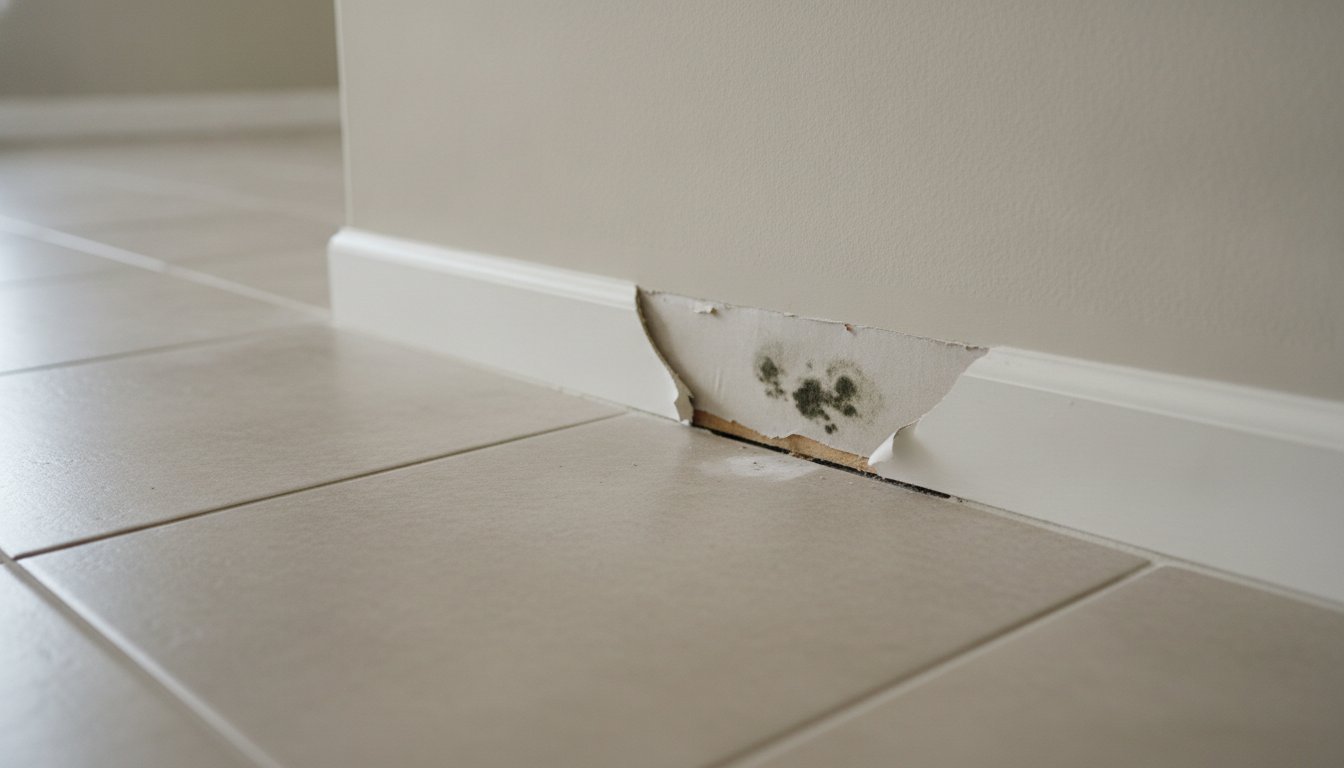
Finding mold on your baseboards usually means moisture is trapped inside the wall cavity. In Phoenix, this often stems from a slab leak or a clogged AC condensate line. Professional mold behind baseboards removal is necessary if the growth covers more than 10 square feet to ensure spores don't spread through your HVAC system.
Is that dark staining on your trim just a bit of dust, or is it a sign of a failing pipe under your concrete slab? In the Valley, mold behind baseboards is rarely a surface-level cleaning job; it is almost always a red flag for a hidden moisture source like a monsoon leak or AC failure.
It is stressful to pull back a piece of wood and find black growth, especially when you worry about your family's health or the cost of repairs. This guide will show you how to assess the damage and handle mold behind baseboards removal using professional standards that fit our desert climate. We will cover how to spot the source and when it's time to bring in a professional for an honest assessment.
Key Takeaways
- Mold behind Phoenix baseboards is almost always a hidden moisture source like a slab leak, a clogged AC condensate line, or monsoon rain seeping through cracked stucco.
- Bleach is the wrong fix on porous drywall or wood trim because its water content soaks in and feeds the mold roots, often making the problem worse.
- The EPA suggests calling a professional once the moldy area is larger than 10 square feet, and a few feet of moldy trim often hides a much bigger mess inside the wall.
- Watch for warning signs such as bubbling paint, warped trim, soft drywall, or a musty smell that gets stronger when the AC turns on.
- Real removal means fixing the leak first, then containing spores and drying the structure, since skipping the moisture source lets the mold return within days.
Why is mold growing behind my baseboards in the Phoenix desert?
Mold behind baseboards is usually caused by water traveling through the wall cavity or up from the concrete slab. In the Valley, we often see this after a heavy monsoon storm or when a plumbing line fails under the foundation. Even in our arid climate, mold can begin growing within 24 to 48 hours of water exposure. Identifying the source is the first step in successful mold behind baseboards removal.
Many homeowners in Mesa and Scottsdale think Arizona is too dry for fungal issues. However, our homes are built to keep the heat out, which means they are tightly sealed. When moisture gets trapped behind a baseboard, it cannot evaporate. This creates a perfect breeding ground for signs of hidden mold that often go unnoticed until the drywall starts to soften or discolor.
To better understand how moisture hides in these areas, watch this helpful video:
Slab leaks and plumbing failures under the foundation
Many older homes in Scottsdale and Tempe use copper piping under the concrete slab. Over time, these pipes can develop tiny pinhole leaks due to corrosion. The water doesn't always flood the floor. Instead, it wicks up through the bottom plate of your wall studs. Because the baseboard is the lowest point of the wall, it acts like a sponge. It hides the damage until the mold becomes visible on the surface of the trim.
AC condensate line clogs and air handler overflows
Phoenix summers push our AC units to their absolute limits. When an AC condensate line clogs, the water has to go somewhere. It often overflows into the air handler closet and seeps behind the drywall. This moisture trickles down to the floor level. If you don't catch the leak early, you'll eventually need professional mold removal to address the growth inside the wall cavity and behind the baseboards.
The "Snowbird" effect: Humidity in closed summer homes
If you leave your home closed up during the July heat, the indoor environment changes. Some "snowbirds" turn their AC off or set it to 90 degrees to save money while they are away. This can cause indoor humidity to spike during the monsoon season between June and September. Without air circulation, moisture settles behind furniture and trim. These issues are often only discovered months later when residents return in October and notice a musty odor.
What are the signs of hidden mold behind your trim?
You might not see black spots right away. Mold often grows on the back of the wood or inside the drywall cavity first. If you notice your baseboards looking "off," it's time to investigate. Catching the problem early makes mold behind baseboards removal much simpler and less expensive for Valley homeowners. Professionals use specialized tools like moisture meters to find these hidden pockets without immediately tearing your house apart.
Visual clues: More than just black spots
Look for bubbling or peeling paint on the drywall just above the trim. This usually means moisture is trapped inside the wall. "Ghosting" is another sign; it's a faint, dark discoloration along the top edge of the baseboard. You might also see the wood start to "cup" or warp. This happens when the wood fibers soak up water from a slab leak or irrigation splash against your exterior stucco. These visual changes are often the first hint that a structural issue is developing behind the scenes.
The role of musty odors in hidden mold detection
In the Phoenix desert, your home should smell dry. If you notice an earthy or musty scent, don't ignore it. This smell often gets stronger when your AC kicks on because the air pressure pulls odors from wall cavities into your living space. Keep in mind that some types of mold don't have a strong smell at all. If you have a known leak or suspect a problem, it's worth getting a mold inspection to be sure your air is safe.
Identifying "soft" drywall and structural damage
Gently press on your baseboards or the drywall right above them. If the material feels "soft" or "spongy," the structure is compromised. This is a major red flag for long-term water exposure, likely from a slow-dripping pipe or a clogged AC drain line. In severe cases, the baseboard may even pull away from the wall with very little effort. When should you call a professional for help? The EPA suggests hiring an expert if the moldy area is larger than 10 square feet.
Crumbling drywall is a sign that the gypsum has lost its integrity. When this happens, simple cleaning won't work. You'll need to focus on proper mold behind baseboards removal, which involves cutting out the damaged sections. This ensures that no spores remain hidden to cause future health issues or structural rot.
When should you call a professional for baseboard mold?
You might be tempted to grab a spray bottle and start scrubbing. Stop. If the growth is larger than a small bath mat, you need help. Proper mold behind baseboards removal starts with fixing the leak, not just cleaning the visible surface. If you don't stop the moisture from a slab leak or a condensate overflow first, the mold will return within days.
Understanding the EPA 10-square-foot rule
The EPA guide to mold cleanup suggests that areas under 10 square feet can often be handled by homeowners. This is roughly the size of a 3-foot by 3-foot square. However, baseboards are deceptive. Three linear feet of moldy trim often hides a much larger mess inside the wall cavity. If the growth has traveled into the drywall or onto the wooden studs, you have likely crossed the professional threshold. A small spot on the outside of the trim is often just the tip of the iceberg.
The dangers of DIY mold removal in dry climates
Phoenix has very low humidity. This sounds like a good thing, but it means mold spores stay airborne much longer than in damp climates. When you rip off a baseboard, you release millions of spores into your living room. Without professional containment using 6-mil poly sheeting and negative air pressure, these spores will enter your AC vents. This can cross-contaminate your entire home, turning a small repair into a massive project. Also, skip the bleach. Bleach is mostly water. On porous surfaces like drywall or wood, the chemical stays on top while the water soaks in, actually feeding the mold roots.
Health considerations and the Arizona Department of Health Services
The CDC and the Arizona Department of Health Services (AZDHS) warn that mold exposure can cause respiratory issues. This is especially true for children, the elderly, or anyone in Scottsdale or Mesa living with asthma. You should never attempt a DIY job if you fall into these vulnerable groups. If you aren't sure how far the damage goes, getting a mold inspection is the safest way to know exactly what you're dealing with. It's better to spend a few hundred dollars on a diagnostic check than thousands on a failed DIY cleanup that spreads the problem to other rooms.
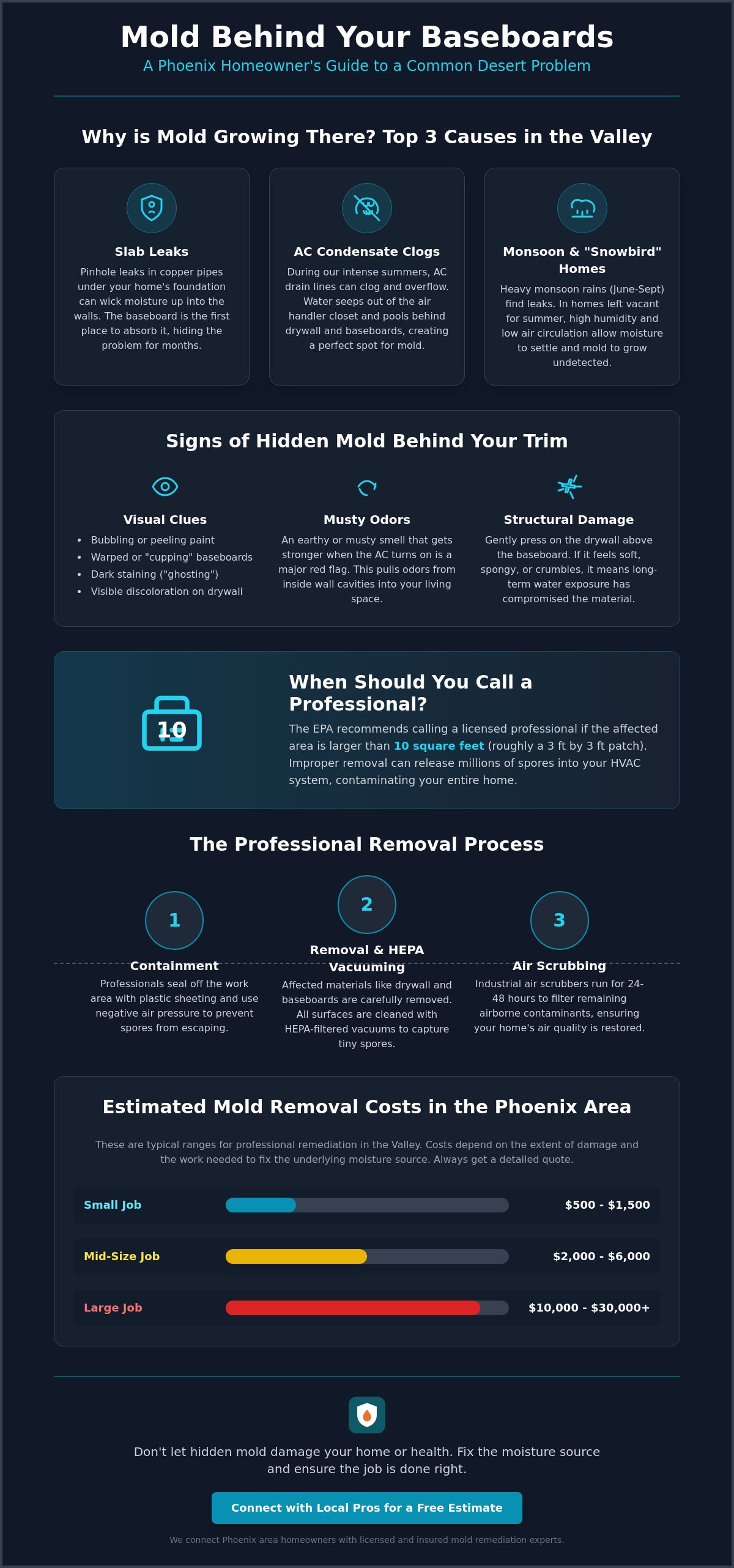
Step-by-step professional removal of mold behind baseboards
Professional mold behind baseboards removal is a methodical process. It isn't just about ripping out wood; it's about controlling the environment. Experts follow strict protocols to ensure your Phoenix home stays safe during the cleanup. This process moves from isolating the damage to deep cleaning and structural drying.
Containment and air filtration setup
The first step is building a containment zone. Pros use 6-mil poly sheeting to seal off the work area from the rest of your house. They set up HEPA air scrubbers to create a "negative air" environment. This keeps spores from drifting into your kitchen or bedrooms. In the Valley, sealing off AC vents in the work area is a critical step. Your HVAC system can easily spread mold throughout the home if it isn't properly protected during the job.
Safe removal of contaminated materials
Once the area is secure, the team removes the baseboards carefully. They don't just pry them off and toss them aside. Every piece is bagged and sealed before it leaves the containment zone. If the mold has soaked into the wall, pros use the "flood cut" technique. For localized water at the base of a wall, that commonly means removing the bottom 12 to 24 inches of drywall. That height is common restoration practice, meant to get above wherever moisture wicked up the board. Federal flood guidance is stricter and inconsistent with itself: FEMA's mold brochure says to remove soaked wallboard "to a foot above the water mark," while its longer flood book says to take out the lower 4 feet. It also gives the team a clear view of the wall cavity to check for hidden leaks. For a wall that got wet with no mold on it yet, the keep-or-cut decision is a different call, covered in does wet drywall need to be replaced.
Structural drying and antimicrobial treatment
After the moldy drywall is gone, the focus shifts to the wooden studs and the concrete slab. Pros use industrial dehumidifiers and high-velocity air movers to pull moisture out of the structure. They then apply EPA-registered antimicrobials to the remaining wood. This kills any leftover spores and prevents new growth. A professional will never close a wall until they verify the moisture levels. In our desert climate, wood should typically be dried to below 15% moisture content before new drywall is installed. This step is the only way to ensure the mold doesn't return once the baseboards are replaced.
If you have discovered dark staining or soft spots along your walls, don't wait for the problem to spread. A professional mold remediation crew can trace the moisture source and give you a clear plan for your home.
What is the estimated cost for mold removal in the Valley?
The cost of professional mold behind baseboards removal in Phoenix depends on how far the moisture has traveled. For a small area, like a single closet or one wall in a bathroom, you can expect an estimate in the range of $500 to $1,500. If the issue involves multiple rooms or has spread into your AC system, mid-size jobs typically range from $2,000 to $6,000.
Local price ranges for baseboard remediation
Every home in the Valley is different. A "snowbird" home that sat through a monsoon season with a hidden leak will face higher costs than a house where a slab leak was caught within 48 hours. Professional mold testing in the Phoenix area usually costs between $300 and $650 to confirm the types of spores present. For very large remediation projects involving structural damage or whole-home contamination, costs can reach $10,000 to $30,000 or more. These figures are estimates, and a local expert will provide a specific range after seeing the damage in person.
Factors that increase the cost of removal
Baseboard mold is rarely just about the trim. Because water wicks up from the slab, pros often have to perform "flood cuts" to remove the bottom of your drywall. This means your total project cost will likely include the price of drywall replacement and painting. If the mold is behind kitchen cabinets or bathroom vanities, the cost increases because these fixtures must be carefully removed and reset. In some cases, a slab leak might require a plumber to fix a pipe under the concrete before the mold behind baseboards removal can even begin. If spores have entered your attic or HVAC ductwork, specialized cleaning will be required, which adds to the labor and equipment fees.
Getting a fair mold-removal quote
A contractor who understands Arizona building codes and desert moisture issues is worth holding out for. Getting more than one quote from licensed and insured contractors in Maricopa County keeps you at a fair market rate with work that follows professional standards. Mold Pros Phoenix handles mold removal in Mesa, Scottsdale, and across the Valley — get a free, no-obligation quote and handle the problem with confidence. Don't let a small leak turn into a structural disaster by waiting too long to act.
Protecting Your Phoenix Home From Hidden Damage
Addressing moisture issues early is the best way to prevent structural rot and protect your family's health. Whether the culprit is a monsoon leak or a failing AC condensate line, identifying the root cause is the first step. Professional mold behind baseboards removal ensures that spores stay contained and don't migrate into your HVAC vents or attic.
You don't have to tackle this stress alone. Mold Pros Phoenix provides free research and tools like checklists to help you make an informed decision, and handles mold removal across the Valley with crews who understand its unique plumbing and climate challenges. Getting an expert opinion can save you from an expensive DIY mistake and give you a clear path forward.
Take the first step toward a dry, healthy home today. Get a free, no-obligation quote and the straight talk you need to fix the problem for good. You can restore your property efficiently with the right help.
Frequently Asked Questions
Is mold behind baseboards common in Phoenix?
Yes, mold is a frequent issue in the Valley despite our dry heat. Most cases are caused by indoor moisture sources like slab leaks, failing water heaters, or clogged AC condensate lines. During the monsoon season from June to September, heavy rain can also seep behind baseboards if your exterior stucco has cracks or if irrigation systems splash directly against the foundation.
Can I just spray bleach on the mold and put the baseboard back?
No, you should never use bleach to treat mold on porous surfaces like drywall or wood trim. Bleach is mostly water; while the chemical stays on the surface, the water soaks in and actually feeds the mold roots. This often makes the problem worse. Successful mold behind baseboards removal requires cutting out the contaminated drywall and fixing the moisture source to prevent a quick return.
How much does a mold inspection cost in Scottsdale or Mesa?
A professional mold inspection in the Phoenix metro area typically falls in the range of $300 to $650. This estimate usually includes a visual assessment, moisture mapping with specialized meters, and air or surface sampling. Having a documented inspection is a smart first step if you suspect a slab leak is causing hidden growth behind your walls.
What happens if I ignore the mold behind my baseboards?
Ignoring the problem allows the fungus to eat away at your home's structural wood and drywall. Over time, the mold can enter your HVAC system through wall cavities or return air vents, spreading spores to every room in the house. This increases the risk of respiratory issues for your family and will significantly increase the eventual cost of remediation.
Will my homeowners insurance cover mold removal from a slab leak?
Coverage depends on your specific policy and the cause of the leak. Many Phoenix policies cover mold remediation if it results from a "sudden and accidental" discharge of water, like a burst pipe. However, insurers often deny claims if the mold is caused by long-term seepage or poor maintenance. You should review your policy or speak with an adjuster to see if your slab leak repairs are covered.
How long does the professional remediation process take?
The average professional project takes between 3 and 7 days to complete. This timeframe includes the initial containment setup, the actual mold behind baseboards removal, and the necessary structural drying time. If a slab leak is involved, the drying process may take longer because concrete holds moisture much longer than wood or drywall.
Is black mold behind baseboards always toxic?
Not all dark mold is the "toxic" variety, but all mold growth indoors is a health concern according to the CDC. Even common molds like Cladosporium or Penicillium can trigger allergies and asthma in sensitive individuals. You shouldn't wait for a lab to confirm the species; any visible growth or musty odor in your home should be treated as a serious health and safety issue.
How do I prevent mold from returning after it is removed?
The only way to stop mold for good is to control the moisture. Ensure your AC condensate lines are cleared every spring and check that your landscaping irrigation doesn't hit your home's exterior walls. If you are a "snowbird" leaving for the summer, keep your AC set no higher than 82 degrees to manage indoor humidity during the humid monsoon months.