Mold Found During a Home Inspection in Arizona: What to Do
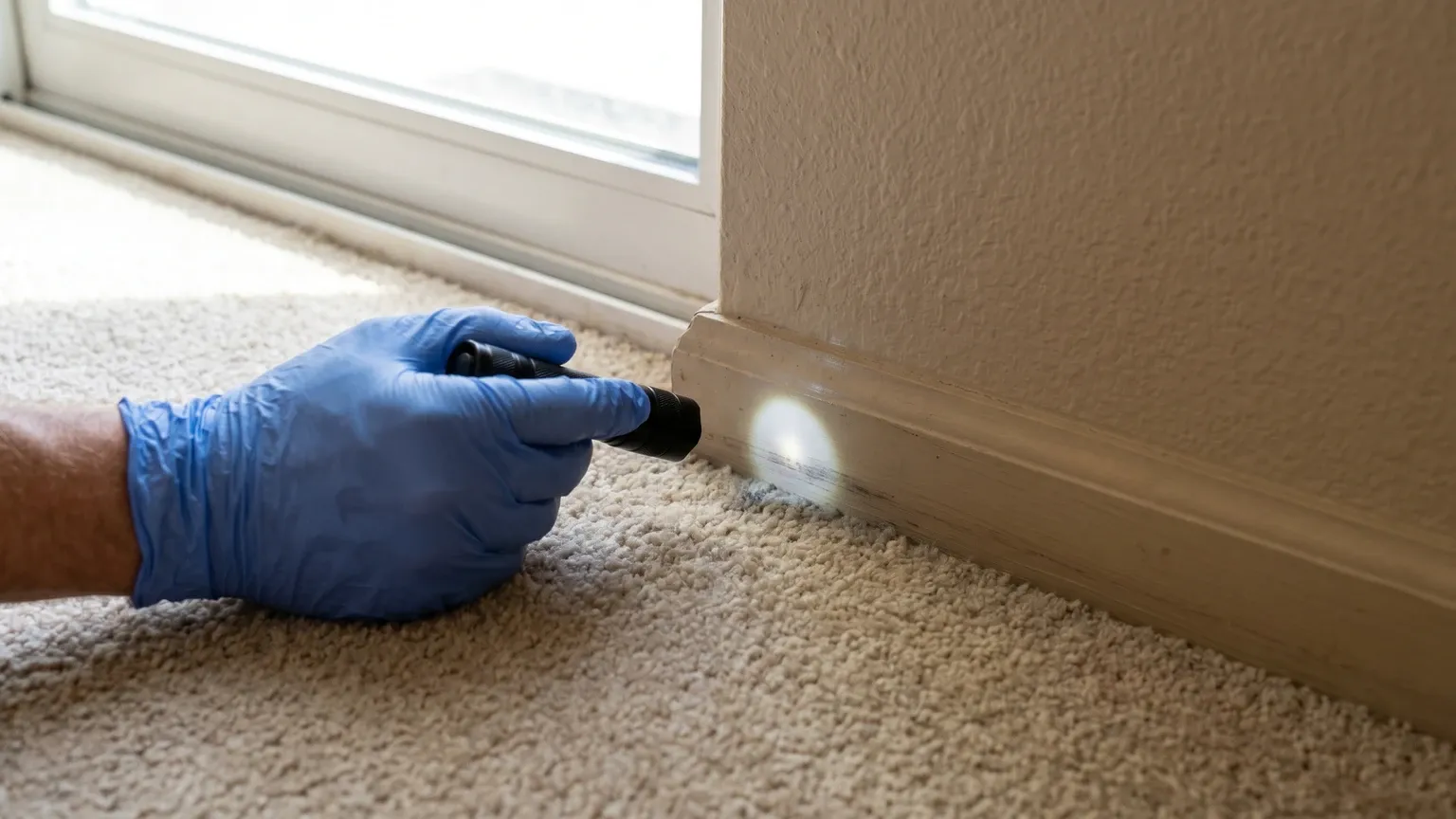
The inspector flagged mold, but you have time to act. Under the AAR purchase contract you get a 10-day inspection period to deliver a signed BINSR — electing to ask the seller to correct the mold or to cancel for a full earnest-money refund. Have the moisture source independently assessed before you decide. This is general information, not legal or real-estate advice.
This is general information, not legal or real-estate advice. It explains how the standard Arizona Association of REALTORS® (AAR) purchase contract handles mold findings during the inspection period, with direct citations to the contract language. Your specific contract, negotiated terms, and facts may differ. For advice on your transaction, talk to your real-estate agent or a licensed Arizona real-estate attorney.
First: a mold finding is a moisture question, not a deal-killer
The first thing most buyers do when the inspection report flags mold is imagine the worst. Most mold findings in a Phoenix home trace back to one specific moisture source — a dripping condensate line, a slow slab leak, a monsoon-season roof intrusion — and once that source is identified and fixed, the scope of the remediation becomes a concrete, priceable number.
That is a very different situation from “there is mold and I don’t know why.”
Before you react to the finding, know whether the inspector identified the moisture source. A general home inspector who spots dark staining at a baseboard or in an attic corner is doing their job — flagging that something is there. They are usually not scoping the source, measuring the extent, or giving you a remediation estimate. That is the job of an independent mold inspection.
If you want to know whether the black staining the inspector found is actually a health concern, our guide on whether black mold is actually dangerous walks through that question directly. The short version: species matters, exposure level matters, and the word “black mold” is thrown around a lot more loosely than the science warrants.
The inspection period is your window to find out what you’re actually dealing with — before you’re committed.
The clock that’s actually running: the 10-day inspection period
The AAR Residential Resale Real Estate Purchase Contract, Section 6(a), sets the buyer’s inspection window:
“Buyer’s Inspection Period shall be ten (10) days or ___ days after Contract acceptance.”
Ten days is the default; it is fillable and can be negotiated shorter or longer. Check your specific contract.
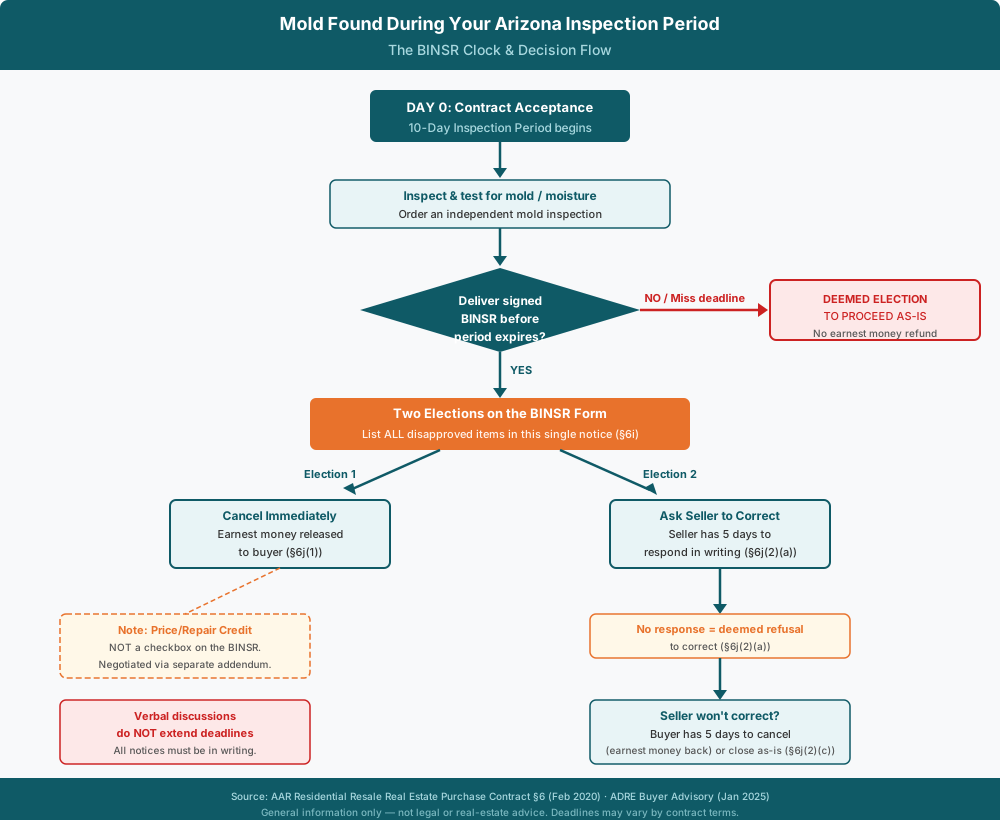
That period is your window for two distinct things: (1) conducting inspections and tests, and (2) delivering a written notice of disapproval. Both have to happen before the period expires. The deadline is not the date you finish inspecting — it is the date your written notice reaches the seller.
The Arizona Department of Real Estate’s Buyer Advisory (January 2025) describes the inspection period as the buyer’s due-diligence window and is clear that acting within it is the buyer’s job, not the seller’s.
One thing the contract is blunt about: “VERBAL DISCUSSIONS WILL NOT EXTEND THESE TIME PERIODS.” If your agent has a phone call with the listing agent about the mold finding, that call does not pause the clock. Only a written, signed agreement by both parties extends the period.
The BINSR: your one written notice (and how not to waste it)
AAR Section 6(i) governs the inspection period notice:
“Prior to expiration of the Inspection Period, Buyer shall deliver to Seller a signed notice of any items disapproved. AAR’s Buyer’s Inspection Notice and Seller’s Response form is available for this purpose… all Inspection Period items disapproved shall be provided in a single notice.”
That last sentence matters. You get one notice. If you find mold at the baseboard and a roof issue and a plumbing concern, they all go on the same BINSR. You cannot deliver a second BINSR later for items you forgot to include the first time.
On the BINSR, you make one of two elections:
Election 1 — Immediately cancel. If the finding is serious enough that you want out, you check this box, list the disapproved items, and the contract releases your earnest money back to you (§6j(1)). The deal ends cleanly.
Election 2 — Ask the seller to correct. You list the items you want addressed and give the seller the opportunity to respond. This keeps the deal alive and opens the negotiation phase.

What the seller can do: the 5-day response window
Once you deliver a BINSR electing to ask for correction, the seller has five days to respond in writing. The contract language in §6j(2)(a) is direct:
“Seller shall respond in writing within five (5) days… Seller’s failure to respond to Buyer in writing within the specified time period shall conclusively be deemed Seller’s refusal to correct any of the items disapproved.”
The seller’s written response can agree to correct some items, all items, or none. There is no partial-response middle ground that extends the timeline — whatever the seller puts in writing within five days is the response.
If the seller says nothing — no written reply within five days — the contract deems that a refusal. You are then in the same position as if the seller had explicitly declined.
Your three real options: correct, credit, or walk
The decision flow below maps the full sequence — from the Day 0 contract acceptance through both BINSR elections, the seller’s response window, and the final buyer decision.
Option 1: The seller corrects the mold. The seller agrees in writing to remediate the mold and, importantly, fix the underlying moisture source. If you go this route, make sure “correct” is defined — a written scope of work and post-remediation clearance testing, not just “paint over it.” The contract moves toward closing with correction.
Option 2: A price reduction or repair credit. This is a common outcome but it is not one of the BINSR’s two elections. A price/repair credit is a separately negotiated agreement — typically a signed addendum — that the parties reach outside the formal BINSR mechanic. If those negotiations succeed, the credit becomes part of the deal. If they fail, you are back to the BINSR elections and their deadlines.
Option 3: Cancel and walk. At any point during the inspection period (Election 1 on the BINSR), or within five days after the seller refuses or fails to respond to your correction request (§6j(2)(c)), you can cancel and receive your earnest money back. The §6j(2)(c) language:
“If Seller is unwilling or unable to correct any of the items disapproved, Buyer may cancel this Contract within five (5) days after delivery of Seller’s response or after expiration of the time for Seller’s response, whichever occurs first, and the Earnest Money shall be released to Buyer. If Buyer does not cancel this Contract within the five (5) days as provided, Buyer shall close escrow without correction of those items that Seller has not agreed in writing to correct.”
Read that last sentence again. If you miss the five-day cancel window after the seller refuses, you close as-is. The option expires.
The overall deemed-proceed trap is stated in all-caps in the contract for emphasis:
“BUYER’S FAILURE TO GIVE NOTICE OF DISAPPROVAL OF ITEMS OR CANCELLATION OF THIS CONTRACT WITHIN THE SPECIFIED TIME PERIOD SHALL CONCLUSIVELY BE DEEMED BUYER’S ELECTION TO PROCEED WITH THE TRANSACTION WITHOUT CORRECTION OF ANY DISAPPROVED ITEMS.”
Why an independent mold inspection matters before you decide
The inspection report told you mold is present. It almost certainly did not tell you:
- What moisture source is feeding it
- How far it has spread (what’s inside the wall cavity, under the flooring)
- What remediation will realistically cost
- Whether the source is active or was a one-time event
Those four questions determine whether you’re looking at a small targeted remediation or a much larger structural repair. Making a BINSR election without that information means negotiating blind.
An independent mold inspection that traces the moisture source gives you the scope before you have to decide. In the Phoenix context, the most common sources are AC condensate line leaks or overflows into ceiling drywall, slab leaks that wick moisture up through flooring, and monsoon-season roof intrusions at flashing and window seams. Each of those has a different remediation scope and a different cost profile.
The inspection report is the flag. The mold inspection is the map.
Buyer vs. seller — where this guide stops
This guide covers the buyer’s side: the inspection period, the BINSR, and the deadlines. It does not cover the seller’s duty to disclose known mold before the contract, what the SPDS requires, or the Hill v. Jones doctrine. Those are the seller’s lane. If you want to understand Arizona’s seller mold-disclosure rules — including what “as-is” does and does not mean — that guide covers it in depth. This guide and that one are complementary; they do not overlap.
Sources
- AAR Residential Resale Real Estate Purchase Contract (February 2020), Section 6 — the governing contract language for Arizona inspection periods, BINSR elections, seller response deadlines, and deemed-proceed provisions. Quotes used above are verbatim from the form. Available through the Arizona Association of REALTORS®.
- Arizona Department of Real Estate (ADRE) — Buyer Advisory (January 2025) — azre.gov — government primary source on buyer due diligence; confirms the buyer’s responsibility to act within the inspection period (the 10-day default is set by the AAR contract, §6a).
- U.S. EPA — A Brief Guide to Mold, Moisture and Your Home — epa.gov — the moisture-source-first framework: mold must be removed, not just killed; dry wet materials within 24–48 hours to prevent mold growth.