Mold in Pet Bowls, Beds & Toys: Risks & Cleanup
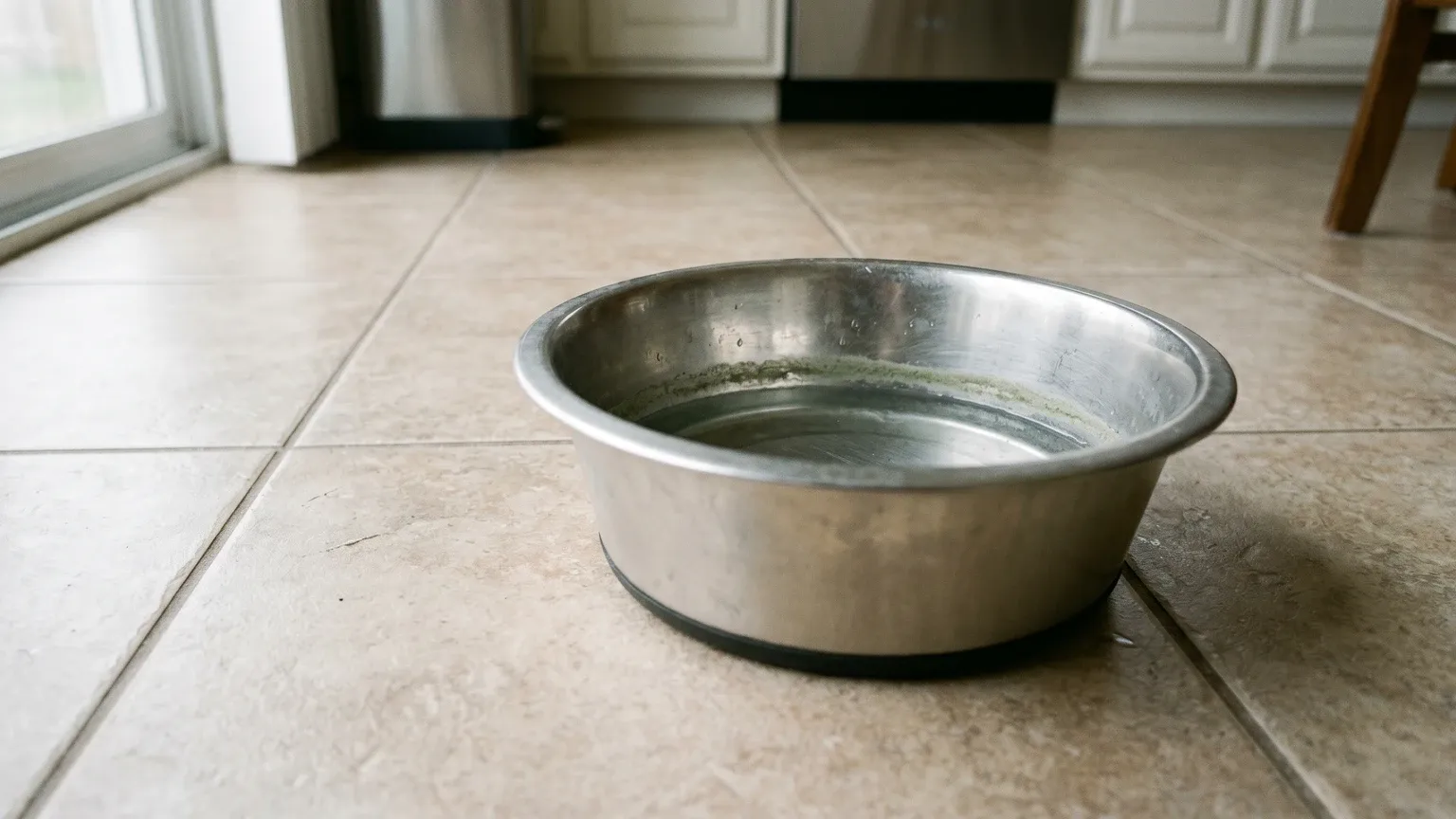
Yes — a damp, food-coated pet bowl is one of the germiest surfaces in your home. NSF International ranked the pet bowl the fourth-germiest of 30 household items; 45% carried a combined yeast/mold category. Fabric beds and toys harbor mold when damp, and stored food can grow mold. Wash bowls daily, dry fabric fully, and store food sealed.
What NSF actually found — and what it means
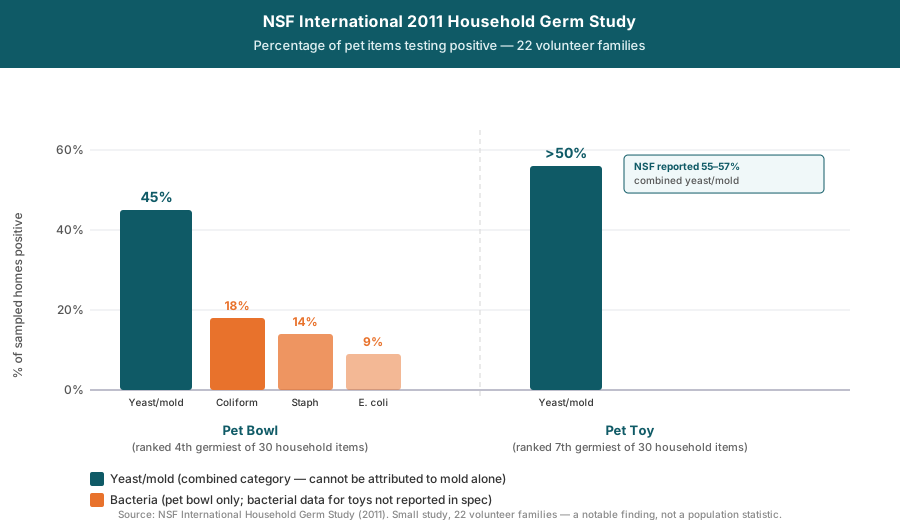
In 2011, NSF International (the public health and safety organization, not the National Science Foundation) published a household germ study covering 30 common items in 22 volunteer homes. The study found that the pet bowl ranked fourth germiest of those 30 items — behind the dish sponge, kitchen sink, and toothbrush holder, but ahead of the kitchen counter, stove knob, and bathroom faucet. The pet toy ranked seventh.
The key numbers from that study:
- Pet bowl: 45% of sampled homes positive for a combined yeast/mold category; 18% coliform; 14% staph; 9% E. coli
- Pet toy: more than 50% of sampled homes positive for the combined yeast/mold category
A few important calibrations before reading too much into those percentages. This was a small study of 22 volunteer families — a notable finding that identifies pet bowls as a real surface of concern, but not a broad population statistic. The “yeast/mold” figure is a combined category: it cannot be attributed to mold alone, and it does not identify specific species. What the study tells us is that pet bowls and toys are high-contact, frequently damp surfaces that accumulate microorganisms quickly between cleanings — which most pet owners already suspect, and the data confirms.
Why pet bowls accumulate yeast and mold
A pet bowl is an almost ideal surface for microbial growth. It is made from a material (often plastic, stainless steel, or ceramic) that stays wet for hours at a time, coated with a thin film of saliva and food residue, and sitting at room temperature — or, in a Phoenix summer, in a warm kitchen or outdoor space.
The slimy film that builds up on a bowl between washes is biofilm: a community of microorganisms — bacteria, yeast, and sometimes mold — that attach to the surface and form a protective matrix. It is not a single organism and it is not an NSF finding specifically; biofilm is a well-understood general phenomenon in any wet, food-contact environment. What makes pet bowls particularly prone to it is the combination of frequent wetting, food residue, and infrequent scrubbing.
Plastic bowls are harder to clean thoroughly because they develop micro-scratches over time that give microorganisms a place to lodge. Stainless steel and ceramic smooth surfaces are more resistant. Regardless of material, rinsing alone does not break up biofilm — scrubbing with soap and warm water is what does it.
Mold and damp pet beds
The CDC notes that mold can grow in dust, paints, wallpaper, insulation, carpet, fabric, and upholstery — which includes the fabric cover and foam fill of a pet bed. A bed that stays damp from a wet coat, a water bowl splash, or a humid room has everything mold needs: moisture, a porous surface, and time.
The practical guidance from the EPA is specific on porous materials: “Absorbent or porous materials, such as ceiling tiles and carpet, may have to be thrown away if they become moldy… the mold may be difficult or impossible to remove completely.” The same principle applies to foam-filled pet beds. Washing a fabric bed cover removes surface growth and is an effective prevention step when done regularly. But if a foam-filled bed has visible mold — patches of green, black, or white growth on the fabric or visible at a seam — washing it is unlikely to remove the growth from inside the foam. Replacing it is the more reliable option.
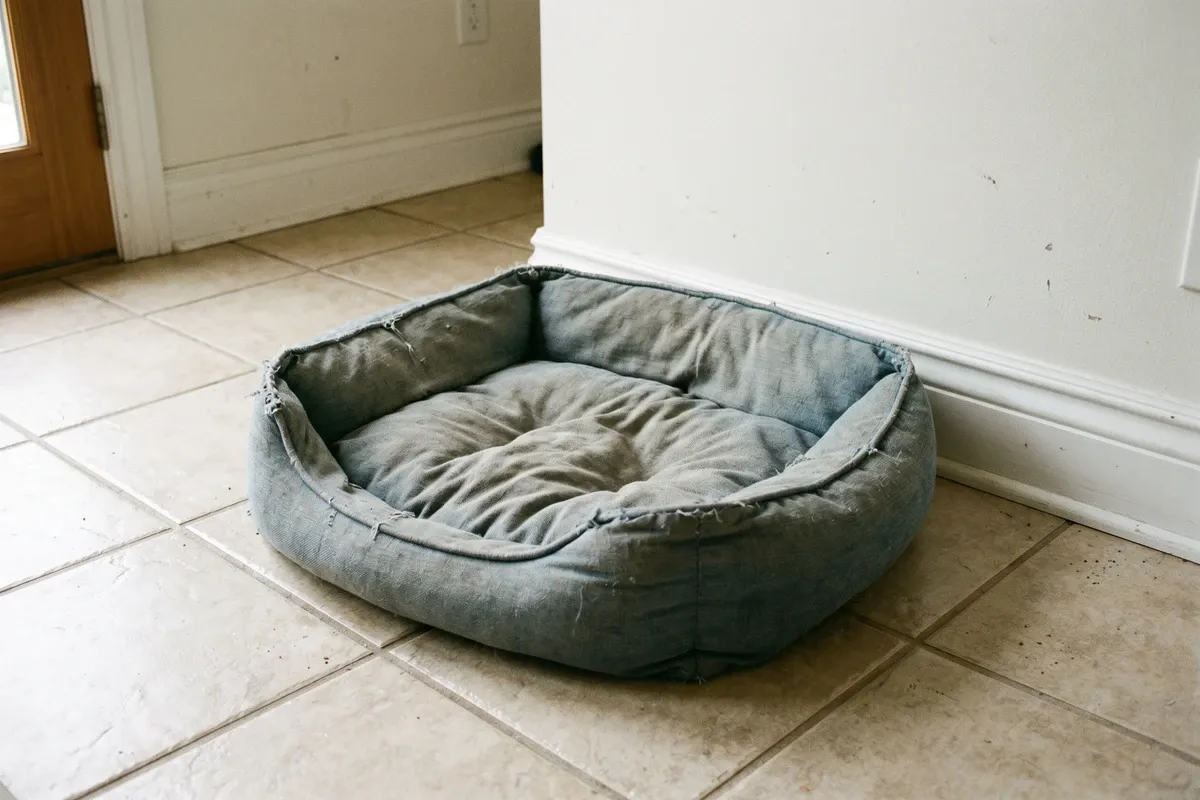
The practical rule: wash fabric pet beds regularly and dry them completely before your pet uses them again. A damp bed going back on the floor is a bed that will grow mold. If you already see mold on the bed, replace it rather than trying to wash it out of the foam.
Damp pet toys
Pet toys — especially rope toys, plush toys, and rubber toys — face the same problem as pet beds: they get wet (from a water bowl, from a dog’s mouth, from outdoor play), they are porous or fibrous, and they spend time sitting at room temperature. The NSF study found more than 50% of pet toy surfaces positive for the combined yeast/mold category — a higher rate than pet bowls.
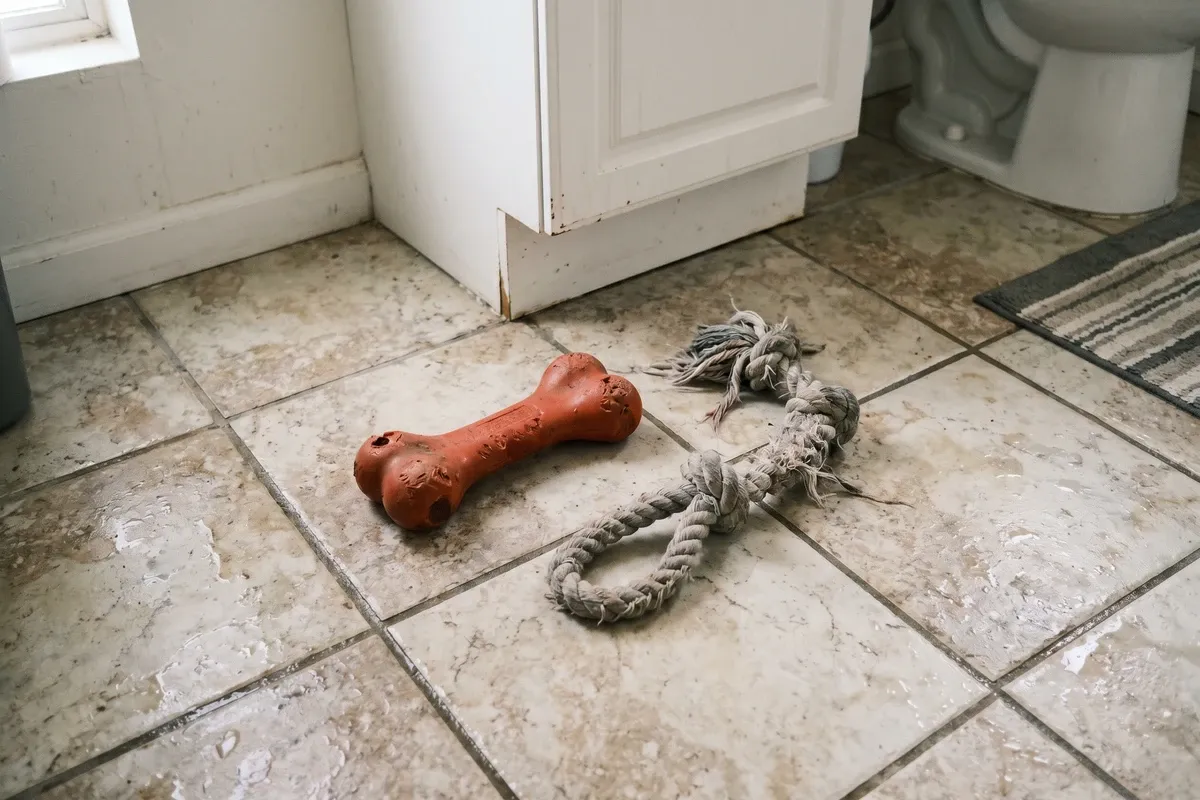
Hard rubber toys can be scrubbed and dried effectively. Rope toys and plush toys are porous in the same way as fabric pet beds: if they become moldy, replacing them is usually the cleaner solution. The prevention step for toys is the same as for beds: don’t let them stay wet. After outdoor play or water sessions, dry toys fully before putting them away, and periodically inspect them for any discoloration, musty smell, or visible growth.
Mold in stored pet food
Moisture in stored dry pet food is a separate concern from bowls and beds, with a specific toxicological risk. The FDA explains: “Aflatoxins are toxins produced by the mold Aspergillus flavus that can grow on pet food ingredients such as corn, peanuts, and other grains. At high levels, aflatoxins can cause illness (aflatoxicosis), liver damage, and death in pets. The toxins can be present even if there is no visible mold.”
It is important to understand what that risk actually means in practice. The dominant aflatoxin pathway is contaminated manufacturing ingredients — not a homeowner’s improperly stored bag. FDA monitors this risk through the manufacturing and distribution chain and issues recalls when contamination is found. High-profile recalls (such as the 2021 Sportmix recall) reflect failures in the production supply chain that FDA polices, not problems that typically arise from a bag stored in a dry pantry.
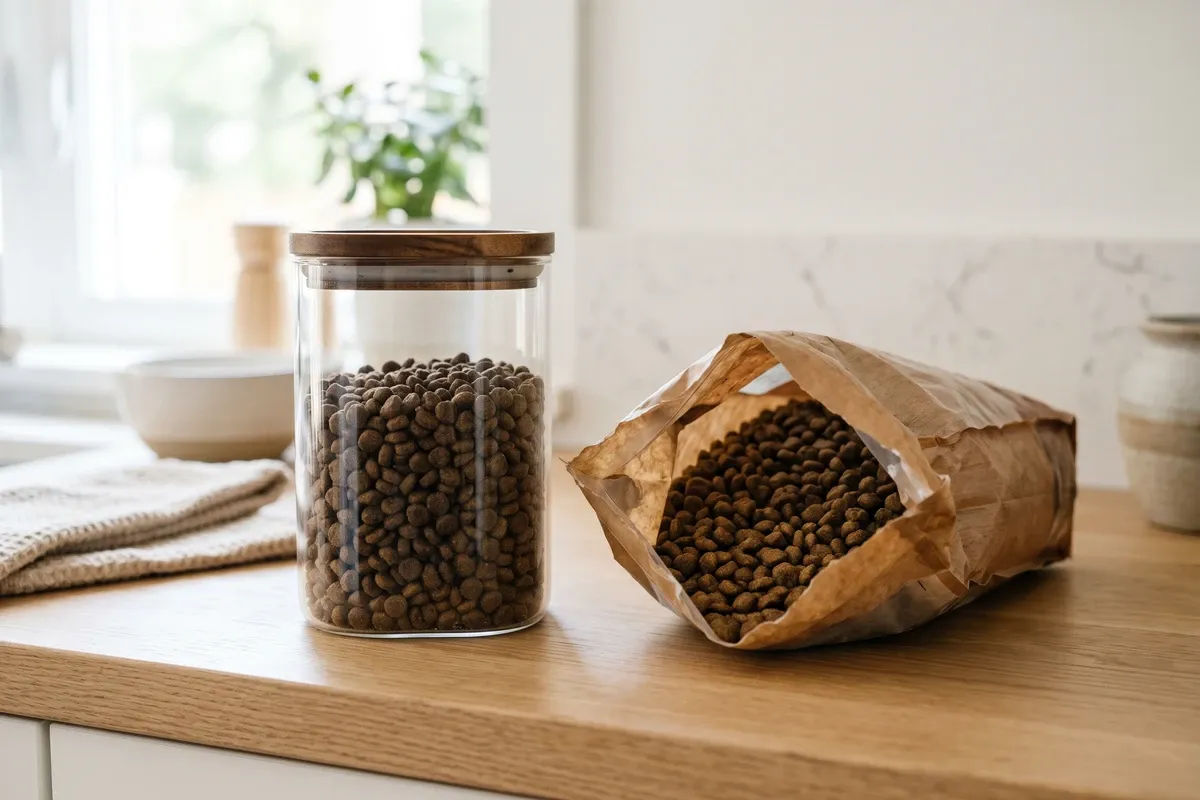
What home storage hygiene does address is the lower-scale risk: an open bag stored in a warm, humid garage or pantry can accumulate surface mold if moisture gets in. The practical steps:
- Keep dry food in a sealed container in a cool, dry location
- Don’t feed food that is past its use-by date
- Don’t feed food with visible mold or an off smell, regardless of date
- If you can smell something musty from the bag, discard it
Merck notes that aflatoxins can form either in the field or during storage, when moisture and temperature are high enough for mold growth. Home storage matters on the margin, even if the manufacturing supply chain is the bigger risk FDA tracks.
How moisture gets into these items in the first place
The upstream driver for mold in pet items is the same as for mold anywhere in a home: persistent moisture. In Phoenix, the most common sources are AC condensate overflow, monsoon-season humidity spikes, and over-watered indoor plants near pet feeding stations. A bowl on a kitchen floor near a leaking refrigerator water line, a pet bed against an exterior wall after a monsoon storm, a toy stored in a garage during the humid weeks of July and August — these are the scenarios where ordinary pet items become mold problems rather than just dirty surfaces.
If you are noticing a musty smell in your home alongside grimy pet items, the pet items are probably not the source of the smell — they are symptoms of a broader moisture problem. Our guide on musty smells in Phoenix homes covers how to locate the actual moisture source, because cleaning the bowl does not fix a condensate line or a wall intrusion.
The cleaning routine that actually works
For pet bowls:
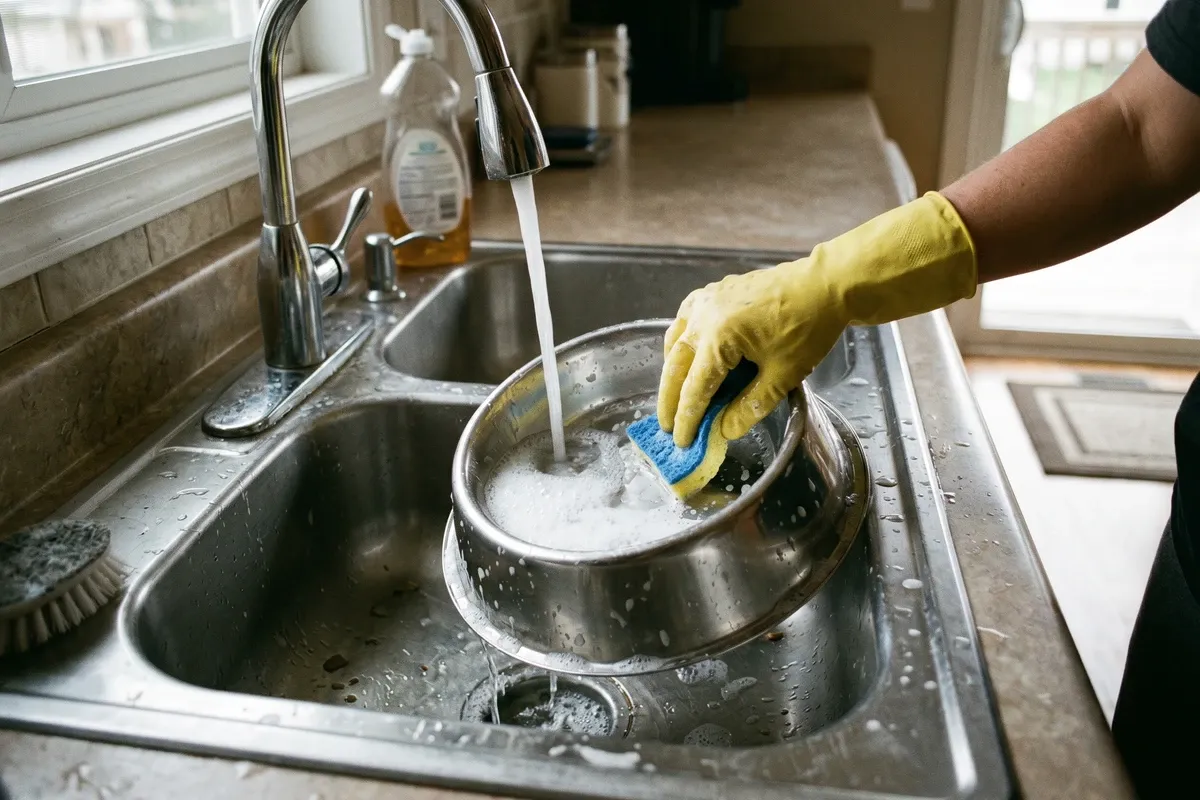
- Wash daily with soap and warm water, scrubbing the sides and bottom to break up biofilm — not just a rinse
- Dry the bowl or let it air-dry before refilling; a perpetually wet bowl accumulates growth faster
- Dishwasher-safe bowls (stainless, ceramic) can go in the top rack — the heat helps
- Plastic bowls: consider switching to stainless or ceramic, which have smoother surfaces and are easier to sanitize
For pet beds and fabric toys:
- Wash the fabric cover on the machine-wash cycle weekly or every two weeks
- Dry completely before returning to use — this is the step most people skip
- Inspect for musty smell or visible discoloration; if either is present on foam-filled items, replace rather than re-wash
- Don’t store damp beds or toys in a confined space (a closet, a corner of the garage) where they won’t dry out
For dry food storage:
- Sealed container, cool and dry location
- In-date food only; don’t use food from a bag that smells musty or shows visible mold
When it’s more than a dirty bowl
Cleaning pet items is straightforward maintenance. But if you are regularly finding mold on bowls, beds, or toys that you clean regularly, or if there is a persistent musty smell in the area where your pet’s things are kept, the issue is likely a moisture problem in that part of the house, not a cleaning frequency problem.
Mold on pet items in a dry Phoenix home almost always means a moisture source nearby: a condensate line dripping near a feeding station, a leaky supply line under a sink, a wall that took in water during monsoon. For a broader guide on what mold exposure can mean for your pet’s health, see our guide on household mold and pets — and for whether the “black mold” people worry about is actually dangerous to pets, see black mold and pets.
If the moisture source is inside your walls or comes from your HVAC system, that is a remediation job — the kind of work where professional containment, negative-air HEPA equipment, and moisture confirmation make a real difference. Our mold removal page explains how that process works and what it involves.
What to do next
Wash your pet’s bowl today with soap and water, check the bed and any fabric toys for musty smell or visible growth, and look at where food is stored. Those three steps address the direct pet-item risk.
If the same area keeps producing moldy items even with regular cleaning, read our guide on musty smells and hidden moisture in Phoenix homes — the pet items may be pointing you toward a moisture source that needs to be found and fixed, not just cleaned around.
For all Phoenix mold guides, start at the guides hub.
Get a free quote
If you are finding mold in your home and want a professional assessment of the moisture source driving it, a free, no-obligation quote is the practical next step. We handle mold across the Phoenix metro — from AC condensate overflows to monsoon wall intrusion — and we can locate the moisture before it keeps showing up on your pet’s things. Fill out the form below and we’ll get back to you with a clear next step.