Mold Cleanup After Flooding: The Phoenix Homeowner’s Recovery Checklist
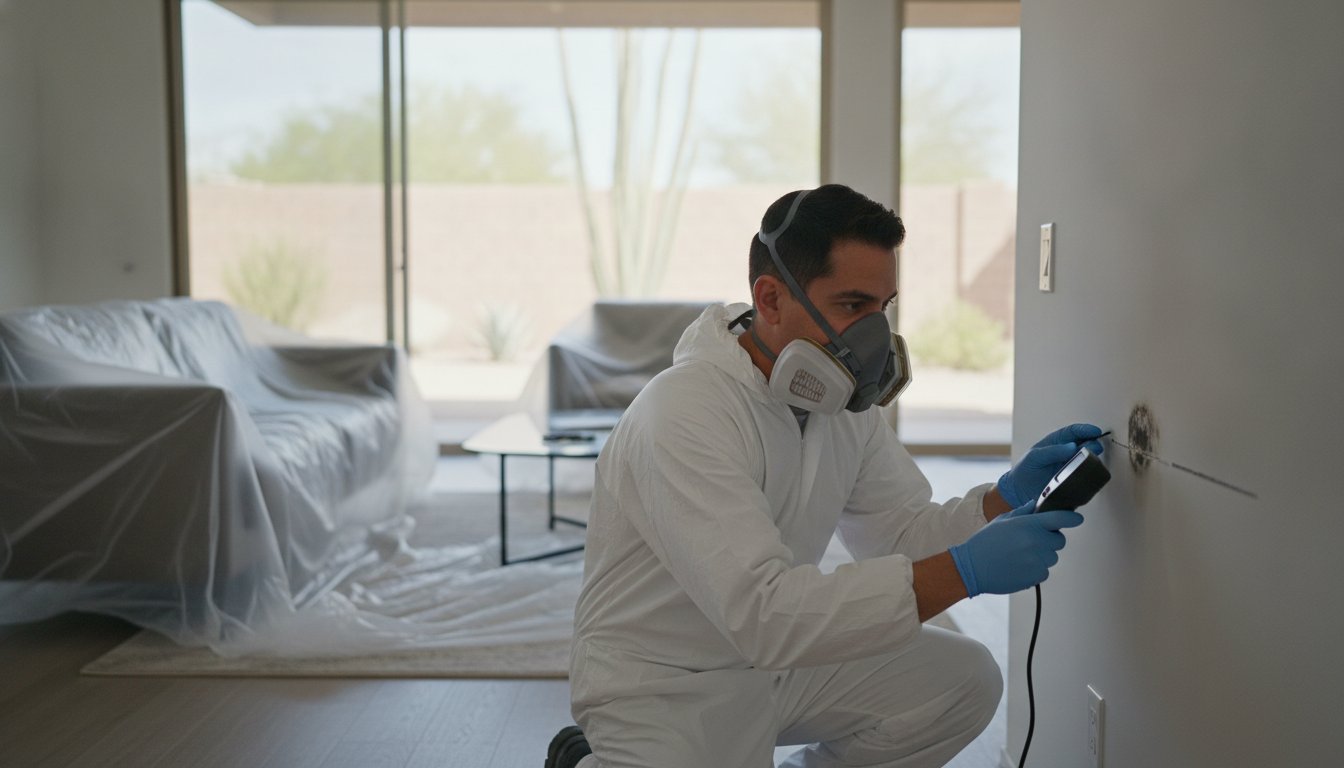
Effective mold cleanup after a Phoenix flood means professional drying and containment within 48 hours to stop spores from spreading. The work involves pulling out saturated materials like drywall, running industrial dehumidifiers, and applying antimicrobial treatments. Move fast to protect your home’s structure and your family’s health through the humid monsoon season.
If flooding soaked drywall, carpet, or wall cavities, professional water damage restoration in Phoenix dries the structure before mold takes hold.
Did you know that a single monsoon downpour can trigger mold growth in your home in less than 48 hours, even when it's 110 degrees outside? It's natural to feel overwhelmed when water enters your property. You're likely worried about your family's health, the scale of the cleanup, or the complexity of insurance claims.
This recovery checklist walks you through the cleanup without any high-pressure sales tactics. We'll cover how to find hidden moisture, the steps for safe removal, and how to keep your home dry in our desert climate. A methodical plan is what moves you from the chaos of a flood back to a clean, dry home.
Key Takeaways
- After a monsoon flood you have about 48 hours to dry the home before mold starts to colonize, even when it is 110 degrees outside.
- Bleach does not fix mold on porous materials like drywall, wood, and carpet padding — the water soaks in, feeds the roots, and the mold often comes back stronger.
- The EPA's rule of thumb is that flooded areas under 10 square feet are usually a safe DIY job, while anything bigger or touching your HVAC calls for a pro.
- Opening windows during monsoon season often lets in more moisture, so it is better to keep the house sealed and run the AC if it still works.
- Holding indoor humidity between 30 and 50 percent through the June-to-September months keeps spores from taking hold again after cleanup.
The First 48 Hours: Immediate Actions to Stop Mold Growth
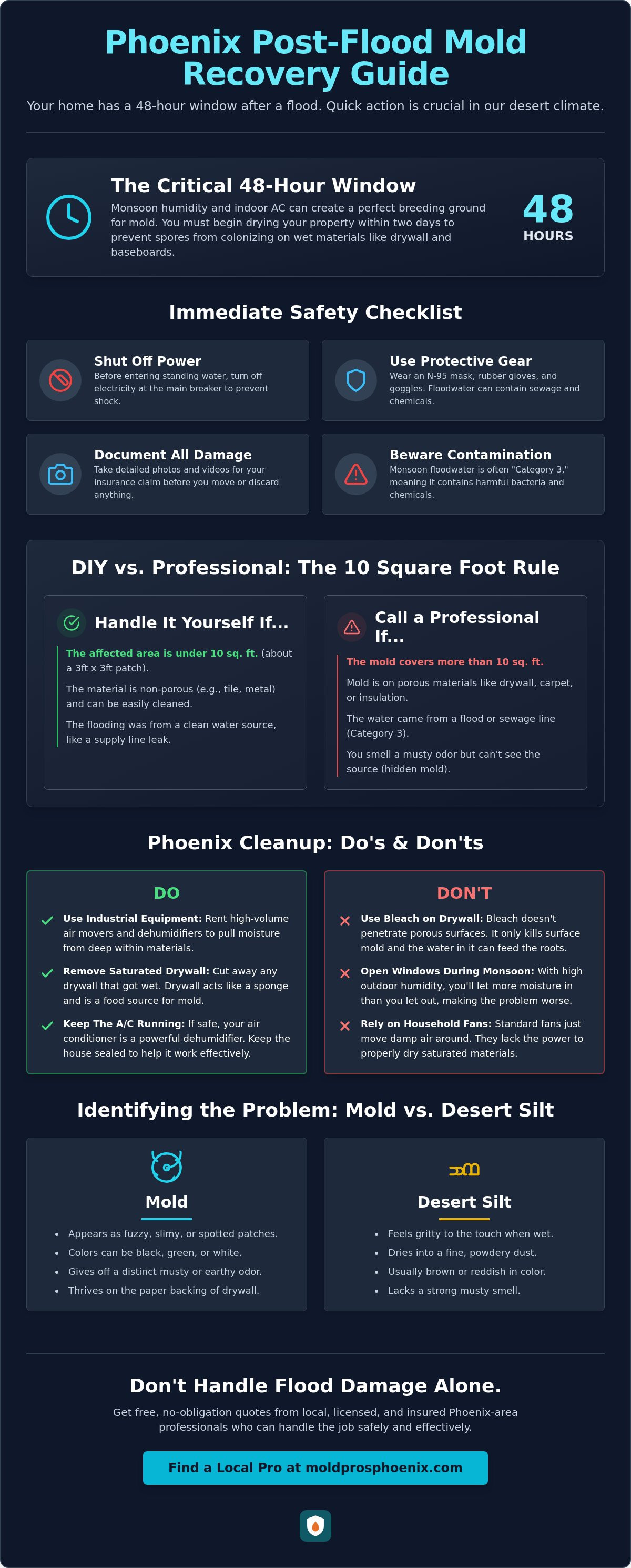
Phoenix summers are brutal, but the heat won't stop fungal growth. Monsoon humidity plus indoor air conditioning creates a greenhouse effect in your home. You have exactly 48 hours to dry out your property before mold begins to colonize. This timeframe is the industry standard for mold assessment and remediation. Miss the window and both the complexity and the cost of your recovery climb. It comes down to one thing: how fast you can pull out standing water and drop the humidity inside your rooms.
To better understand the immediate steps you should take, watch this helpful video on preventing growth after a water event:
How do I stay safe while starting the cleanup?
Safety comes before any work. Don't step into standing water until you've shut off the power at the main breaker. Street flooding is often "Category 3" water, meaning it carries sewage, chemicals, and bacteria. Wear N-95 masks, heavy rubber gloves, and goggles before touching anything wet. If the water reached your electrical outlets or your subfloor feels soft, call a professional to check the structural integrity. Photograph and film the damage for your insurance company too: capture the water line on the walls and the exact point where the water came in, whether a roof leak or a slab failure.
What is the fastest way to dry my home?
Ceiling fans and household vacuums won't cut it here. You need high-volume air movers and industrial dehumidifiers to pull moisture from deep inside your drywall and baseboards. In the Phoenix area, opening windows during monsoon season is often a mistake. If the outdoor humidity is high, you're just inviting more moisture into the house. Keep the home sealed and run your AC system if it hasn't been damaged. Use a wet-dry vacuum to lift every inch of standing water you can find. Every gallon you remove by hand is moisture that won't seep into your furniture and wall cavities.
Identifying Mold After Flooding: What to Look For
After a monsoon flood or a major pipe burst, you might see a layer of brown sediment on your floors. It's easy to mistake this desert silt for mold, or the other way around. Silt is gritty and dries into a fine dust. Mold appears as fuzzy patches or slimy streaks in shades of black, green, or white. Look closely at where the water sat. Mold doesn't just grow on the surface; it thrives on the paper backing of your drywall and the underside of your baseboards.
Is the mold visible or hidden?
Surface spots are usually just the tip of the iceberg. Drywall acts like a sponge, pulling water upward in a process called wicking. You might see a water stain only 2 inches high, but moisture could have traveled 12 inches or more up the wall cavity, leaving a dark, damp space for species like Aspergillus or Penicillium to grow unseen. Check your baseboards for warping or a slight pull away from the wall. A musty, earthy smell that lingers after surface cleaning usually means mold is growing in the wall voids or under your flooring.
What are the health triggers and environmental signs?
In the Phoenix area, we frequently see Cladosporium and Alternaria after water damage. While "black mold" (Stachybotrys chartarum) gets the most headlines, all indoor mold growth should be treated with the same level of caution. You don't need to be a scientist to know something is wrong. Trust your nose and your physical reactions. According to the CDC, dampness and mold are linked to approximately 21 percent of asthma cases in the United States. If family members or pets start sneezing or coughing more than usual after a flood, it's a sign that spores may be airborne.
Your eyes alone won't find every pocket of moisture. Professionals use infrared cameras and moisture meters to map the wet zones, spotting cold spots behind walls where water is still trapped. If you suspect hidden dampness, a professional mold inspection maps the wet zones a visual check misses. Catching these spots early prevents structural rot and long-term health triggers for vulnerable residents like children or the elderly. Roughly 47 percent of homes in the country show some visible mold or odor, so staying proactive is the best way to protect your property.
DIY vs. Professional Remediation: The Straight Talk
The EPA gives homeowners a simple guideline. If the affected area is less than 10 square feet, you can usually handle the cleanup yourself. For anything larger, or if the water came from a "Category 3" source like street flooding or sewage, you need professional help. The job is rarely just scrubbing a wall. It means managing airborne spores you can't see with the naked eye.
Many people reach for bleach first, which is a mistake on porous materials like drywall, wood, or carpet padding. Bleach is mostly water. It might kill surface mold, but the water soaks into the material and feeds the roots of the fungus, so the mold often returns stronger within a few weeks. Professional remediation uses antimicrobial treatments that actually penetrate these surfaces. Failed DIY attempts tend to cost more later because the contamination spreads during cleaning.
When should I call a Phoenix mold specialist?
If the flooding reached your HVAC system or ductwork, stop your DIY efforts immediately. Spreading spores through your ventilation can contaminate the entire house. Cleaning an HVAC system is complex and usually costs between $3,000 and $10,000. Professionals use negative air machines and HEPA filtration to keep spores from moving into unaffected rooms. This is critical when dealing with structural saturation where moisture is trapped behind multiple layers of building materials. You should also call a pro if the water has sat for more than 48 hours or if you have a compromised immune system.
How do I evaluate remediation quotes?
A professional mold inspection in the Valley typically costs between $300 and $650. This fee should cover a thorough assessment, not just a quick visual check. Look for a crew that follows the ANSI/IICRC S520 standard, the recognized industry benchmark for safe and effective removal. Watch for these red flags during your search:
- Stand-alone sprays: Be wary of companies that promise to "fog" away mold without removing wet drywall or addressing the moisture source.
- Vague estimates: Avoid quotes that don't specify the square footage or the exact materials being removed.
- Lack of containment: Real pros always use plastic barriers and air scrubbers to stop spore spread during demolition.
Small remediation jobs usually run $500 to $1,500. Mid-size projects often cost between $2,000 and $6,000. Whole-home remediation after major flooding can range from $10,000 to over $30,000. Mold Pros Phoenix handles water-damage and mold cleanup across the Valley, so an honest, itemized estimate gets the job done right the first time.
The Step-by-Step Post-Flood Cleanup Checklist
The most important rule here is the porous material test. If an item is porous and has been soaked with floodwater, you likely need to throw it away. That covers carpet, padding, mattresses, and upholstered furniture. These materials act like sponges, trapping spores and bacteria deep inside where topical cleaners can't reach. Non-porous items like metal, glass, and hard plastics can usually be saved with a thorough scrubbing using detergent and water.
Why do I need to cut out my drywall?
Drywall is highly porous and will pull water upward like a candle wick. FEMA puts it plainly in Repairing Your Flooded Home: "Wallboard will act like a sponge, drawing water up above the flood level." That is why the cut goes above the water line, and it is why FEMA's own rule is generous: if floodwater soaked the wallboard at least 4 feet above the floor, take down all of it; if the water was shallower than that, remove the lower 4 feet. Restoration crews often make a shorter cut, commonly 12 to 24 inches above the water line, for shallow or localized water. FEMA is not consistent with itself on this: its short brochure Dealing With Mold & Mildew in Your Flood Damaged Home says "If wallboard is soaked, remove to a foot above the water mark and discard," while the longer flood book says 4 feet. After a real flood, the 4-foot line is the safer benchmark. Removing the saturated insulation is vital because it often becomes a "mold sandwich" trapped between the wall studs and the exterior siding. Discard these materials in heavy duty plastic bags to prevent spores from drifting into other parts of your home during the removal process. If the wall got wet but there is no mold yet, the keep-or-cut decision is covered in does wet drywall need to be replaced.
How do I handle wet concrete and wood studs?
Wood studs and concrete slabs are semi-porous. They can often be saved if they are dried quickly and treated with a professional biocide. In many Phoenix homes, you might see a white, fuzzy substance on the concrete slab after a flood. This is often efflorescence, which is a mineral salt deposit left behind by evaporating water. While it isn't mold, it is a sign that the slab is still holding too much moisture. You must ensure the slab is bone-dry before you attempt to install new flooring, or you risk trapping moisture that will lead to future growth.
Once the unsalvageable materials are gone, deep-clean what's left. Scrub all hard surfaces with a stiff brush and a non-ammonia detergent, then run a HEPA vacuum to lift fine dust and lingering spores. If you're unsure whether your subfloor is dry enough for reconstruction, a professional moisture check confirms it before you rebuild. Proper drying at this stage is the only thing that keeps odors from creeping back later. Most small, localized cleanup jobs cost between $500 and $1,500, while larger structural drying projects can range from $2,000 to $6,000 depending on the size of the affected area.
Preventing Future Mold: Long-Term Protection for Phoenix Homes
Preventing mold in the desert is about controlling moisture sources the sun can't reach. Even after a thorough cleanup, a home stays at risk if indoor humidity runs high. Aim for a relative humidity range of 30 to 50 percent. Track it with a simple hygrometer, which earns its keep during the humid months from June through September. Holding your home in that range stops spores from colonizing on your furniture and walls.
Your AC system is your best defense against fungal growth. It acts as a large-scale dehumidifier for your entire house. Regular maintenance on condensate lines prevents clogs that lead to indoor flooding and hidden wall damage. If you use a swamp cooler, be aware that these units add significant moisture to your indoor air. Many homeowners switch to traditional AC when the dew point rises during monsoon season to keep their indoor environment dry and safe.
Landscaping also plays a major role in property protection. Phoenix soil often contains caliche, a hard layer that prevents water from soaking into the ground. If your yard slopes toward your house, monsoon runoff will pool against your foundation. Ensure your landscaping directs water at least 5 to 10 feet away from the base of your home. This prevents water from seeping into the slab or wicking up into the bottom of your drywall.
How do I monsoon-proof my property?
Storms in the Valley can overwhelm your drainage systems in minutes. Clear your roof scuppers and yard drains before the first storm hits in July. Check for foundation cracks that may have expanded during the 110-degree summer heat. These gaps allow heavy rain to seep into your wall cavities. Installing smart water leak detectors near your water heater, AC unit, and under sinks provides an early warning before a small leak becomes a major flood. These devices can alert your phone the moment they sense moisture.
Restoring your home and moving forward
Rebuilding after a flood is the right moment to switch to mold-resistant drywall and moisture-blocking primers. Once reconstruction wraps, consider a final air quality test to confirm the spore counts inside your home have returned to normal levels. Catching slow leaks through annual inspections is far cheaper than a full remediation project. A professional mold inspection in Phoenix typically costs between $300 and $650, and that small spend surfaces problems before they turn into expensive repairs.
If you're worried about hidden moisture or want a professional eye on your property, get a free, no-obligation quote today. Mold Pros Phoenix handles flood cleanup and water-damage restoration across the Valley, and knows what Valley homeowners are up against. Done right, the cleanup keeps your home safe for your family and pets for years to come.
Taking Control of Your Home’s Recovery
Recovering from a monsoon flood takes a methodical approach, and timing is the factor that matters most. Acting within the first 48 hours and correctly sorting porous from non-porous materials are what carry the whole recovery. They also keep you clear of the DIY missteps that snowball into pricier repairs later.
Mold Pros Phoenix handles flood cleanup and mold removal across Phoenix, Scottsdale, Mesa, and the entire East Valley, with IICRC-certified work that follows strict industry standards. Free cost calculators and checklists help you manage this process with confidence. Get a free, no-obligation quote today and we'll get back to you with a clear next step.
Take these steps now and your property stays a safe place for your family. Don't let the scale of the work feel overwhelming. With the right information and professional support, you can restore your home and keep it dry for years to come.
Frequently Asked Questions
How long does it take for mold to grow after a flood?
Mold can begin to colonize in as little as 24 to 48 hours after water exposure. In the Phoenix desert, the high humidity from a monsoon storm creates a greenhouse effect that triggers rapid growth even when outdoor temperatures are high. That's why immediate water extraction is the single most important move you can make. If the area isn't dried within this two-day window, the risk of structural damage increases.
Can I stay in my house if I have mold after a flood?
You can often stay in your home if the mold is confined to a small, isolated area like a single guest bathroom. However, if the flooding reached your HVAC system or covers more than 10 square feet, you should consider staying elsewhere during the cleanup. Spores can travel through your ventilation system and affect the air quality in every room. Vulnerable residents like children and the elderly should avoid staying in damp environments.
Will my homeowners insurance cover mold cleanup after flooding in Phoenix?
Insurance typically covers remediation if the mold resulted from a sudden, internal peril like a burst pipe or an AC condensate line failure. Standard policies often exclude damage from rising groundwater or monsoon street flooding unless you have a separate flood insurance policy. Since 1978, Arizona has recorded over 5,000 flood insurance claims. You should review your specific policy limits and exclusions with your agent immediately after any water event.
Is bleach effective for killing mold on flood-damaged drywall?
Bleach is not an effective solution for mold on porous materials like drywall, wood, or carpet padding. While it may remove the surface stain, the water in the bleach soaks into the material and feeds the roots of the fungus. This often leads to the mold returning stronger within a few weeks. To clean up properly, you must remove the saturated materials and treat the structural studs with professional-grade antimicrobial solutions.
What is the average cost of mold remediation after a flood?
The cost of remediation depends on the size of the affected area and the moisture source. For small, localized jobs, you can expect an estimate range of $500 to $1,500. Mid-size projects often range from $2,000 to $6,000. If the flooding was extensive and requires whole-home remediation, costs can range from $10,000 to over $30,000. Professional inspections to define the scope of the work usually cost between $300 and $650.
How do I know if the mold cleanup was successful?
A successful cleanup is confirmed through post-remediation verification, which often includes air quality testing. This ensures that the spore counts inside your home have returned to normal levels compared to the outdoor air. You should also verify that the musty odor is completely gone and that the original moisture source has been repaired. If the area remains dry and the air smells clean, the remediation process was likely a success.
Does the Phoenix heat kill mold spores naturally?
The Phoenix heat does not kill mold spores; it usually just makes them go dormant until the next moisture event. Some species found in the Arizona desert actually thrive in high temperatures when combined with monsoon humidity or swamp cooler moisture. Even if the mold looks dry and brittle, the spores can still cause respiratory issues if they become airborne. You must physically remove the contaminated materials to ensure the home is safe.
What are the signs of hidden mold behind my walls?
The most common signs of hidden mold are a persistent musty odor and visible changes to your wall surfaces. You might notice paint bubbling, wallpaper peeling, or baseboards that have warped and pulled away from the drywall. If your family experiences unexplained sneezing or coughing only when inside the house, it is a strong indicator of hidden growth. Professionals can use moisture meters to find these damp pockets without needing to tear down your walls.