Monsoon Flood vs. Wind-Driven Rain: How to Classify Phoenix Water Damage
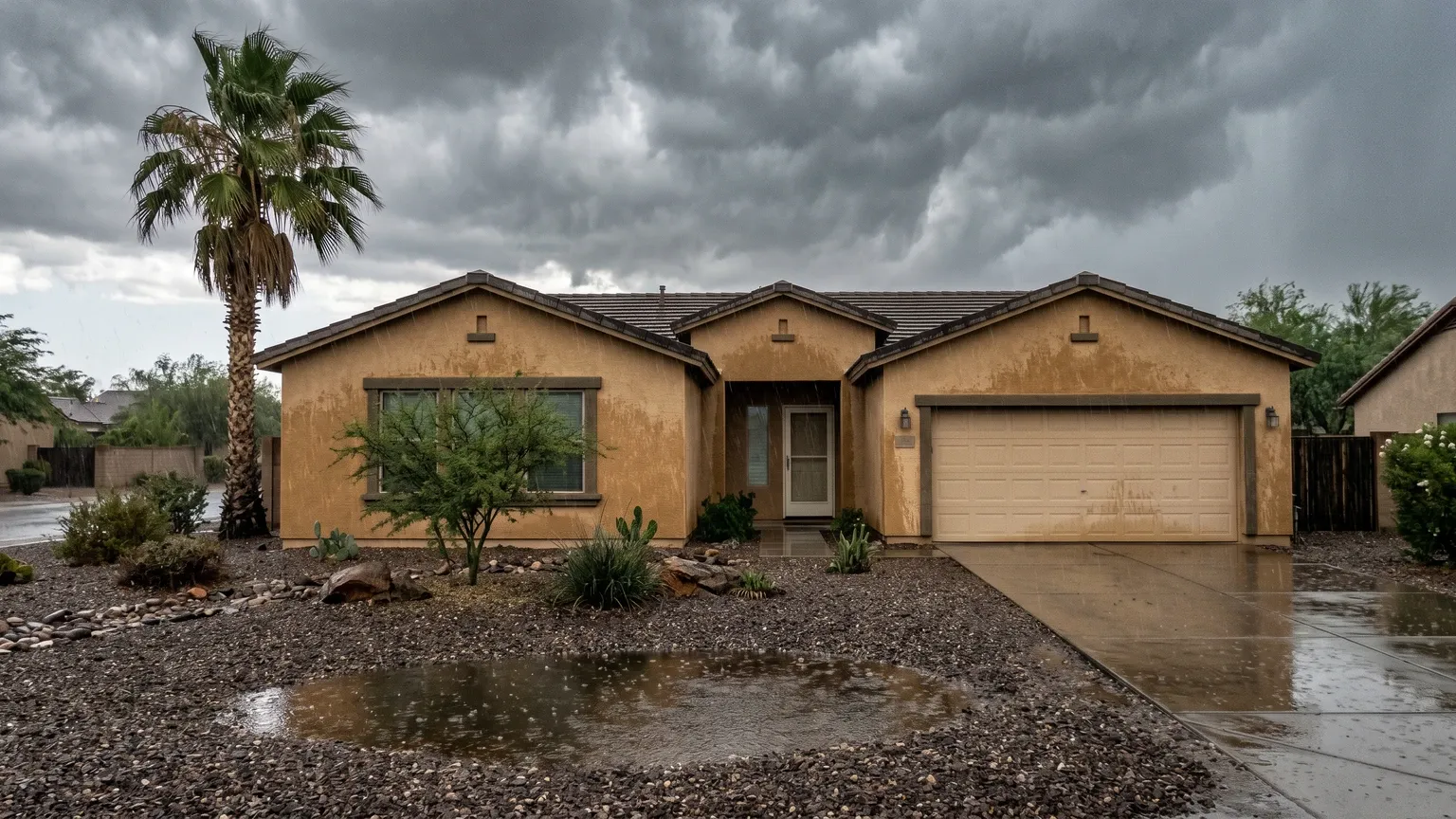
Whether your monsoon water damage counts as a flood or wind-driven rain depends on where the water came from. Water rising from the ground — wash overflow or street flooding — is a flood, excluded from homeowners insurance and needing NFIP. Wind-driven rain through storm-created openings is water from above, often a covered peril. Mold can start within 24–48 hours.
This is general information, not insurance or legal advice. It explains how to classify the water source after a Phoenix monsoon event, with citations to FEMA NFIP, the Insurance Information Institute, and the National Weather Service. Coverage depends on your specific policy language and facts. Read your own policy and talk to your carrier, your agent, or a licensed public adjuster before assuming anything is or is not covered.
Why the source of the water decides everything
After a monsoon storm hits the Valley, two homeowners on the same block can have two entirely different coverage outcomes — not because their damage looks different, but because the water that caused it moved in opposite directions.
This is the single classification that matters. Every downstream question — insurance coverage, remediation scope, who pays — traces back to one upstream fact: where did the water originate and which way did it move?
The reason is structural. Standard homeowners insurance and flood insurance are designed to cover separate physical events. The Insurance Information Institute states it plainly: “Floods are not covered under homeowners and renters policies. Only a specific flood insurance policy will cover home flood related losses.” On the other side, a standard homeowners policy typically covers weather damage to the structure — including, in many cases, water that enters through openings a storm creates.
Getting this classification wrong — assuming monsoon flooding is covered, or assuming that wind-driven rain through a broken skylight is a flood — is one of the most common and expensive mistakes Phoenix homeowners make after a monsoon event. Documenting the source correctly, right after the storm, is the single most important thing you can do.
For a full breakdown of how Arizona homeowners policies handle mold coverage after a water event, see Does Homeowners Insurance Cover Mold in Arizona? — this guide stays focused on the upstream diagnostic.
What counts as a “flood” (the NFIP definition)
The word “flood” has a precise federal meaning that does not match how most people use it in everyday conversation.
FEMA’s FloodSmart program defines a flood as: “A general and temporary condition of partial or complete inundation of 2 or more acres of normally dry land area or of 2 or more properties (at least 1 of which is the policyholder’s property) from: Overflow of inland or tidal waters; or Unusual and rapid accumulation or runoff of surface waters from any source; or Mudflow…”
In plain English: surface water accumulating on normally dry land. The key words are “surface waters” and “normally dry land.” This is water moving horizontally across the ground and pooling where it doesn’t usually sit.
In a Phoenix context, the NFIP flood definition covers:
- A wash overflow — the Valley’s wash and drainage-channel network, such as Indian Bend Wash or the Salt River (Río Salado), or local retention basins that top out in a severe monsoon cell
- Street flooding — water that pools over roadways and flows toward and into homes at grade
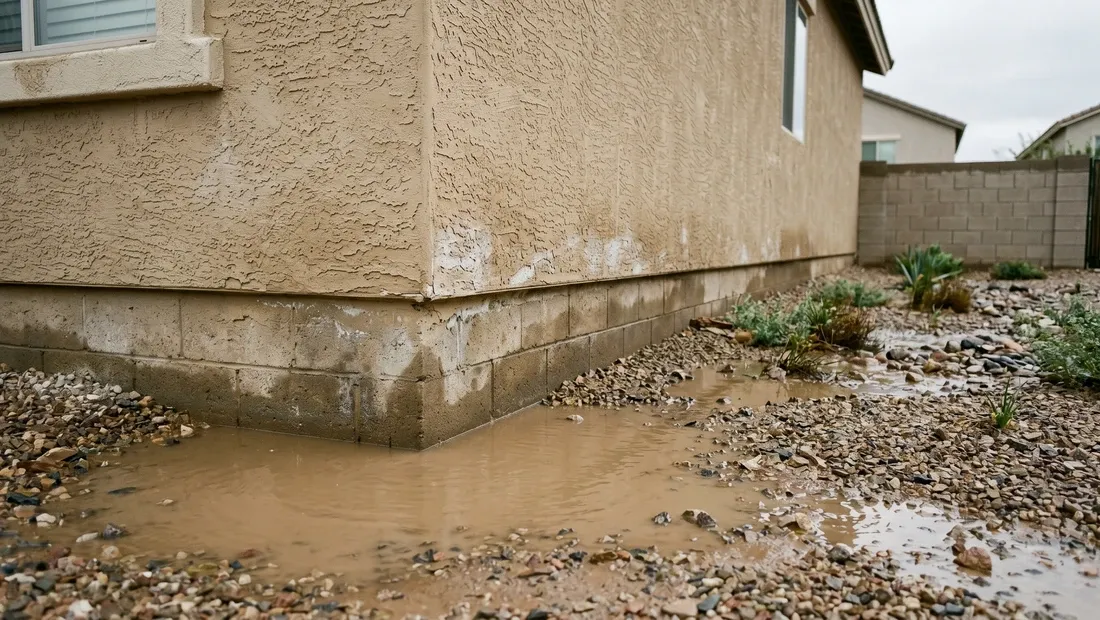
- Sheet flow across hardscape — monsoon rain hitting an impervious urban surface and running toward low points, including foundation walls and garage doors
- Groundwater intrusion from saturated soil after an extended rain event
If water came from any of these sources — if it was moving along the ground and entered your home at or below grade — it is almost certainly a flood under the NFIP definition, excluded from your standard homeowners policy, and potentially covered only by a separate NFIP flood insurance policy.
What counts as wind-driven rain
Wind-driven rain is the other direction: water entering the structure from above or sideways through an opening the storm created.
The mechanism here is storm damage to the building envelope. A monsoon microburst or haboob creates the opening first — lifting roof tiles, cracking flashing, forcing a window out of its frame — and then rain drives through that opening. The water’s origin is the sky, not the ground.
According to the National Weather Service, “A microburst is a localized column of sinking air (downdraft) within a thunderstorm and is usually less than or equal to 2.5 miles in diameter,” with winds that “can reach up to 100 mph.” That is more than enough force to create roof openings in a standard residential stucco home.
Common wind-driven rain entry points in the Valley:
- Lifted or cracked roof tiles — barrel tile is the standard Phoenix roofing; the mortar and flashing beneath it can fail under microburst wind loads
- Window and door frame failures — high-speed outflow winds can force water past window seals or open improperly latched doors
- Roof-to-wall flashing separations — a vulnerable point on flat or low-slope sections common on Valley homes
- Damaged fascia or soffits — once the fascia lifts, water can follow the roof sheathing line into the attic
The key distinction from flooding: the structure was damaged first, then rain entered through the damage. That sequence — storm damage → penetration by rain — is the coverage-relevant fact pattern on a standard homeowners policy, and it is what documentation needs to capture.
The Phoenix monsoon mechanics that cause both at once
The Valley’s monsoon produces a specific mix of weather events, and understanding them explains why a single storm can simultaneously flood one neighbor’s garage floor and drive rain through another’s roof — or do both to the same property at different points in the same storm cell.
Haboobs. According to the National Weather Service, “Haboobs occur as a result of thunderstorm outflow winds” and represent “an advancing wall of dust and debris which may be miles long and several thousand feet high.” A haboob arrives with the outflow wind surge before the rain — high-horizontal-velocity winds that load roof surfaces with lateral force before a single drop falls. This is the wind-damage event that can create openings before rain begins.
Microbursts. Once the cell matures, a microburst can follow: intense, localized downburst winds at the cell’s core. The NWS notes winds up to 100 mph in a small-diameter column, which produces highly localized damage — one house on a street may lose roof tiles while the neighbor’s are untouched.
Flash flooding. The National Weather Service’s Flagstaff/Phoenix office notes that Arizona’s monsoon “officially runs from June 15th to September 30th” and that “The biggest threat … is flash flooding.” Monsoon rainfall is intense and short-duration — the kind that exceeds surface absorption and moves fast across impervious urban surfaces. That is the ground-up flood mechanism.
The combined scenario. A strong cell arrives with haboob outflow winds, damages a roof or window seal, then drops two inches of rain in twenty minutes. Water enters from above through the storm damage AND ponds against the foundation from surface runoff. Both patterns can exist on the same property from the same storm. The classification still depends on each water source separately — the roof-entry water and the foundation-pooling water follow different tracks.
How to tell which one you have
Use the decision flow below. One entry question — where did the water originate — branches three ways, each with a different coverage and remediation track.
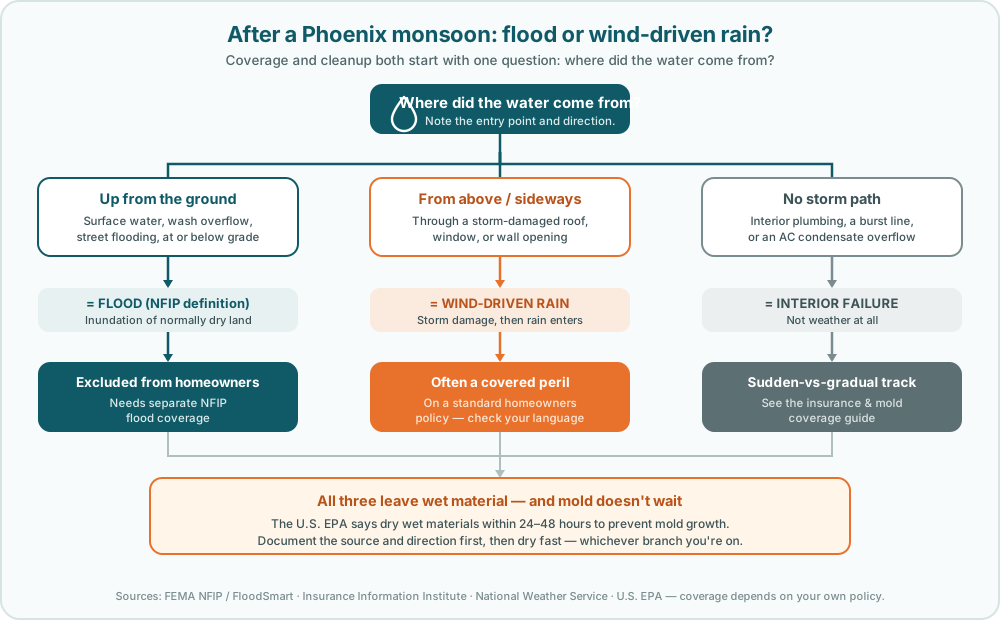
Branch 1 — Rising or pooling from the ground. Water is entering at grade or below: coming under a door, rising from a floor drain, flowing from the yard toward the foundation, pooling in a garage that is below street level. This is surface water accumulation — the NFIP flood definition. Standard homeowners insurance does not cover it.
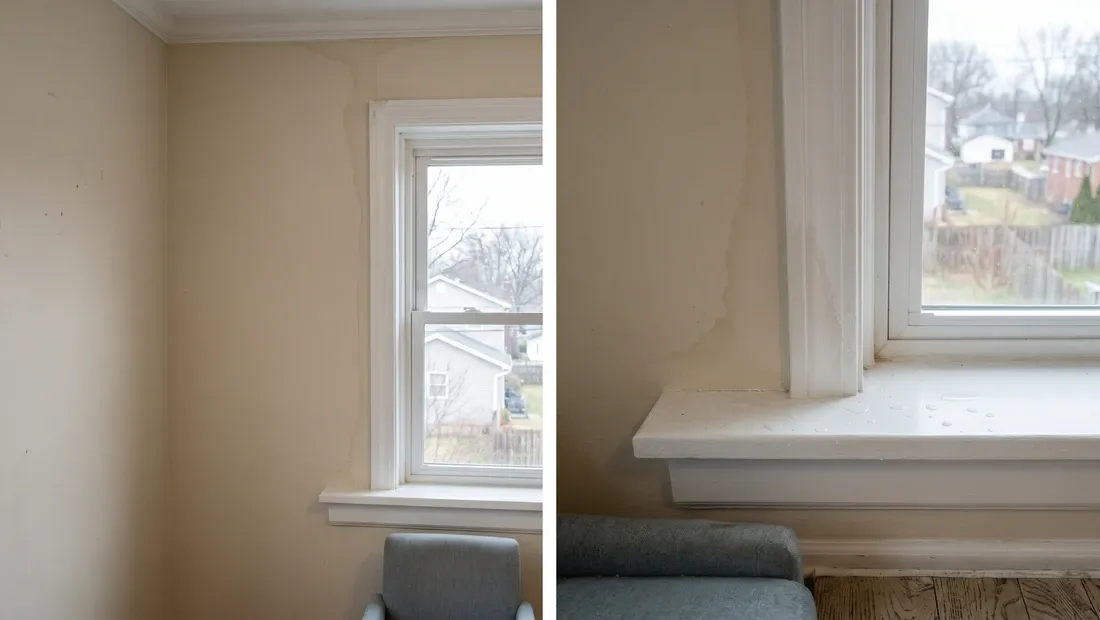
Branch 2 — Entering from above or sideways through storm damage. There is visible storm damage to the roof or wall assembly (lifted tiles, cracked flashing, a forced window), and water staining runs downward from the entry point — ceiling stain below the roof breach, wall staining down from a window corner. This is wind-driven rain through storm damage. Standard homeowners policies often treat this as a covered weather peril, though the exact outcome depends on your policy language and whether an anti-concurrent-causation clause applies.
Branch 3 — No storm path: interior plumbing or AC. The storm is happening outside but the water came from inside: a pipe that burst, a condensate line that overflowed, a water heater that failed. This is the sudden-versus-gradual track covered in detail in Does Homeowners Insurance Cover Mold in Arizona? A clogged AC condensate drain overflowing into a Phoenix attic is a very common monsoon-season coincidence — the storm spikes humidity, the system runs hard, and a partially blocked line backs up. That is an interior mechanical failure, not a flood.
What if you have multiple sources? Document each entry point separately. An adjuster and a water-damage assessor evaluate each source on its own facts. Mixing them together in your account of events complicates the claim.
Why it matters for mold: both grow it, fast
Here is where the two tracks converge. Whether the water came from above or below, the mold risk is the same.
The U.S. EPA is specific: dry wet materials within 24 to 48 hours to prevent mold growth. The EPA is also direct that once mold is established, “it is not enough to simply kill the mold, it must also be removed” — you cannot treat mold in place on porous materials like drywall and insulation. Before mold appears, though, FEMA treats clean rainwater differently from floodwater — whether wet drywall has to be replaced covers that split.
Phoenix in monsoon season is the worst possible environment for this race. Overnight lows often stay in the 80s and 90s, so the heat that speeds mold growth barely lets up. Wall cavities trap moisture. Insulation holds water. In those conditions, 24 to 48 hours is not a comfortable buffer — it is a hard deadline.
A water-damage assessment after a monsoon event does two things the claim and the mold risk both require: it documents the water source and direction (which establishes the coverage track), and it identifies hidden moisture in wall cavities and under flooring that surface drying will miss. That documentation is the same record an adjuster needs and the same information a remediation scope requires.
If mold is already visible or if wet materials sat more than a day or two, the work shifts. Phoenix monsoon mold risk — and the moisture sources that drive it, including AC condensate, wash proximity, and monsoon roof intrusion — is covered in depth in the Phoenix Mold Risk Report 2026 and in Mold in the Desert: Why Phoenix Homes Get Mold.
What to do first after monsoon water intrusion
The first hour after you discover water in your home matters more than almost anything that follows. In order:
1. Safety before entry. If there is standing water anywhere near an electrical panel, outlets, or appliances, do not enter. Shut off power to the affected area at the breaker panel before going in. Floodwater in particular can carry contaminants.
2. Document the source and direction — immediately. Take dated photos and short video of: the water level, where it is entering (window, door gap, floor, ceiling), any visible storm damage to the exterior (lifted tiles, cracked flashing, broken window seal), and the spread pattern (does the staining run down from above, or spread laterally from grade level?). This is not busy work — it is the fact record that decides the coverage classification and the remediation scope. Photograph before you move anything.
3. Start drying within the 24-to-48-hour window. Remove standing water with a wet-dry vac or mop. Open windows and doors if outside humidity is lower than inside (check before opening — a still-humid post-storm evening can make it worse). Use fans. Remove saturated rugs, cushions, and cardboard immediately.
4. Get a water-damage assessment if materials are soaked. Surface drying does not reach moisture inside wall cavities, under flooring, or in insulation. A professional water-damage assessment uses moisture meters and thermal imaging to find hidden wet pockets and document the source — the same documentation that protects both the structure and the insurance claim. Acting within the mold window is the reason this matters.
5. Contact your carrier promptly. Report the event in writing as soon as possible. Reference what the storm did (date, NWS-confirmed cell if available), what was damaged, and how the water entered. Prompt notice is a policy requirement, and a paper trail beats a phone-call memory. For what the adjuster does with that record once it reaches them — and the deadlines Arizona’s rule puts on the carrier’s side — see what an adjuster looks for on a Phoenix mold claim.
For a mold inspection if visible mold or a persistent musty smell develops after water intrusion, or if materials were wet for more than a couple of days before drying began — that is where the moisture source gets formally documented and the scope of any remediation gets defined.
Sources
- FEMA NFIP / FloodSmart — Definitions: official flood definition — “A general and temporary condition of partial or complete inundation of 2 or more acres of normally dry land area or of 2 or more properties (at least 1 of which is the policyholder’s property) from: Overflow of inland or tidal waters; or Unusual and rapid accumulation or runoff of surface waters from any source; or Mudflow…”
- Insurance Information Institute — Facts About Flood Insurance: “Floods are not covered under homeowners and renters policies. Only a specific flood insurance policy will cover home flood related losses.”
- National Weather Service (FGZ — Phoenix/Flagstaff) — Monsoon Information: Arizona monsoon “officially runs from June 15th to September 30th”; “The biggest threat … is flash flooding.”
- National Weather Service — Dust Storms and Haboobs: “Haboobs occur as a result of thunderstorm outflow winds”; a dust storm is “an advancing wall of dust and debris which may be miles long and several thousand feet high.”
- National Weather Service — Microbursts: “A microburst is a localized column of sinking air (downdraft) within a thunderstorm and is usually less than or equal to 2.5 miles in diameter”; winds “can reach up to 100 mph.”
- U.S. EPA — A Brief Guide to Mold, Moisture and Your Home: dry wet materials within 24–48 hours to prevent mold; “it is not enough to simply kill the mold, it must also be removed.”