Does Wet Drywall Need to Be Replaced?
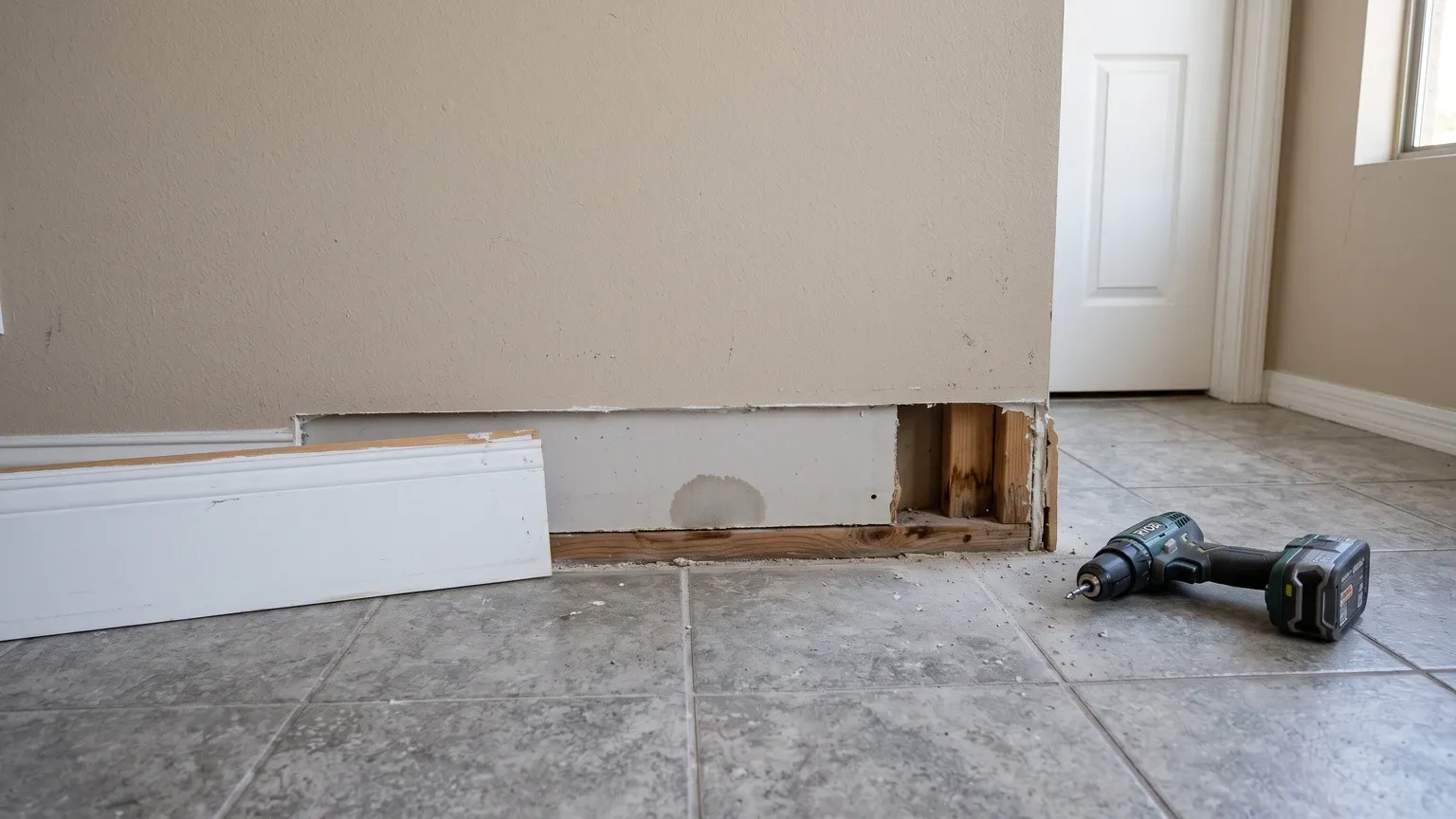
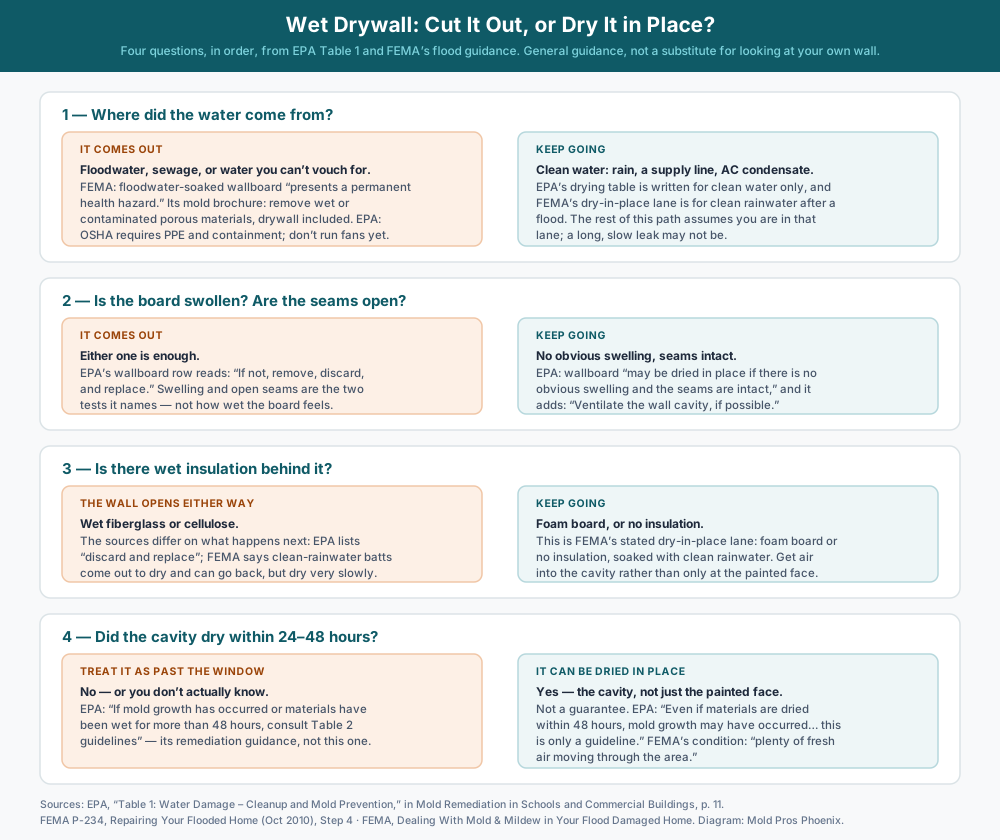
Not always. EPA says wallboard “May be dried in place if there is no obvious swelling and the seams are intact. If not, remove, discard, and replace.” That applies to clean water handled within 24 to 48 hours. The answer shifts with the water source, how long the wall stayed wet, and whether the cavity behind the drywall actually dried.
This guide is general information, not a substitute for looking at your wall. It covers the decision before mold shows up. If there is already visible growth on the drywall, that is a different job, covered in mold on drywall: cleaning vs cutting it out.
What does EPA actually say about wet drywall?
EPA publishes a table called Water Damage – Cleanup and Mold Prevention, in its Mold Remediation in Schools and Commercial Buildings guidance, which EPA says is applicable to other building types. Its scope matters, so here it is exactly: “Guidelines for Response to Clean Water Damage within 24 – 48 Hours to Prevent Mold Growth.” Everything in it assumes clean water and a fast response.
The wallboard row gives drywall a salvage lane with two named tests. No obvious swelling and seams intact means it “May be dried in place.” If either test fails, “remove, discard, and replace.” The same row adds: “Ventilate the wall cavity, if possible.”
Other rows are blunter. Ceiling tiles: “Discard and replace.” Cellulose insulation: “Discard and replace.” Fiberglass insulation: “Discard and replace.” Carpet and backing are listed with a 24 to 48 hour drying window, and the table adds that the subfloor underneath has to be cleaned and dried too. Several rows are conditional in their own way, but wallboard is the only one that gives an explicit fork, dry it or replace it, and names the two tests that decide which.
Is the 48-hour rule really a deadline?
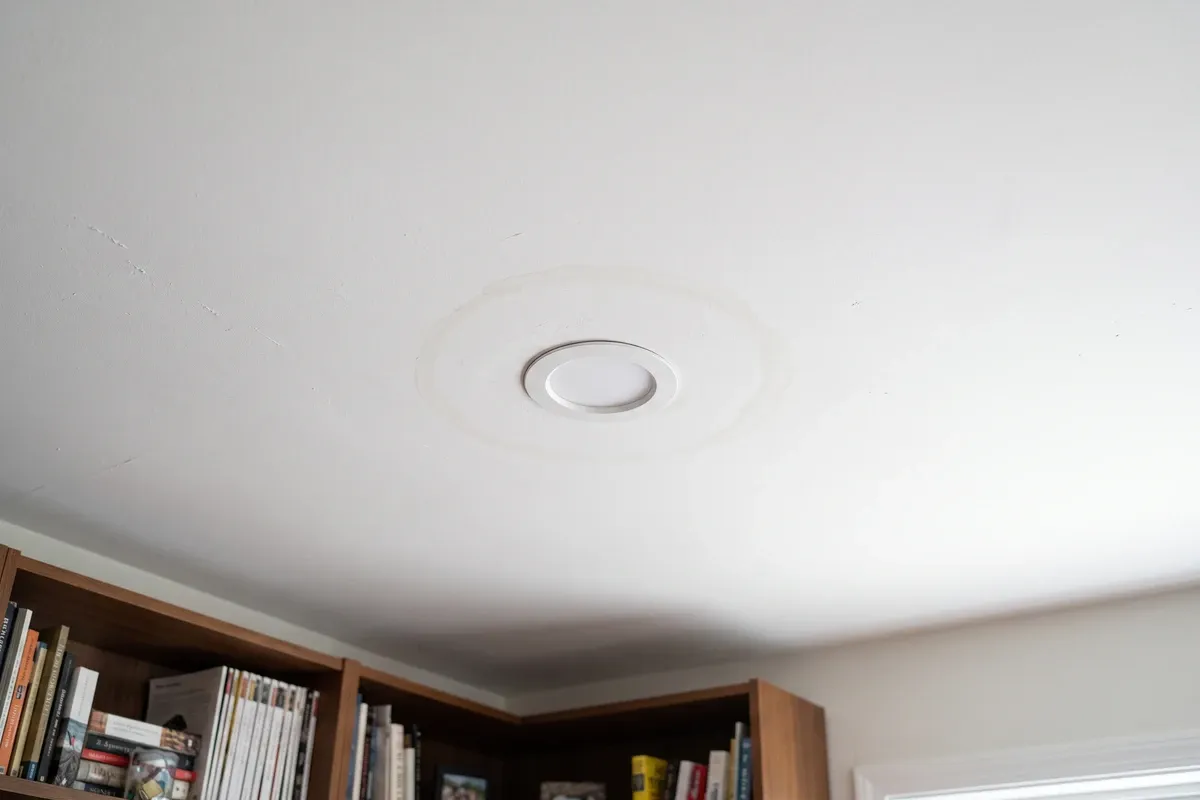
It is a guideline, and EPA says so in both directions. On its brief home guide, EPA says: “If wet or damp materials or areas are dried 24-48 hours after a leak or spill happens, in most cases mold will not grow.” Note the wording: in most cases, and will not. It does not say mold will grow once the window passes.
The footnote to the table is more careful still: “If mold growth has occurred or materials have been wet for more than 48 hours, consult Table 2 guidelines. Even if materials are dried within 48 hours, mold growth may have occurred. Items may be tested by professionals if there is doubt. Note that mold growth will not always occur after 48 hours; this is only a guideline.”
So two things are true at once. Drying inside the window does not guarantee a clean wall, and missing the window does not guarantee mold. Treat the clock as a reason to hurry, then let the wall itself, the swelling, the seams and the cavity, make the call.
Does it matter where the water came from?
Yes, and this is where national articles flatten things. FEMA’s flood-repair book, Repairing Your Flooded Home, splits the decision by water source: “Wallboard that has been soaked by floodwater presents a permanent health hazard. Therefore, this book recommends that you throw out flooded wallboard. On the other hand, if the wallboard was soaked by clean rainwater, it can be dried in place with plenty of fresh air moving through the area.”
That last clause is the condition, not a footnote. FEMA’s salvage lane is drying with air moving through the wall, not leaving a wet wall alone and waiting.
FEMA also gives an actual cut height: “If floodwaters soaked the wallboard at least 4 feet above the floor, you should take down all the wallboard and replace it. If the water level was less than 4 feet deep, remove the lower 4 feet of wallboard.” You will often see “cut 12 to 24 inches above the water line” repeated online. Here is the honest version, and it is stranger than either camp admits: FEMA publishes two different cut heights in two different documents. The book above says 4 feet. FEMA’s short mold brochure, Dealing With Mold & Mildew in Your Flood Damaged Home, says: “If wallboard is soaked, remove to a foot above the water mark and discard,” and its diagram is labeled 12 inches minimum above the flood. So 12 inches is a real federal figure. 24 inches is not a federal cut height we could find in either document. Neither figure is wrong; FEMA simply never reconciled the two, and the safer read after a genuine flood is the longer book’s 4 feet.
One framing point: FEMA’s book is written for flooding. It is not general advice for a supply-line leak, and we cite it for the logic, not as a rule for every wet wall.
It also explains why drywall fails when it stays wet: “Wallboard will act like a sponge, drawing water up above the flood level. It becomes very fragile if it stays wet for long and will fall apart when bumped.” Wicking means the damp line on the wall can sit higher than the water ever did.
If the water might be contaminated, stop. EPA’s table notes that for water contaminated with sewage, or chemical or biological pollutants, “Personal Protective Equipment and containment are required by the Occupational Safety and Health Administration (OSHA),” and “Do not use fans before determining that the water is clean or sanitary.” The restoration industry sorts water into three categories under the IICRC S500 standard, roughly clean-source, some contamination and grossly contaminated, and that sorting drives whether material is dried or discarded. EPA adds that “An experienced professional should be consulted if you and/or your remediators do not have expertise remediating in contaminated water situations.” Working out which one you have after a storm is covered in monsoon flood vs wind-driven rain.
What about the insulation behind it?
Here the two federal sources disagree, and we would rather show you the conflict than hide it.
- EPA’s table lists “Fiberglass insulation” with the instruction “Discard and replace.”
- FEMA’s flood book says: “Fiberglass batts should be discarded if they are muddy. If soaked by clean rainwater, remove them so the rest of the wall can dry. They can be put back in the wall, but it will take a very long time to dry.”
Neither replaces the other. EPA’s table is a clean-water response guide built around 24 to 48 hours. FEMA’s book is flood recovery. They address different scenarios, and on wet fiberglass they point in different directions.
Our read, which is our judgement and not either agency’s position: take the batt out and replace it. A new batt costs little next to opening the same wall twice, and “a very long time to dry” is the opposite of EPA’s 24 to 48 hour target. For other types, FEMA says “Foam board insulation survives best; it may only need to be hosed off,” and that cellulose “will hold water for a long time” and that “flooded cellulose insulation should be replaced.” FEMA’s mold brochure draws the line by rigidity instead: “Remove all wet insulation. Discard all but rigid insulation, which can be reinstalled after disinfecting and drying.” Three federal documents, three shades of the same answer, and all three of them take wet batts out of the wall.
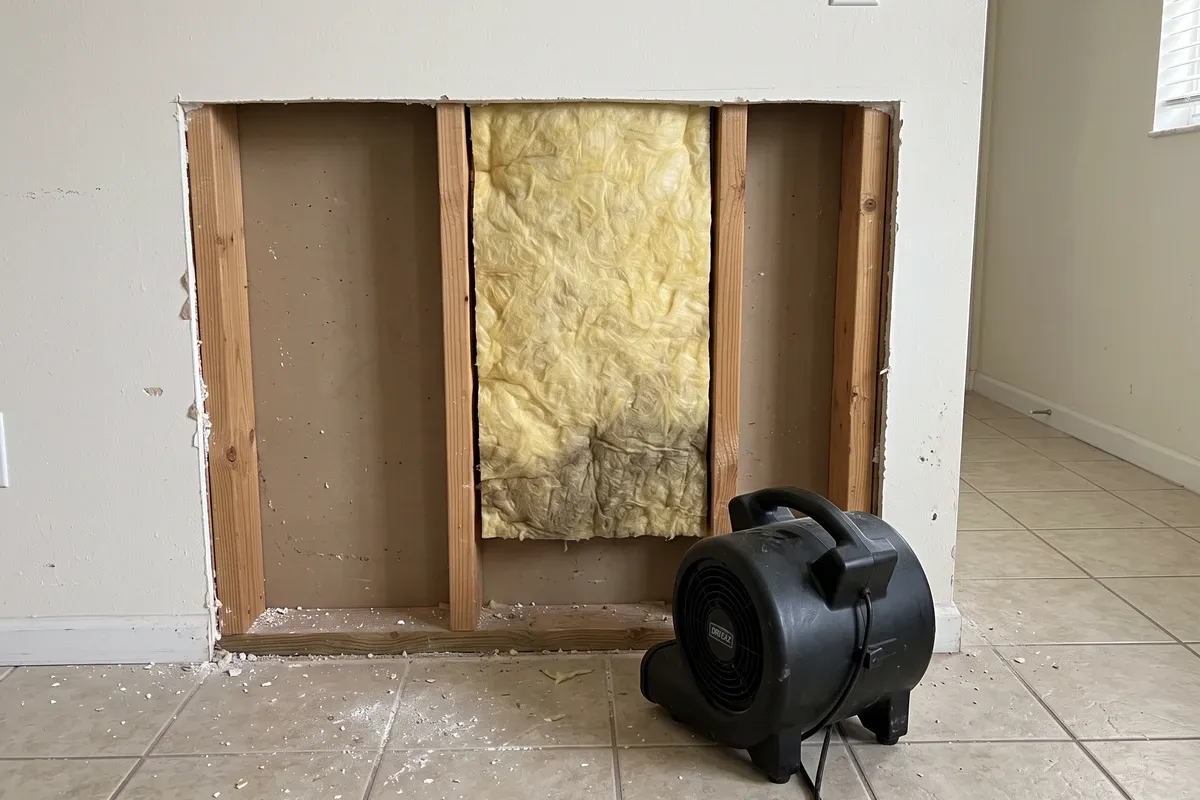
There is a practical catch. FEMA notes “If there is wet insulation, you will have to remove the wallboard in order to take out all the insulation.” So wet batts usually decide the drywall question for you. Dry-in-place is realistic mainly when you have foam board or no insulation and clean rainwater, as FEMA puts it: “you can dry the walls without removing the wallboard using the technique explained below for plaster walls.”
How do you tell if the wall cavity is still wet?
Before you open anything, two things. First, electricity: switch off power to that wall at the panel, and use a hand or cordless tool rather than a corded one. The tool matters on its own, and that part is FEMA’s instruction — a corded drill or saw in a wet structure is its own shock path. Wiring and plumbing share those stud bays, and where FEMA covers drilling elsewhere in the house it puts the rule plainly: “Don’t cut or drill near electric lines or pipes.” For walls it adds that the wiring “is usually at the same height as your electrical outlets.” If you cannot tell what is behind the spot you are about to open, stop there and get someone who can.
Second, age. In a home built before about 1980, the joint compound can contain asbestos and the paint can contain lead. Disturbing either is a hazard of its own, and it is worth having the material tested before you open the wall.
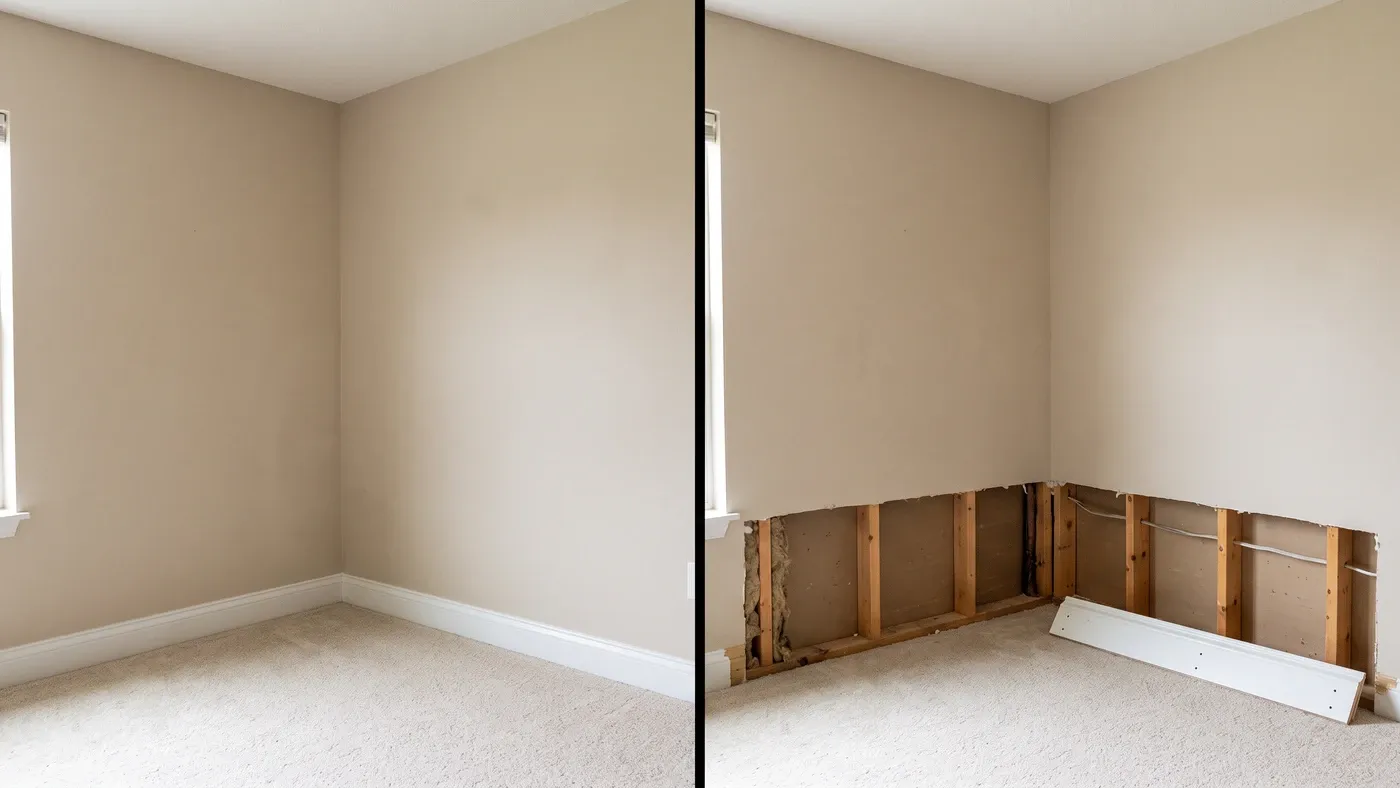
With that done, FEMA describes a low-tech check: “To check for water, take off the baseboard. Stick an awl or knife into the wall about 2 inches above the floor (just above the 2 x 4 wood sill plate). If water drips out, cut or drill a hole large enough to allow water to freely drain. (Use a hand or cordless drill or saw to avoid shock.)”
For spacing, FEMA says: “Depending on the spacing between studs in your walls, make a hole every 16 or every 24 inches. Watch out for the wiring, which is usually at the same height as your electrical outlets.” To dry a wall without removing it, and FEMA states the precondition first, “If the plaster or wallboard is clean and in good shape, you can drill or cut ventilating holes in each wall cavity. Place holes low enough so they will be covered by the baseboard after the wall dries out.” That lines up with EPA’s “Ventilate the wall cavity, if possible.”
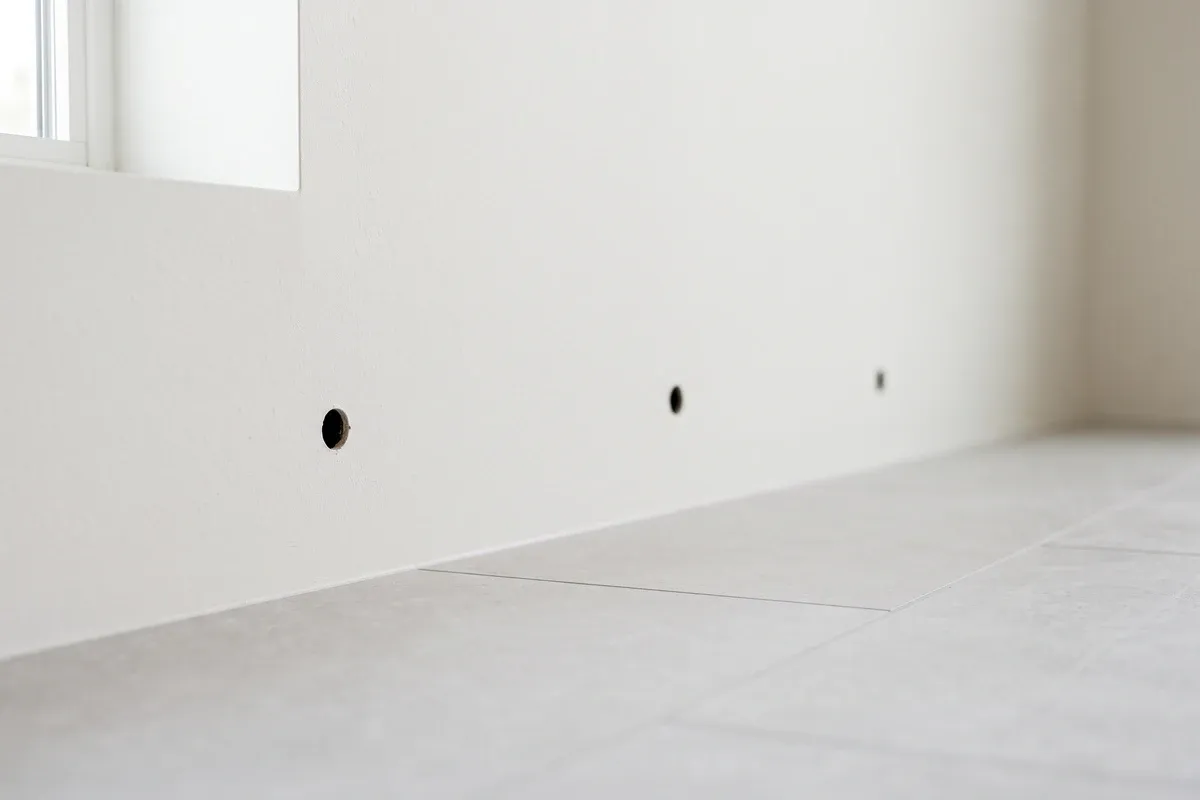
The framing itself usually stays. FEMA: “Unlike wallboard, wet studs and sills that are touched by floodwaters do not need to be thrown out,” and “wet wood studs and sills do not need to be replaced if they are allowed to dry properly.”
Why do Phoenix walls fool you?
Desert air dries the painted face of a wall first. Within a day the surface can look and feel fine while the cavity, the bottom plate and the batt are still wet. Both federal sources tell you to open or ventilate the cavity, and that is the step people skip because the wall looks done.
Vinyl wallcovering makes this worse. FEMA: “Vinyl wallcovering seals the wall and prevents drying.”
The water story also changes the answer. Arizona’s monsoon “officially runs from June 15th to September 30th,” according to the National Weather Service. Roof and window intrusion in that window is usually the clean-rainwater lane, which is the case where FEMA says drywall can be dried in place. So advice to rip out everything overshoots for many monsoon leaks, although rain that has passed through an attic or old insulation may not stay clean. AC condensate overflow and slab or supply-line leaks are a different water story, and they often run longer before anyone notices. If you are sorting out who pays, see does insurance cover mold in Arizona.
What if it has been wet longer than that, or there is already mold?
Past the 48-hour guideline, EPA’s footnote sends you to its Table 2, the guidance for when mold growth has occurred or materials stayed wet. That is where the decision stops being a simple cut-or-dry question.
For a small area, EPA says: “If the moldy area is less than about 10 square feet (less than roughly a 3 ft. by 3 ft. patch), in most cases, you can handle the job yourself”. EPA also says porous materials “may have to be thrown away if they become moldy.” What mold on drywall looks like and how to decide between cleaning and cutting is in mold on drywall. Whether hidden mold behind a wall is a health concern is in is mold behind drywall dangerous. For a whole-house flood, the order of work is in the flood recovery checklist.
If the cavity test finds standing water, the wall has been wet past the window, or wet insulation means opening a large section, water damage restoration is the service that handles extraction, drying and the tear-out. If drywall mold is already confirmed, see drywall mold removal. You can also browse the rest of our mold guides.
Sources
- U.S. EPA, “Table 1: Water Damage – Cleanup and Mold Prevention,” from Mold Remediation in Schools and Commercial Buildings: epa.gov
- U.S. EPA, “A Brief Guide to Mold, Moisture and Your Home”: epa.gov
- U.S. EPA, “Mold Cleanup in Your Home”: epa.gov
- FEMA P-234, Repairing Your Flooded Home (October 2010), Step 4, “Dry Out Your Home”: nchh.org
- FEMA, Dealing With Mold & Mildew in Your Flood Damaged Home: fema.gov
- National Weather Service Flagstaff, Arizona monsoon information: weather.gov
- IICRC S500 Standard for Professional Water Damage Restoration (the three water categories, described not quoted): iicrc.org