What Is a Mold Clearance Test?
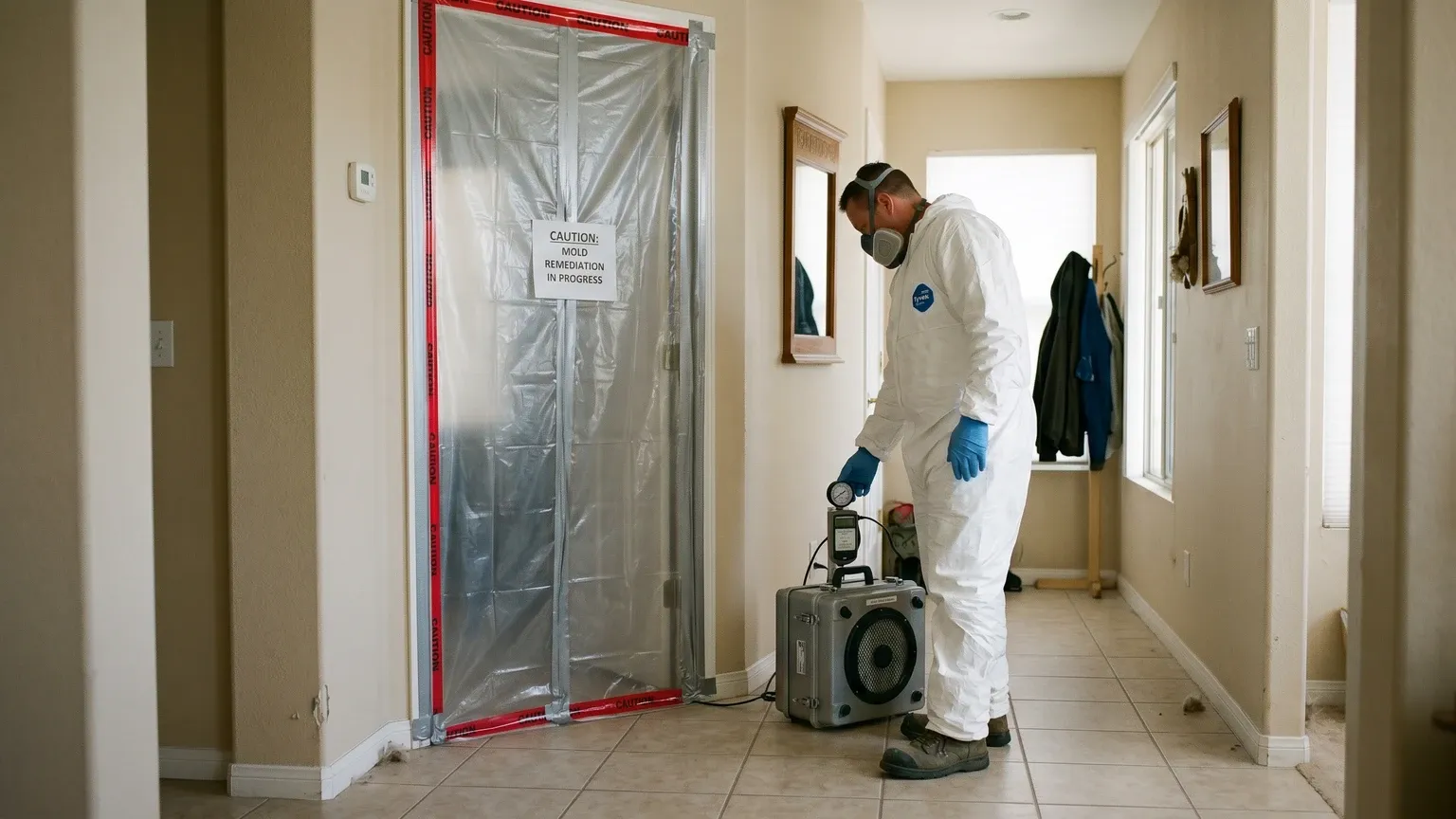
A mold clearance test, also called post-remediation verification (PRV), is an independent inspection confirming that a mold remediation job was completed correctly. A third-party verifier checks that the work area is visually clean and dry, the moisture source is fixed, and the space is safe to reoccupy. It is the receipt that proves the job is done.
What a mold clearance test (post-remediation verification) checks
Remediation contractors can make honest mistakes, and some make dishonest ones. The clearance test exists because the people who did the work have a financial interest in saying it is finished. An independent verifier has no such interest.
The IICRC S520 standard, the professional framework for mold remediation, incorporates this conflict-of-interest principle as a core part of post-remediation verification. The verifier and the remediator should not be the same party.
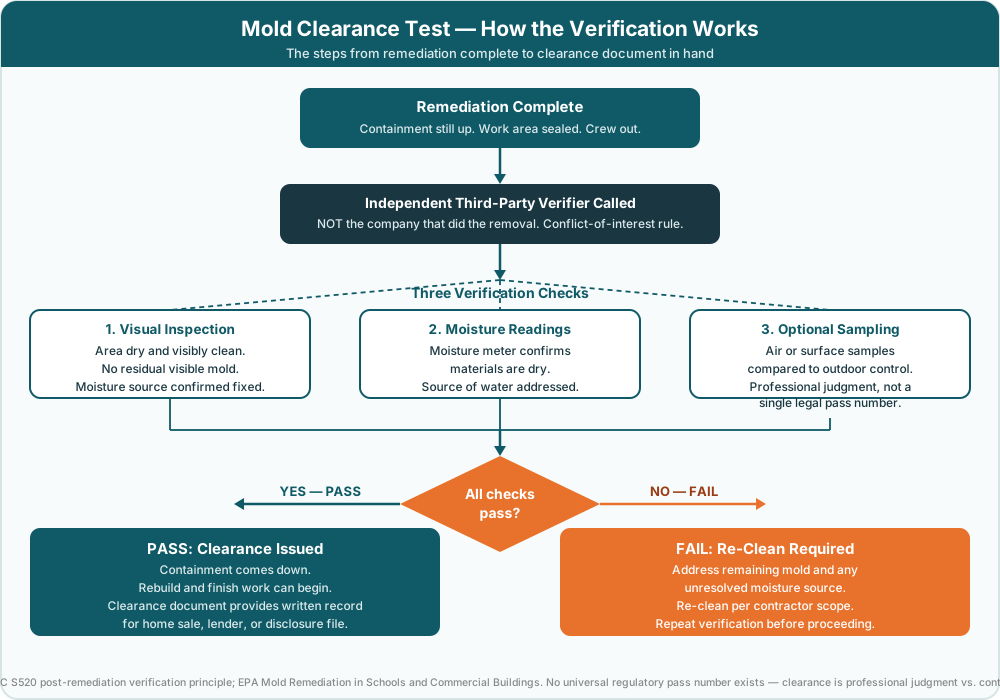
What the independent verifier actually looks for covers three areas.
Visual inspection. The work area should be visibly clean. No residual mold growth should remain on any surface. Materials should look dry. There should be no visible debris or dust from the remediation that could harbor spores.
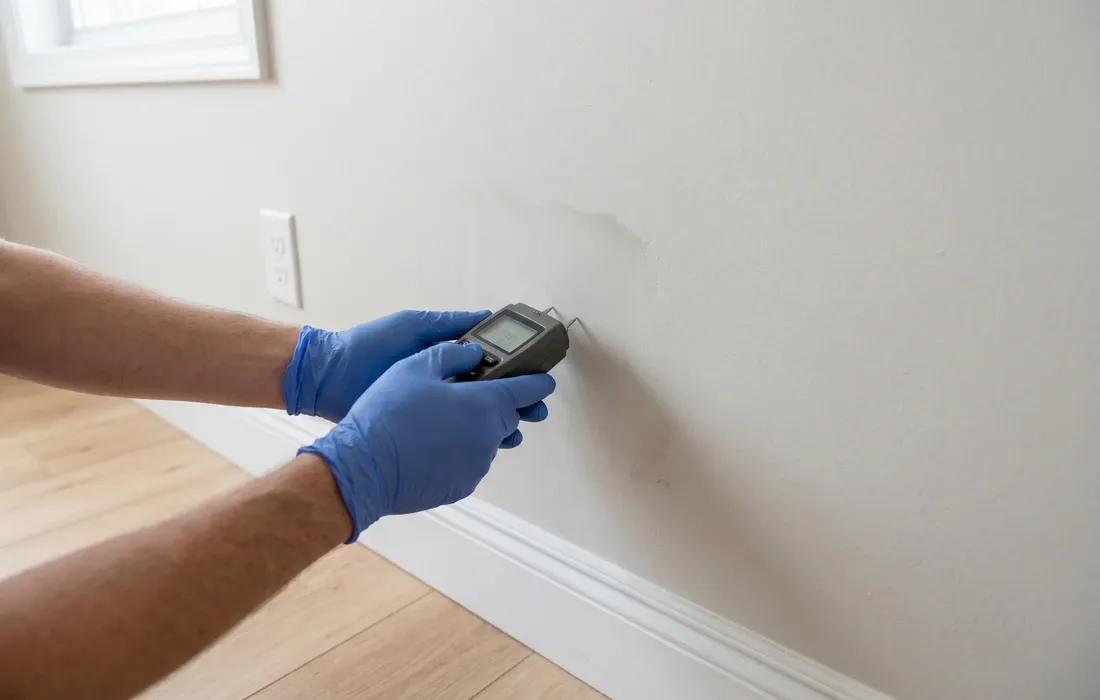
Moisture confirmation. A moisture meter confirms that building materials in the affected area are at normal, dry readings. This matters because mold does not grow on dry materials. If the meter finds elevated moisture in drywall, framing, or flooring, the area is not ready regardless of how it looks.
The moisture source, specifically. This is the piece most homeowners overlook. A clearance check is not just about the mold that was removed. It also confirms that the source driving the mold, the AC condensate leak, the slab leak, the roof intrusion, has been corrected. Mold that was cleaned but whose moisture source is still active will return. A verifier who does not check the source is not doing a complete clearance.
The optional sampling piece
Not every clearance test includes air or surface sampling. A visual inspection with moisture readings is often sufficient for a straightforward residential job, particularly when the remediation scope was clearly defined, the moisture source is confirmed repaired, and no unusual conditions are present.
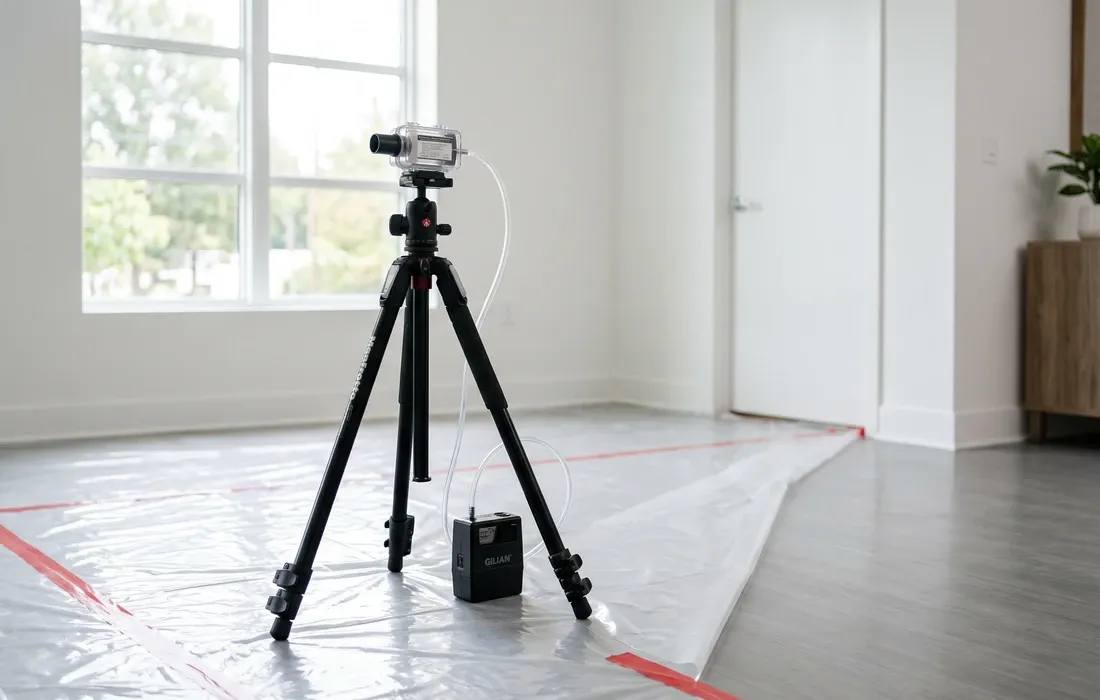
When sampling is done, air samples or surface swab samples are collected inside the work area and compared to samples taken outside the home. The outdoor sample is the control. The goal is for indoor post-remediation counts to be comparable to outdoor counts, not zero. Mold spores exist everywhere at low levels; the question is whether the remediated space has elevated counts relative to the baseline.
Here is the part that surprises many homeowners: there is no single regulatory number that defines a passing result. The EPA’s guidance on mold remediation does not set a spore count threshold. The IICRC S520 does not establish a universal numeric pass/fail limit. Clearance is a professional judgment call, comparing post-remediation samples to the outdoor control, evaluating visual and moisture findings together, and reaching a documented conclusion. Any company that gives you a specific legal limit number without that context is overstating what the standards say.
That professional-judgment structure is also why the verifier’s qualifications matter. A licensed industrial hygienist or a certified mold assessor has the training to interpret the full picture. Someone simply looking at a number on a report does not.
Who should perform it and why it matters
The conflict-of-interest issue is worth stating plainly. If the company that removed the mold also does the clearance inspection, they are evaluating their own work. That creates an obvious incentive problem, and it is exactly the situation the IICRC S520 verification principle is designed to prevent.
In practice this means hiring a separate inspector, typically an independent industrial hygienist or a licensed mold assessor, to do the post-remediation check. Your remediation contractor should support this. A reputable company will not resist an independent clearance: it protects them from callback disputes as much as it protects you.
If a contractor actively discourages you from getting an independent clearance, that is worth noting.
For more on what a full mold inspection covers before and during remediation, see our mold inspection service page.
What a PASS actually means
A passing clearance does not mean there is zero mold in the home. It means the remediated area meets the professional criteria for clearance: visually clean, dry, with no active moisture source driving regrowth, and (if sampled) comparable to outdoor baseline counts.
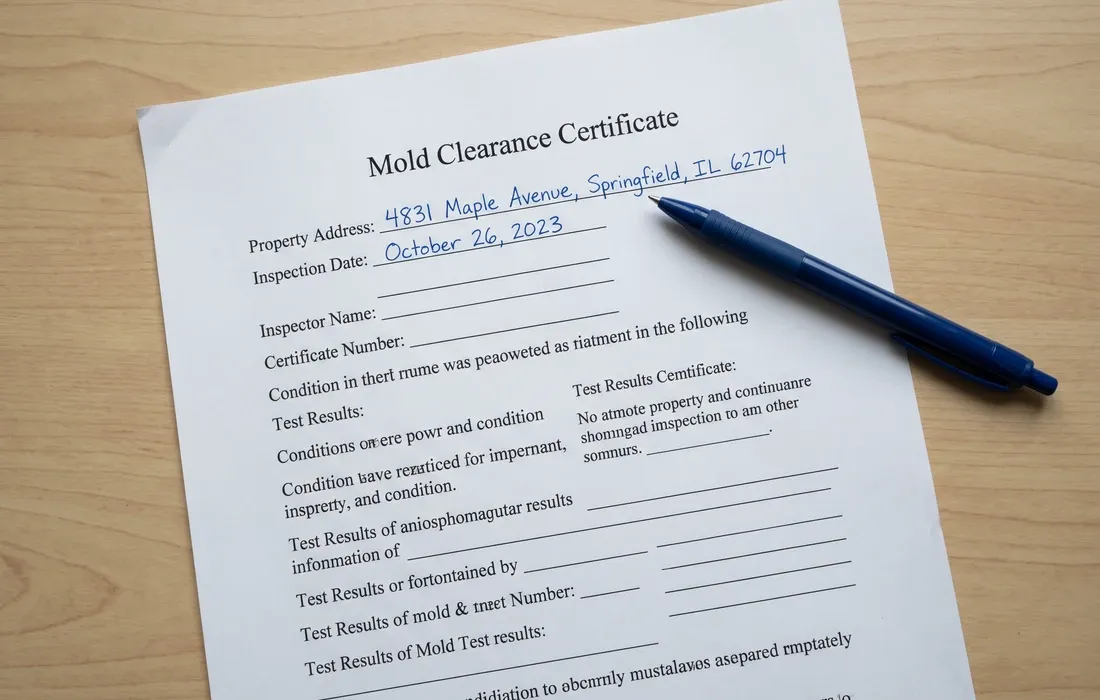
What you get from a passing clearance is a written document: a post-remediation verification report. This report describes the work scope, the date of inspection, the methods used, the findings, and the professional’s conclusion. It is a dated, signed record.
That record has real practical value in several situations.
When you need a clearance test
After any professional mold remediation. If you hired a contractor to remediate mold in your home, getting an independent clearance test is the prudent final step. It confirms the work was done to standard before you tear down containment, put back drywall, and move back in.
Before a home sale closes. If the property has a mold history and remediation was done, a clearance document becomes part of your disclosure file. Arizona sellers must disclose known mold and water-damage history. See our guide to Arizona mold disclosure rules for home sellers for the full picture on that obligation. A clearance report doesn’t just satisfy a disclosure, it documents that the problem was resolved correctly, which is a meaningfully stronger position than disclosure without documentation.
When a buyer or lender requires it. In some home sale transactions, a buyer’s lender or the buyer’s own inspector will require evidence of post-remediation clearance before the loan closes. This is increasingly common when mold or water damage history appears on the SPDS.
When mold was found during the inspection period. If a home inspector flagged mold and remediation is agreed to as part of the BINSR resolution, the buyer may require a clearance test before releasing final approval. Our guide to mold found during a home inspection in Arizona covers the BINSR process in detail.
What a clearance test costs in Phoenix
A post-remediation clearance inspection in Phoenix commonly runs $250 to $500. That range reflects a visual inspection and moisture readings. If air or surface sampling is included and requires lab analysis, the cost will be higher depending on the number of samples and the lab’s turnaround.
The clearance test is billed separately from the remediation itself. It is an add-on you typically arrange with a different company than the one that did the removal.
The clearance test is a small line item next to the remediation itself, so budget for it as part of the overall job rather than a major separate expense.
The Phoenix-specific context
In Phoenix, the most common remediation jobs involve AC condensate overflows into ceiling drywall, monsoon-season roof intrusions into attics, and slab-leak-related wall damage. Each of those has a specific moisture source that needs to be independently confirmed as corrected, not just treated.
A clearance inspector in Phoenix who doesn’t verify the condensate drain or check for active moisture at the slab is not doing a complete job. The visual pass without the moisture confirmation misses the thing most likely to cause mold to return.
That is also why the clearance check belongs to a separate inspector: the company that handled the removal may have a strong incentive to call the job done before confirming the underlying plumbing or HVAC issue is truly resolved.
For broader context on how mold spreads through Phoenix homes, our Phoenix mold guides hub covers the local drivers in detail.
Sources
- IICRC S520: Standard for Professional Mold Remediation. The professional framework governing mold remediation practice and post-remediation verification. The standard’s verification principle holds that the entity performing clearance should be independent from the entity that performed the remediation. Published by the Institute of Inspection, Cleaning and Restoration Certification. Cited for the conflict-of-interest principle and the post-remediation verification structure; specific section numbers are not quoted verbatim here.
- U.S. EPA: Mold Remediation in Schools and Commercial Buildings. epa.gov. EPA’s remediation guidance describing the “fix the moisture, remove the mold, verify” framework.
- U.S. EPA: A Brief Guide to Mold, Moisture, and Your Home. epa.gov. The source for the moisture-first principle (mold cannot grow without a moisture source) and for the point that no federal limits exist for airborne mold, so clearance is judged by comparison to an outdoor control rather than a fixed number.
- Mold Pros Phoenix: Mold Cost Model (2026). Internal sourced data file reconciled from a 30-company Phoenix audit plus national cost guides, 2026-06-25. Clearance test range: $250 to $500.