Phoenix Dry Air Mold Myth: Why the Desert Hides It
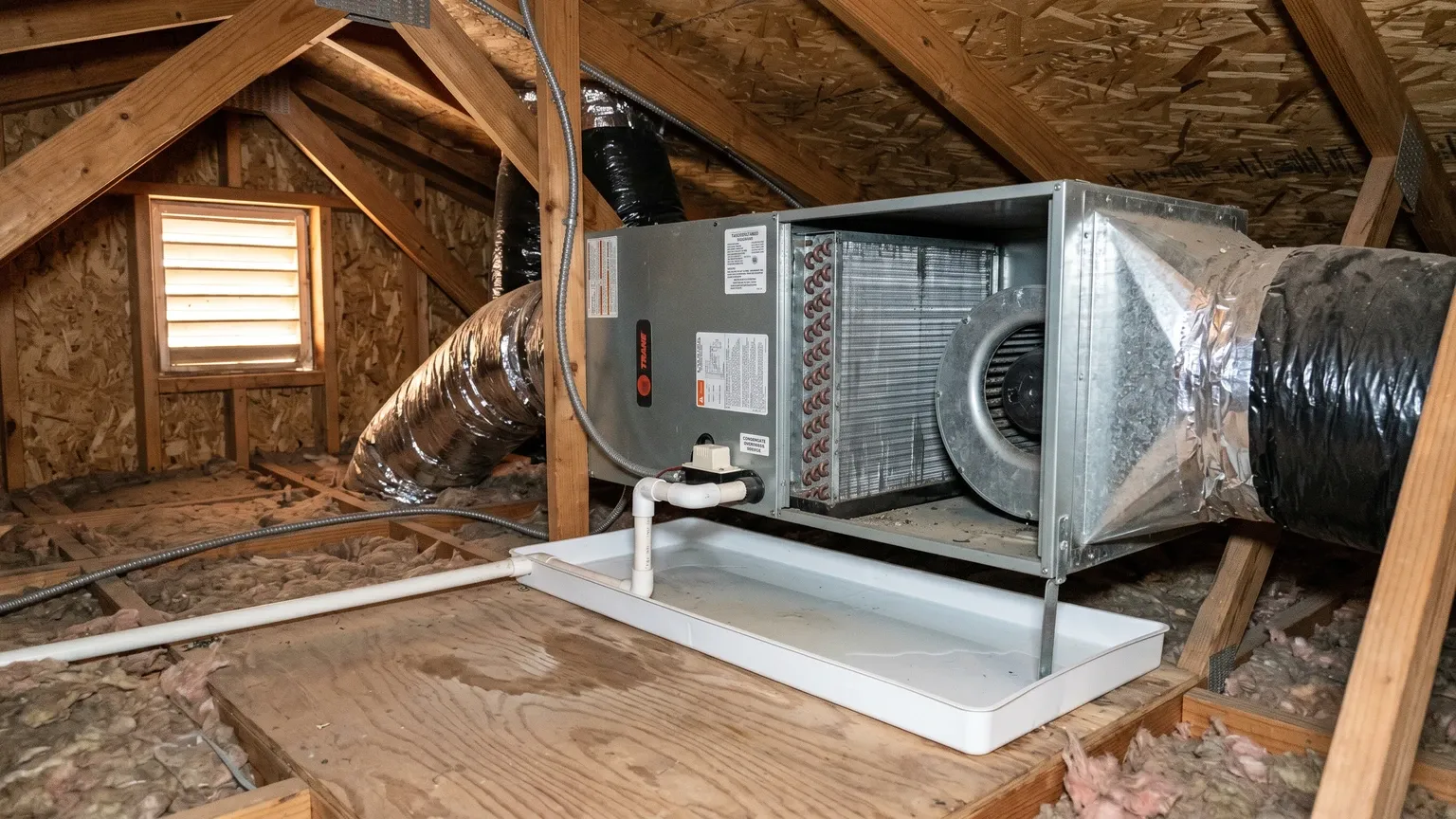
No. Phoenix’s dry air does not prevent mold; it hides it. Mold grows on wet surfaces inside walls, in AC condensate pans, and under slabs regardless of outdoor humidity. On the order of 1.9% of occupied Phoenix-metro homes, tens of thousands of households, reported mold in the 2023 American Housing Survey. As the EPA puts it, the key to mold control is moisture control.
I’m Nik Crawley, and I built this site after getting sick from mold in my own homes. Not once. Multiple times, across multiple states: California, Oregon, Tennessee, and Utah, where I live now. I am not a Phoenix local, and I am not a doctor or a mold remediation professional. What I am is a person who fell for the desert myth in my own life and spent years figuring out why.
Phoenix doesn’t have less mold risk than a humid city. It has concentrated, invisible risk. The dry air is what makes it dangerous, because it lulls people into not looking. The desert doesn’t protect your home from mold. It hides it.
Phoenix homes are not immune to mold. According to the U.S. Census Bureau and HUD American Housing Survey 2023, on the order of ~1.9% of occupied Phoenix-metro homes, tens of thousands of households, reported visible mold in the prior 12 months. That is below the national rate, not zero. The desert suppresses mold on exposed outdoor surfaces, where the sun and low humidity do their job. It does nothing about the water that gets inside a wall from a clogged AC drain line, a slab leak, or a monsoon roof crack. Mold grows where the surface is wet, not where the air is humid. Those are different things, and in Phoenix the gap between them is exactly where the problem hides.
Why low humidity outdoors doesn’t matter inside your walls
The case for dry-air safety is not stupid. Low humidity genuinely suppresses mold on exposed surfaces. Bread left on a Phoenix counter in January goes stale before it molds. Grout in an outdoor tile patio stays clean. Wood furniture left in a garage lasts decades without rot. The science behind this is real: mold needs moisture at the growth site, and dry air pulls moisture away from exposed surfaces. Outdoors, in open spaces, the desert’s low relative humidity is a genuine mold suppressant.
The problem is that this is true outdoors, and you do not live outdoors. You live inside a structure full of enclosed spaces (wall cavities, attic bays, crawl spaces, the interior of an HVAC cabinet) where the outdoor air does not reach. The moisture that feeds mold in those spaces comes from inside the building: a pipe, a condensate system, a flooding event. The dry-air argument simply does not apply to them.
The EPA is direct on this point. Per their Brief Guide to Mold, Moisture and Your Home: “The key to mold control is moisture control.” Not humidity control. Moisture control. And importantly, the EPA gives no published numeric threshold at which mold begins to grow as a function of relative humidity, only a management target (keep indoor RH below 60%, ideally 30 to 50%). The reason there is no single threshold is that mold growth depends on moisture at the surface of a material, not the RH reading on a thermostat in a different room.
This is the steelman version of the “dry climate is safe” argument, and it fails at exactly the point where Phoenix homes actually produce mold.
The six places dry air can’t reach
Maricopa County’s federal flood-insurance claims cluster in the July-through-September monsoon window (most of the last 47 years’ OpenFEMA claims fall there). That is one of the cleaner measures of when Phoenix homes get wet: the outdoor air is dry for nine months, then several moisture signals spike at once in a 15-week window that catches homeowners who spent the dry season not thinking about water damage.
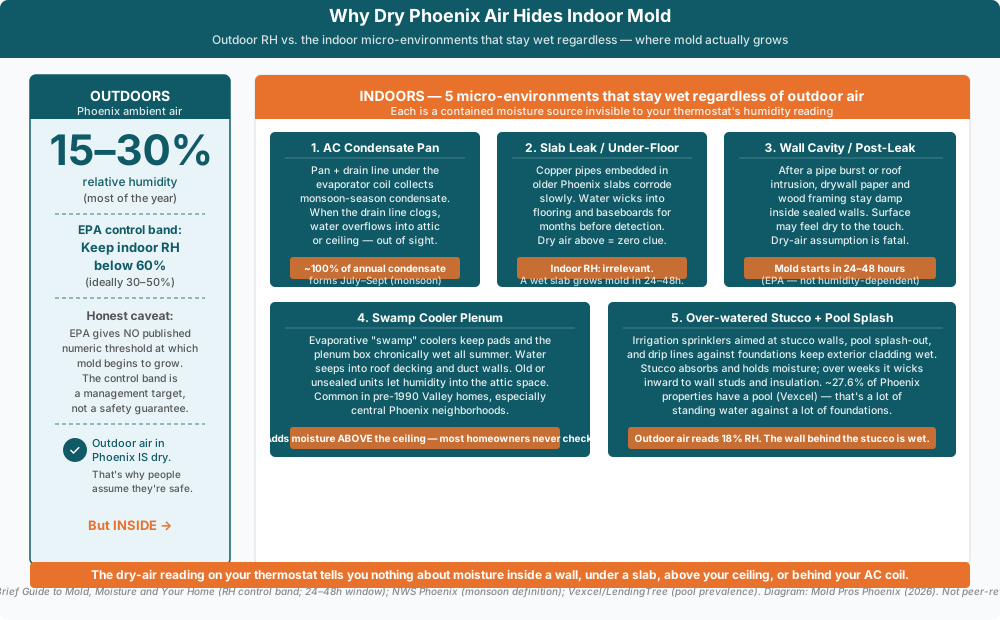
Here is where the water actually comes from in a Phoenix home. None of these six sources are meaningfully affected by the outdoor humidity reading.
1. AC condensate lines and overflow pans
Every central AC in Phoenix runs an evaporator coil that pulls water out of the indoor air, and the large majority of a typical home’s annual condensate forms in the July-through-September monsoon. When the drain line clogs, the overflow pan fills and soaks the air-handler cabinet, attic floor, or ceiling below, where wood and drywall stay wet long enough to grow mold while the outdoor air reads 22%. I walk through all six drivers in detail in the desert mold explainer.
2. Slab leaks
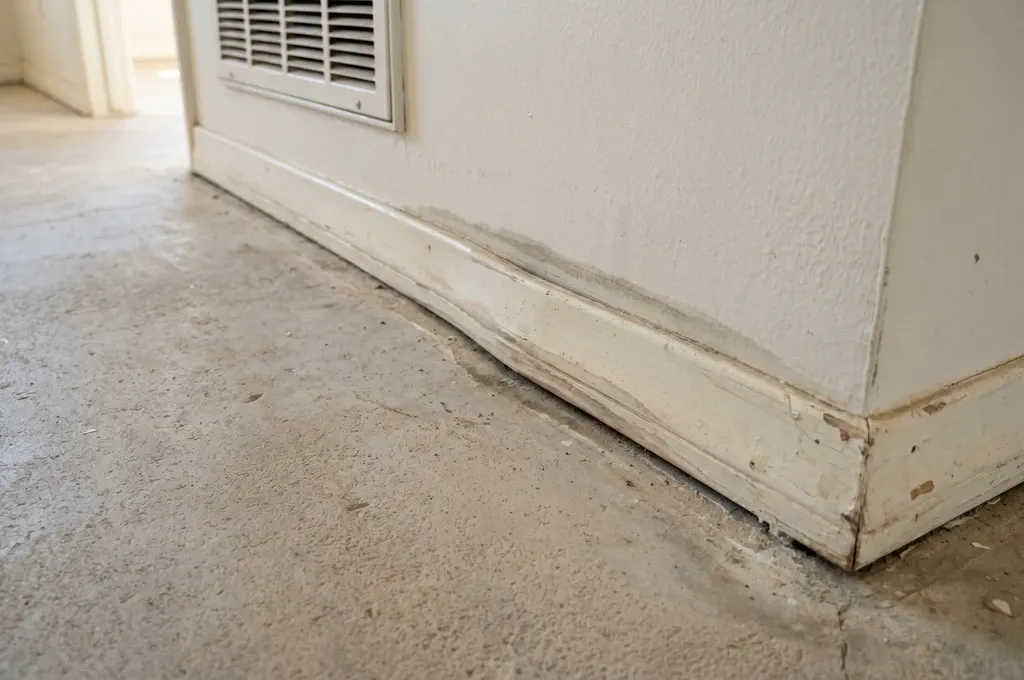
A large share of Phoenix housing built between 1950 and 1980 used copper pipes embedded in the concrete slab; as they corrode, water wicks up into flooring and baseboards for months before anyone notices. This slab-leak pattern is specific to older Phoenix and Scottsdale neighborhoods, and the dry surface above is exactly what keeps owners from suspecting the wet wall base behind it.
3. Monsoon roof and window intrusion
The Arizona monsoon runs June 15 to September 30 (NWS), and the flat, low-slope roofs common on Valley homes built before 1985 pond water during its intense storms, so a hairline parapet crack or failed flashing seal sends water straight into the attic and ceiling. With summer attic temperatures over 140°F, that intrusion can start mold the same weekend even though the outdoor air is bone dry.
4. Evaporative swamp coolers
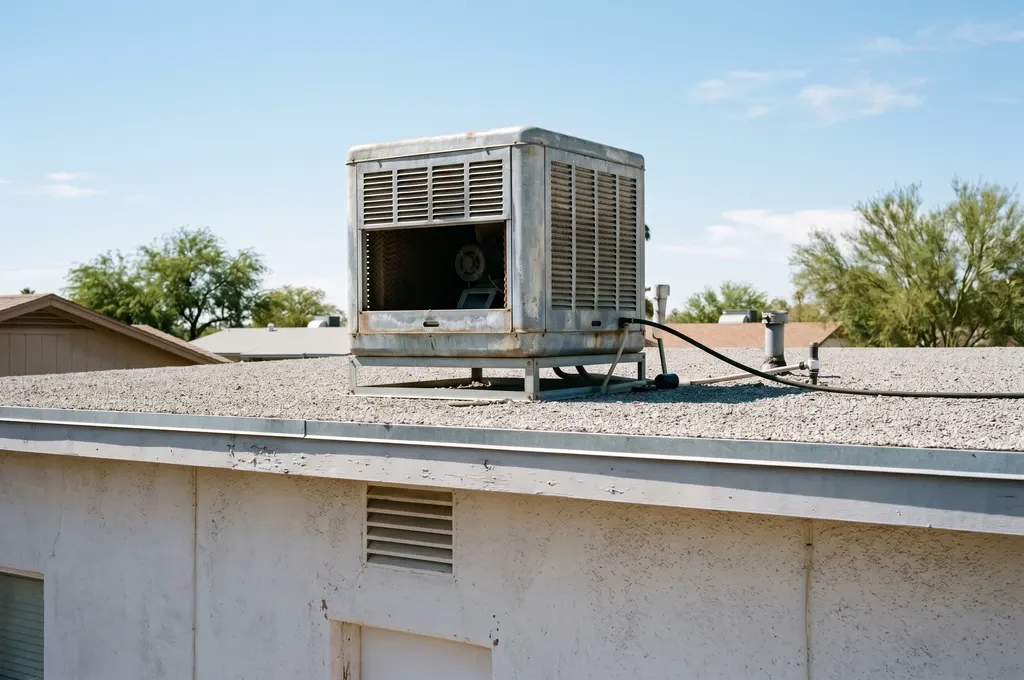
Swamp coolers keep their pads and reservoir wet all cooling season, and in older units (common in pre-1990 central Phoenix, Tempe, and older Scottsdale) water seeps past deteriorated seals into the roof deck and ductwork, leaving the plenum itself a chronic place for mold to grow. The desert mold paradox analysis covers the seasonal timing and specific failure modes.
5. Post-pipe-burst drywall
After a pipe bursts and the water is mopped up, Phoenix’s low-humidity air dries the visible surfaces within hours, but water that wicked into the framing, insulation, and back of the drywall stays damp inside the sealed wall for days or weeks. Surface dry is not structurally dry, so the dry-air assumption leads homeowners to declare victory and skip the professional drying step that would have caught the mold.
6. Over-watered stucco and pool splash
About 27.6% of Phoenix properties have a pool, the highest share of any major U.S. metro (Vexcel). Pool splash, sprinklers aimed at siding, and drip lines against foundations keep stucco chronically damp, and because stucco absorbs and holds moisture, that water wicks into the wall framing and insulation behind it over weeks even while the outdoor air reads 18%.
The two failure modes that both cost people money
Symmetric treatment matters here. There are two wrong answers, not one.
The first wrong answer is complacency: “this is a desert, we don’t get mold, that smell is probably just the AC ductwork.” This is the failure mode this piece argues against. It leads to mold running six months behind a wall instead of being caught in the first two weeks, and it turns a cheap drain-line clearing into a four-figure remediation job.
The second wrong answer is panic: “I found a stain, it’s black mold, I’m going to get sick, my house is toxic.” Phoenix reports mold below the national average, and most household mold is remediable by a licensed professional. The phoenix mold statistics guide covers what the real numbers look like: not a reason to panic, but not a reason to ignore a musty smell either. For what mold actually does to your health, the place to go is the CDC and your doctor, not a website. “Toxic black mold” as a phrase generates more fear than useful action; finding the moisture source early and drying or repairing it is what helps.
Both failure modes produce the same outcome: the problem runs longer than it should, costs more than it needed to, and affects more of the building than it would have if caught at the start.
What the dry air actually does (and doesn’t do)
Let’s be specific about what the low-humidity outdoor environment genuinely does and does not do for a Phoenix home.
It does suppress mold on exposed exterior surfaces: brick, concrete, wood siding that dries quickly after rain. It does mean surface mold on bathroom tile, caused by showers, is less common than in a humid climate where ambient humidity keeps the tile damp after every shower. It does make a musty smell, when it appears, a sharper signal than in Houston, where ambient dampness creates baseline mustiness everywhere. Our mold in the desert explainer covers this mechanism in depth.
What it does not do is reach any of the indoor moisture sources above: a wet wall cavity, a monsoon-soaked attic, a slab leak, a swamp-cooler plenum, or the studs behind a pipe burst that feels dry on the surface. The outdoor air and the indoor micro-environment are separate systems, and the dry-air assumption crosses a boundary that does not exist.
The practical upshot
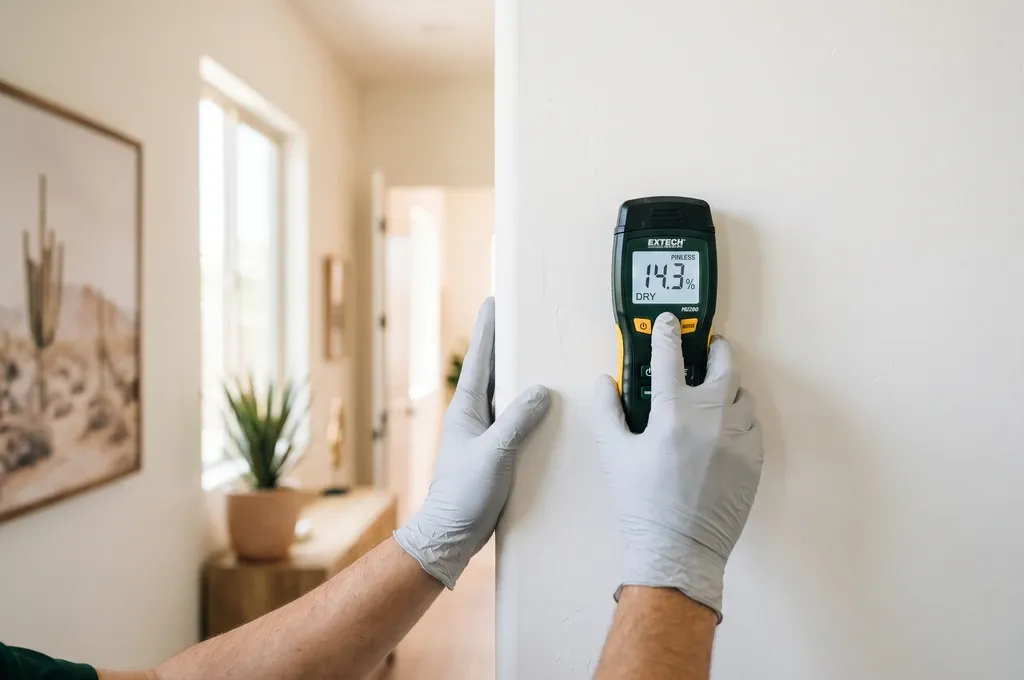
If you have a persistent musty smell in your Phoenix home and the obvious places (under sinks, around the AC handler, in closets) don’t turn anything up, the next step is not to keep looking by eye. It is to stop trusting the dry air and get a moisture reading on the walls.
A professional mold inspection uses moisture meters and sometimes thermal imaging to locate dampness through finished surfaces without opening walls. That is the appropriate tool for this specific problem: a moisture source invisible to the outdoor-air assumption. In Phoenix, the inspection typically starts with the air handler and its condensate system, then works through the attic, the slab-adjacent walls, and any room that had a water event in the past few years.
The kicker is the same as the thesis. The desert doesn’t protect your home from mold. It just hides it.
For the full clinical picture on mold and health, what the established science says, what is still being studied, and where the limits of current evidence are, talk to a doctor, not a mold website. The CDC’s mold health resource is the appropriate place to start. For Phoenix-specific removal, use a licensed, insured local professional, not DIY for anything larger than a small surface area. If you want to see what a professional inspection actually involves, the inspection process walks through every step.
Sources: EPA — A Brief Guide to Mold, Moisture and Your Home (moisture control as key to mold control; 24–48-hour drying window; RH control band below 60%, ideally 30–50%; no published numeric mold-growth RH threshold); CDC — About Mold (respiratory and allergy health effects); U.S. Census Bureau / HUD American Housing Survey 2023 (Phoenix-metro mold prevalence ~1.9% of occupied homes, tens of thousands of households); NWS Phoenix — Arizona Monsoon (June 15–September 30 definition); OpenFEMA — NFIP Redacted Claims (Maricopa County flood claims cluster in July–September, 1978–2025); Vexcel — How Many Pools Are in Phoenix (27.6% Phoenix pool prevalence, highest of any major U.S. metro). The mold-onset window is an EPA indicator, not a predictor for individual circumstances. Nothing in this article is medical advice.