Older Phoenix Homes and Mold Risk: What the Data Shows
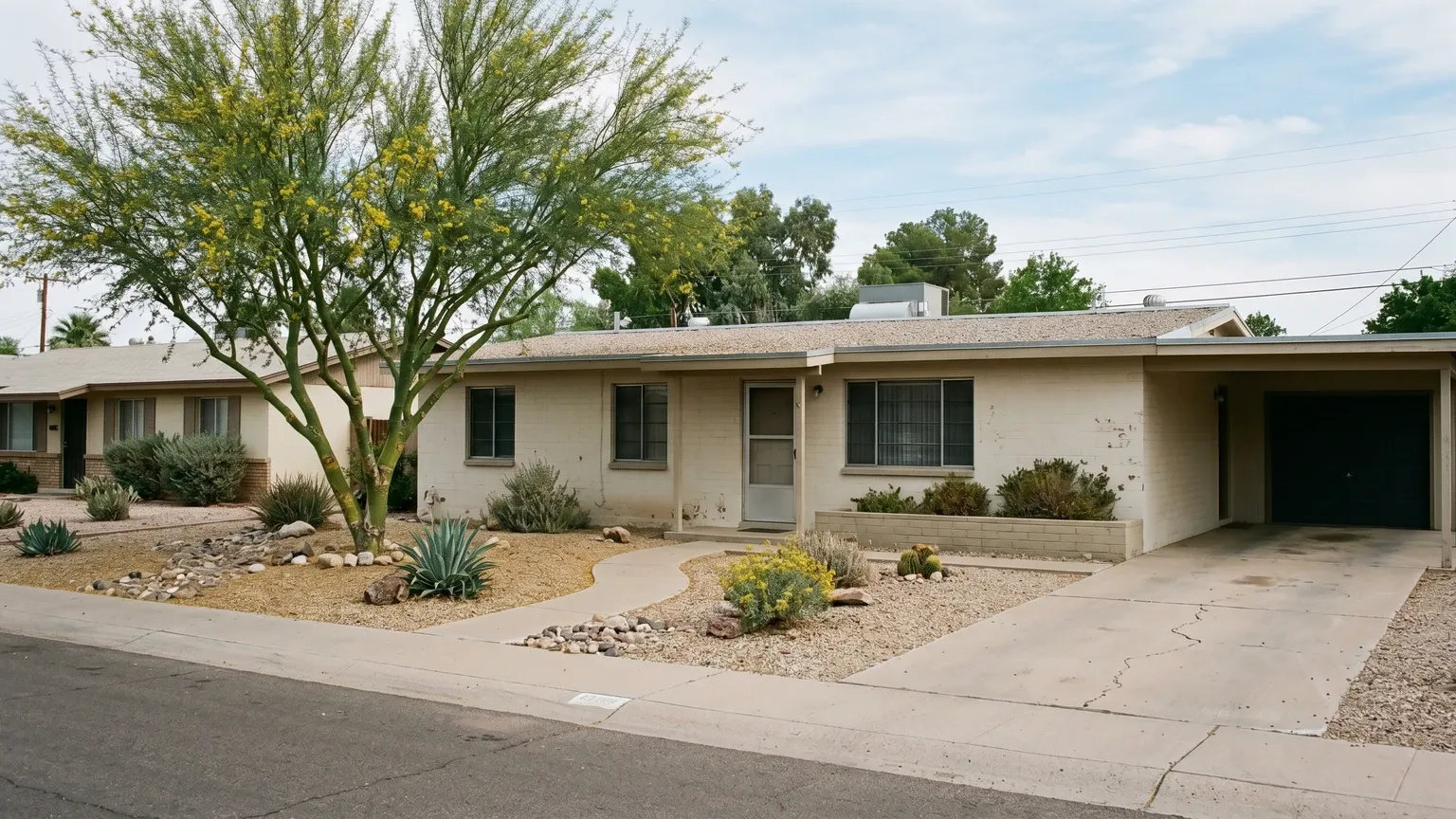
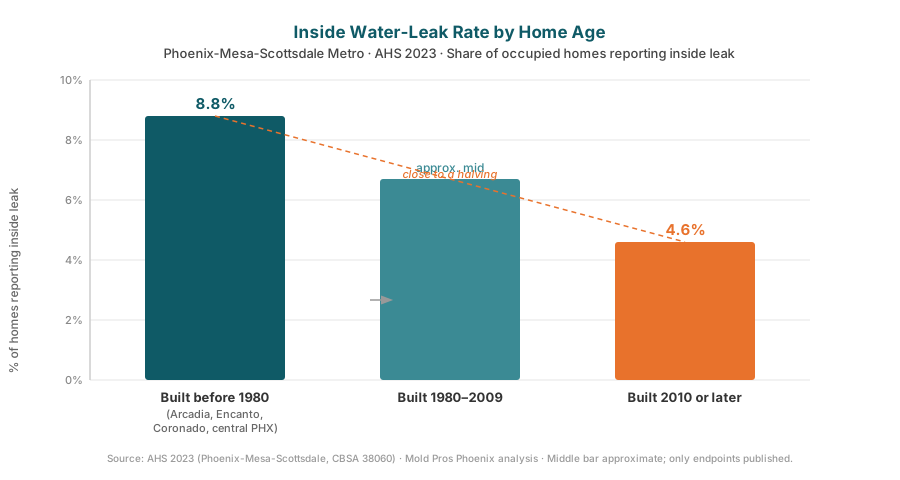
Federal housing survey data for 2023 shows that Phoenix homes built before 1980 report inside water leaks at roughly 8.8% — nearly double the 4.6% rate for homes built in 2010 or later. Leaks drive mold. That gradient is the most reliable signal in the data, and it means the age of a Phoenix home is one of the strongest predictors of where mold risk concentrates.
What the federal data actually shows
Our Phoenix mold statistics report re-analyzed the U.S. Census Bureau / HUD American Housing Survey (AHS) 2023 for the Phoenix-Mesa-Scottsdale metro — 1,476 occupied interviews, weighted to households, with 90% confidence intervals from 160 replicate weights. The headline finding is that Phoenix overall reports mold at 1.9% of occupied homes, below the 2.9% national rate. That is the reassuring number. The age breakdown is the more useful one for anyone looking at an older home.
Inside water-leak rates fall on a clean gradient as homes get newer: roughly 8.8% for homes built before 1980, down to about 4.6% for homes built 2010 or later. That is close to a halving across the age range. The direction of the mold numbers follows the same pattern: pre-1980 homes report mold around 2.9% (coincidentally close to the national rate), with newer homes lower. But those sample cells are small, so we treat mold-by-age as directional only and let the much steadier leak gradient carry the point. The causal logic is sound: more leaks produce more standing moisture, and standing moisture in a warm enclosed space produces mold.
One honest limit worth stating: the AHS reports self-identified leaks by the occupant, not by an inspector. Small leaks behind walls that have not yet surfaced as a visible stain or running water are not captured. The actual leak gradient in the housing stock is likely steeper than what occupants report — older homes with slow under-slab or inside-wall leaks that have not yet shown through are invisible to the survey.
Why Phoenix mold is a plumbing problem, not a climate problem
The key framing from the data is this: a Phoenix mold problem is far more likely to be a plumbing-and-building-age problem than a climate problem.
The outdoor air in Phoenix is genuinely dry. Ambient outdoor humidity cannot sustain mold growth on building materials the way Gulf Coast or Southeast air can. Every Phoenix mold case we see traces to a specific indoor moisture source — a leak, a condensate overflow, a roof failure. The desert does not protect against those. It just means that if you do not have a moisture source, you probably do not have mold.
Older homes have more potential moisture sources, and more of them are hidden. That is why the leak gradient matters. It is not that people in 1960s homes are careless about plumbing; it is that 60-year-old copper supply lines, aging under-slab cast-iron drain lines, and flat roofs that have gone through forty monsoon seasons have simply had more time and cycles to develop failure points.
For more on how Phoenix mold differs from humid-climate mold — the mechanics of why a dry city still has a mold problem — the desert mold guide covers the climate and moisture drivers in full.
The three building-age factors that create the risk
Aging supply lines
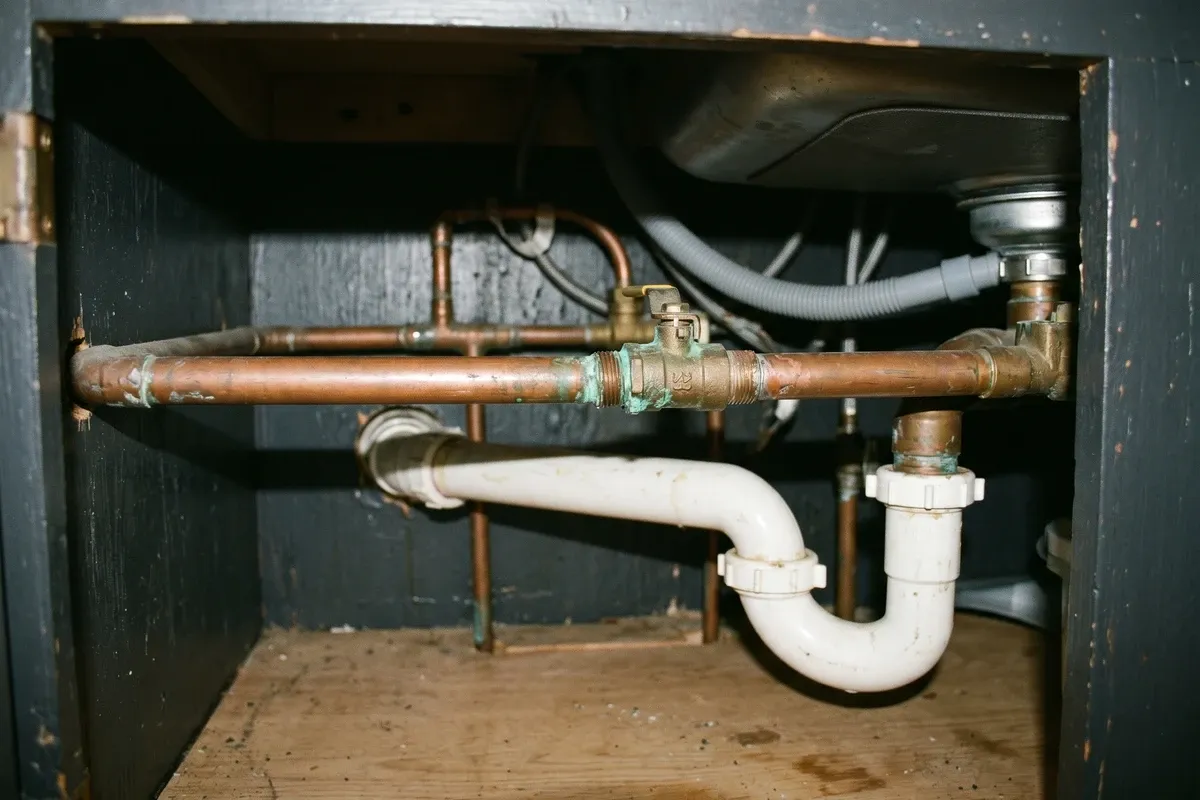
Phoenix residential construction from the 1940s through the 1970s relied heavily on copper supply lines, which were the right choice at the time. After fifty or sixty years, copper supply lines thin from the inside due to water chemistry, develop pinhole leaks at fittings and bends, and eventually fail. Some older Phoenix homes still have galvanized steel supply lines, which corrode from the inside and can develop slow leaks inside walls long before the pipe visibly fails.
The problem with supply-line leaks in a slab-on-grade Phoenix home is that they are often invisible for months. A slow pinhole leak inside a wall cavity or under a cabinet wicks into the drywall backing, the flooring, and the baseboard. By the time the stain shows on the wall or the floor feels soft, the moisture has been there long enough for mold to establish behind the surface.
Older neighborhoods where this profile concentrates: Arcadia, Coronado, Encanto, Willo, central Phoenix east of I-17, central Mesa west of the 101, and central Tempe near Arizona State.
Under-slab plumbing
Phoenix is overwhelmingly slab-on-grade construction. That means the drain lines serving kitchen and bathroom fixtures run under the concrete foundation. In homes built before the 1980s, those under-slab lines were typically cast iron or early copper. Cast iron corrodes over decades; early copper drain lines develop slow leaks at joints.
A slow under-slab leak does not always show on the surface immediately. Water that escapes a drain line under the slab migrates laterally and wicks upward through the concrete into flooring. The first sign is often a soft spot in the vinyl or tile floor, or an unexplained odor. By then the subfloor has been wet for long enough that mold is usually present underneath.
Roofs that have weathered multiple monsoon cycles
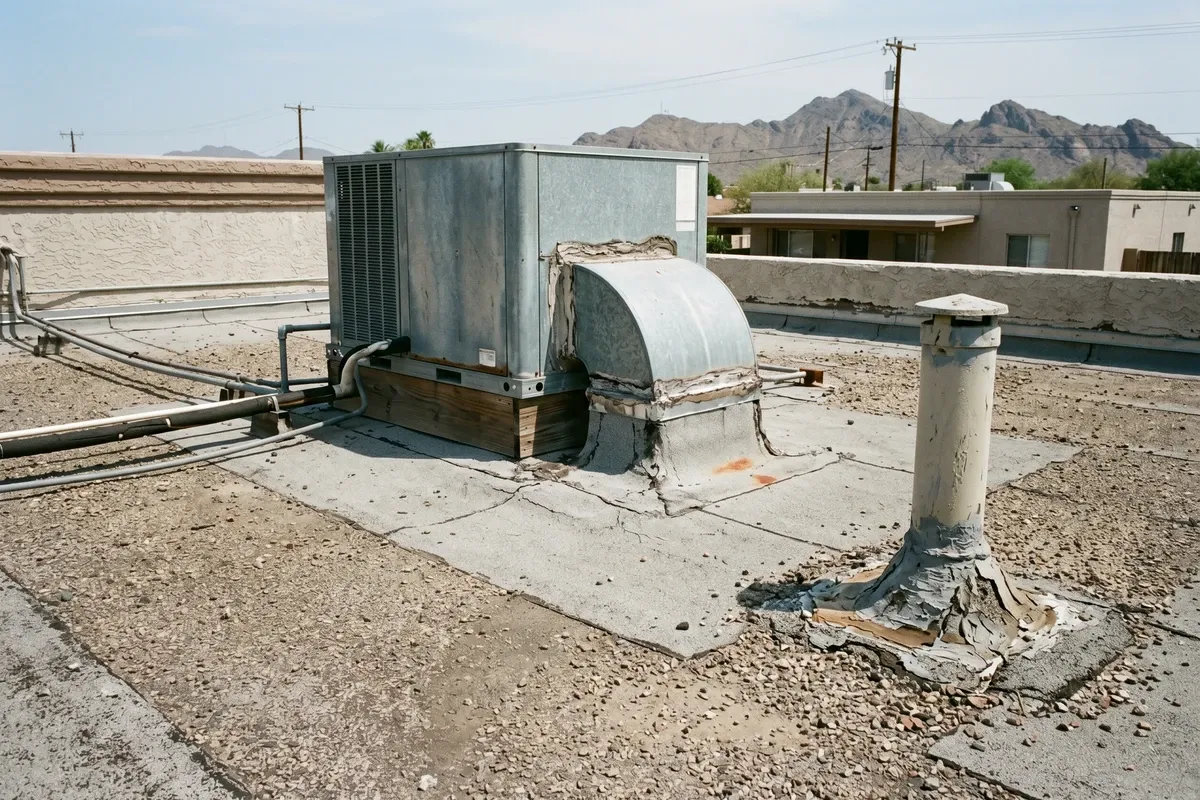
Phoenix monsoon season runs June through September. Storms arrive fast with heavy, concentrated rain — sometimes two inches in an hour. A flat or low-slope roof membrane that is sound during dry weather can develop hairline cracks that only leak under that kind of hydrostatic pressure. Flashing around HVAC penetrations, vent stacks, and roof transitions ages out after 15 to 20 years of Phoenix sun.
Older homes have roofs that may have been patched and re-coated multiple times without full replacement. Each repair cycle can leave transitions between old and new membrane that are vulnerable during intense storms. Monsoon water that finds a path through the roof hits the insulation and roof decking, where mold can establish within 24 to 48 hours at Phoenix summer temperatures — consistent with EPA guidance on water-damaged materials.
Where mold shows up in Phoenix homes
The AHS 2023 data for the metro shows that the bathroom is the single most common location for reported mold — about 1.1% of all occupied Phoenix homes. After that: other rooms (0.55%), kitchen (0.42%), bedroom (0.30%), and living room (0.23%). Basements register 0.0%, which reflects Phoenix construction: slab-on-grade homes without below-grade spaces.
The bedroom and living-room numbers are the telling ones for older homes specifically. Those rooms are not the source of the moisture — they are catching ceiling stains from condensate or roof intrusion above, or wall moisture from a slab leak below. An older Phoenix home where the roof has cracked flashing or the slab drain has a slow leak will eventually show it in the living areas, not just in the bathroom.
These room figures sit on small sample cells, so read them as the shape of the problem — where to look — rather than precise rates. The point is that mold in a Phoenix home is rarely ambient; it has a specific upstream water source that can be found and fixed.
What to look for in an older Phoenix home
You do not need to be an expert to do a reasonable first pass. A few checks that surface the most common moisture problems:
Under every sink. Look for water stains on the cabinet floor, soft spots in the wood, or green oxidation at pipe fittings. A dry cabinet that has never had a drip is one thing; a cabinet with old staining that someone painted over is another.
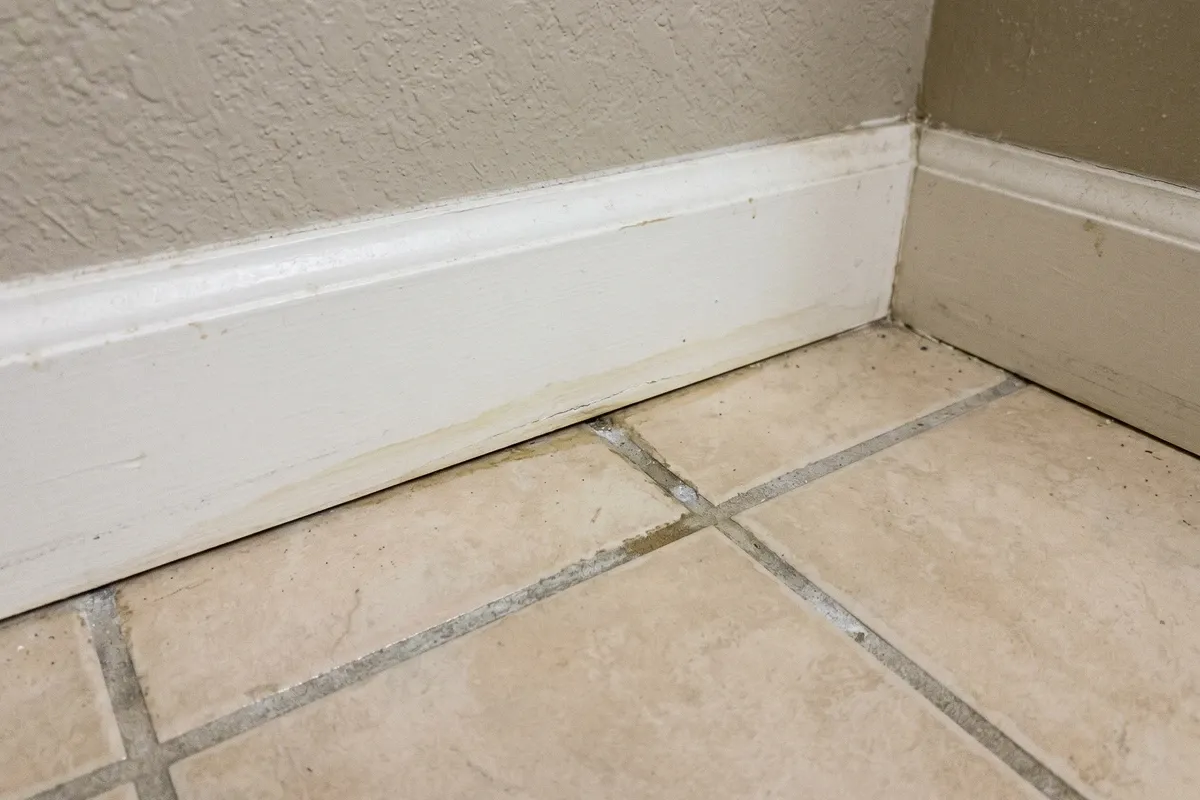
Baseboards in bathrooms and kitchens. Swelling, soft spots, or discoloration at the baseboard-floor junction is one of the most reliable early signs of a supply-line leak or under-slab migration. It is easy to miss because it is down near the floor.
Ceilings below rooflines. Brown rings, paint bubbles, or soft drywall are signs that roof water has reached the structure. Check corners of rooms, near light fixtures on exterior walls, and around any area with an AC supply vent above.
The odor check. A faint musty smell that is stronger in one room than another — especially stronger when the AC turns on — is often the first sign of hidden mold. The HVAC circulates air through the whole home, so a moldy wall cavity or attic space can smell strongest at the vents.
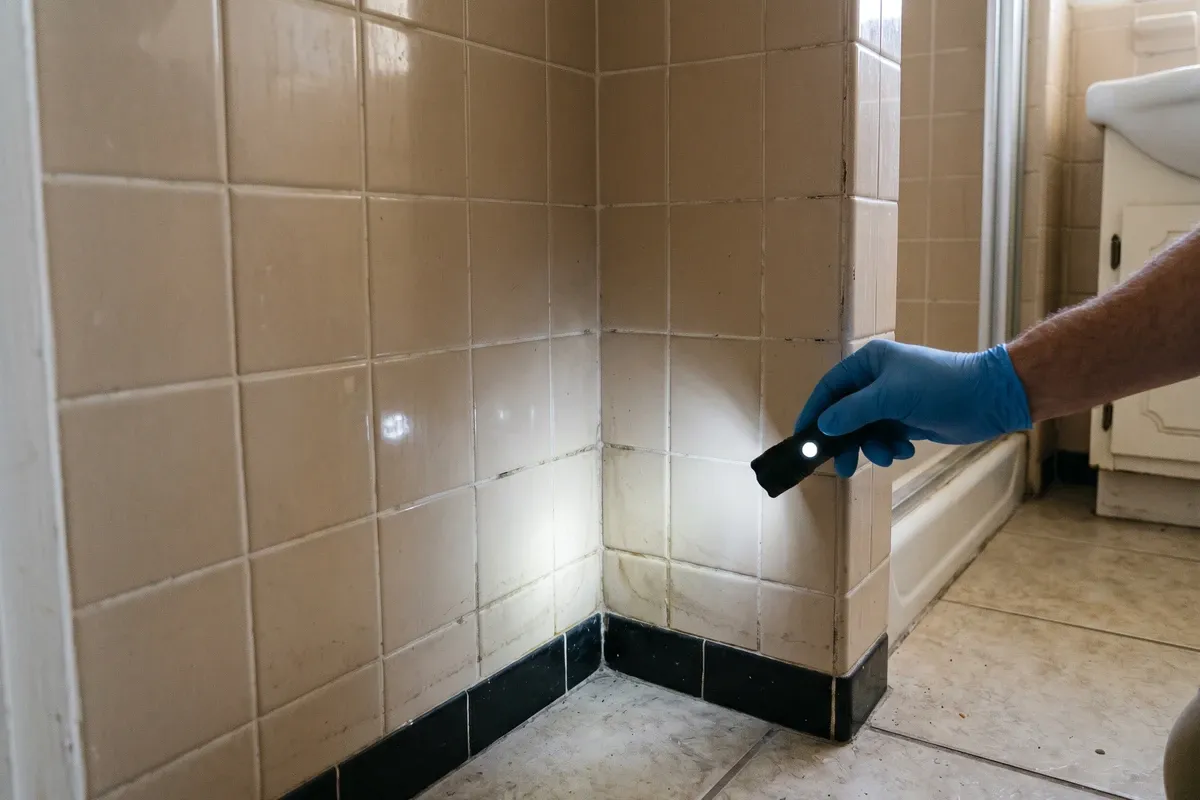
The limit of a self-inspection is that it finds only what has surfaced. A slow under-slab leak or a pinhole supply-line leak inside a wall cavity can be running for months before it reaches the exterior. A professional mold inspection uses a calibrated moisture meter and infrared camera to read the moisture content of drywall, subfloor, and slab without opening walls — which is why it is the right tool for an older Phoenix home, especially before a purchase.
The practical bottom line
The data from our Phoenix mold statistics report does not say older Phoenix homes are crawling with mold. Phoenix overall is below the national mold rate. But it does say older homes leak more — and in a city where mold is driven entirely by moisture events rather than ambient humidity, leaking more means facing more of the conditions that produce mold.
An older Phoenix home in Arcadia, Encanto, or Coronado is not automatically a mold problem. It is a home that has had more time for its plumbing, roof, and slab to develop the slow failures that go unnoticed. That is a reason to know the home’s moisture history and to look carefully, not a reason to panic.
If you are buying an older Phoenix home, a mold inspection before closing costs a fraction of what a remediation job costs after moving in. If you already own an older Phoenix home and have a smell you can’t place, or a soft floor, or a ceiling stain that reappears after being painted, a professional inspection is the fastest way to rule out or confirm a moisture problem. Use the form below to get a free, no-obligation quote anywhere in the Phoenix metro.
The full picture of the Phoenix mold guides is at /guides/.