Does Vinegar Kill Mold? Only Some Species
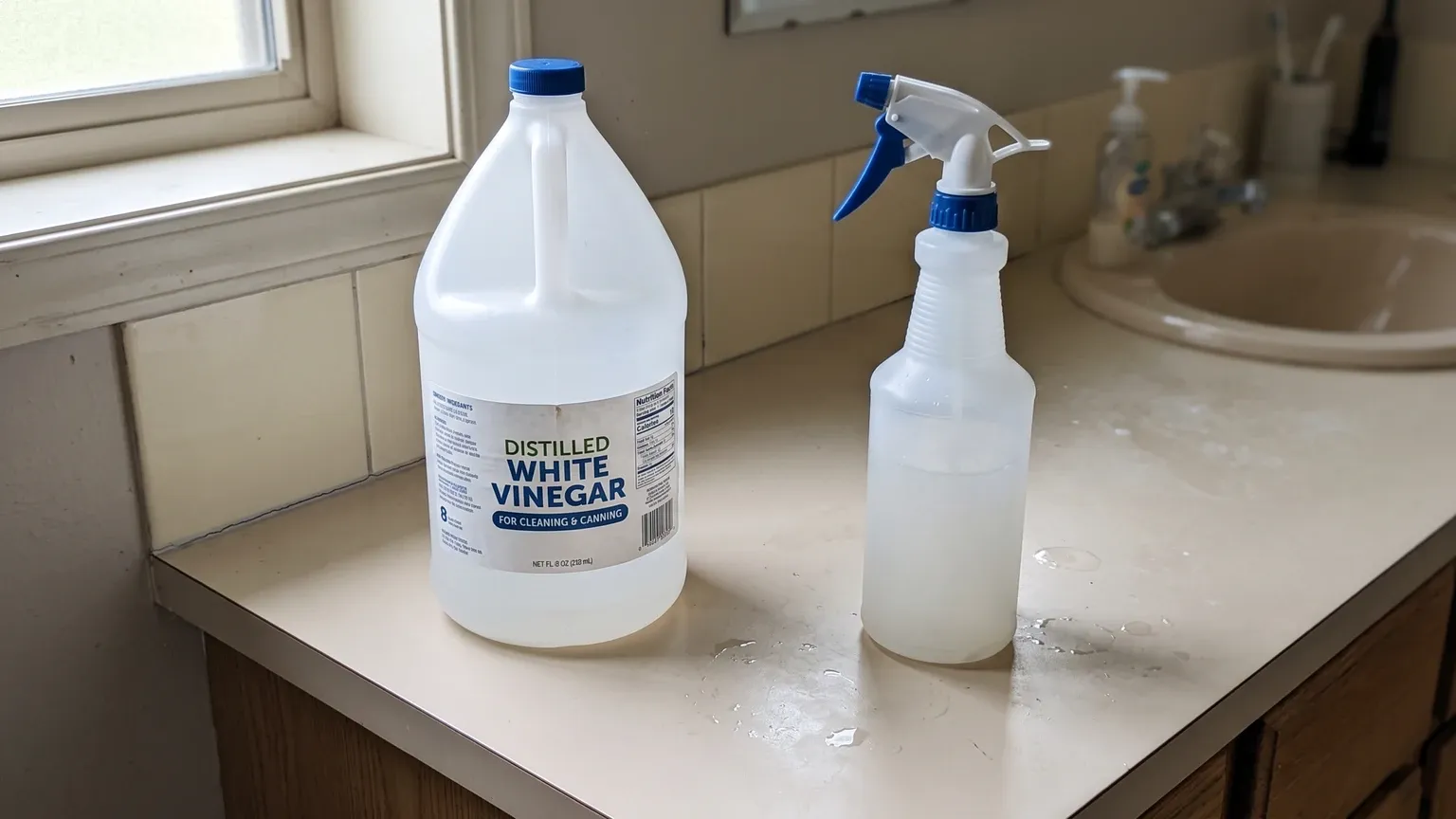
Does vinegar kill mold? Only sometimes, and less than people assume. In the peer-reviewed test we could find, household-strength vinegar inhibited the growth of one common indoor mold species on a lab plate and had no measurable effect on another. Inhibiting growth is not the same as killing, and mold still has to be physically removed either way.
What did the peer-reviewed testing find?
The closest thing to a real answer comes from a 2015 study published in the International Journal of Environmental Research and Public Health, which tested several antifungal agents, including household vinegar, against one species from each of two mold genera common in indoor air: Aspergillus fumigatus and Penicillium chrysogenum.
The method was a disc-diffusion test: a disc carrying the test substance is placed on an agar plate seeded with the fungus, and researchers measure whether growth is inhibited around the disc. The study describes it as an assessment of “fungal growth inhibition using a disc diffusion method against a representative species from two common fungal genera… which were isolated from air samples and are commonly found in indoor air.”
The result for vinegar was specific: “Vinegar (4.0%–4.2% acetic acid) was found to only inhibit the growth of P. chrysogenum, while 70% ethanol was found to have no inhibitory effect on the growth of either fungi.” In the results section the authors put a number on it: vinegar produced “a mean inhibition zone diameter of 15 mm (± 1.15)” against P. chrysogenum and “did not show an inhibitory effect on the growth of A. fumigatus.” Their own summary of what that adds up to is blunt: “this study demonstrates that vinegar has limited antifungal action.”
One distinction runs underneath all of this, and it is the one the question itself gets wrong. What the test measured is growth inhibition — how far back the fungus was held from the disc — not a verified kill. A result that stops something growing is not the same as a result that kills it, and the study never claims the second.
Two smaller details from the same paper are worth keeping straight. Vinegar did suppress sporulation in P. chrysogenum, which the authors describe as “a notable inhibition in sporulation, distinct from growth inhibition” — so it is not nothing. And tea tree oil, not vinegar, showed the strongest inhibitory effect on both fungi. That last one is a laboratory finding about antifungal chemistry, not homeowner advice; nobody should read it as a recommendation to treat mold with essential oils.
One limit decides how far any of this carries: this was a disc-diffusion test on agar, not a test on drywall, wood, tile, or grout. It tells you something about how vinegar behaves against two specific species under ideal, continuous lab contact. It does not tell you what happens when you spray vinegar on a real building material in a real bathroom. We found no published test of household-strength vinegar applied to mold on gypsum board, wood framing, or grout. So the honest summary is: vinegar showed a real effect against one common indoor mold species and none against another, in a lab setting, and we don’t have equivalent data for how it performs on the surfaces in your house.
Where does the “82% of mold species” claim come from?
If you’ve searched this question before, you’ve probably run into a specific number: vinegar kills “82% of mold species.” It shows up on cleaning blogs, mold-removal sites, and product pages, almost always stated as fact and almost never with a citation attached.
We went looking for the source. We checked for a published study, and for guidance from the EPA, the CDC, and the USDA. We could not trace the 82% figure to any of them. That isn’t proof the number was invented. It may trace to something we simply didn’t find. But we could not verify it, and a specific-sounding percentage with no traceable origin is not something we’ll repeat as fact on a health topic.
A number that precise, repeated that widely, with nothing behind it, is worth treating as marketing rather than evidence.
What vinegar is made of, and why the surface decides the outcome
Even setting the species question aside, what vinegar is made of matters as much as what it’s sprayed on.
Distilled white vinegar sold for household cleaning is typically about 5% acetic acid. The rest, roughly 95%, is water. (The vinegar in the study above was slightly weaker at 4.0–4.2%, so if anything the test was a touch gentler than the bottle under your sink.)
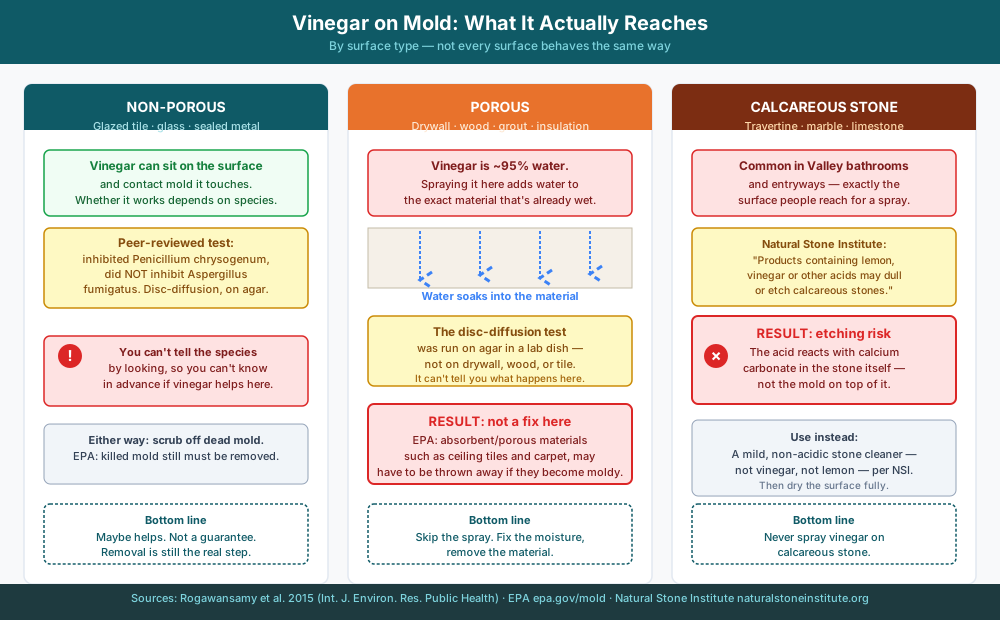
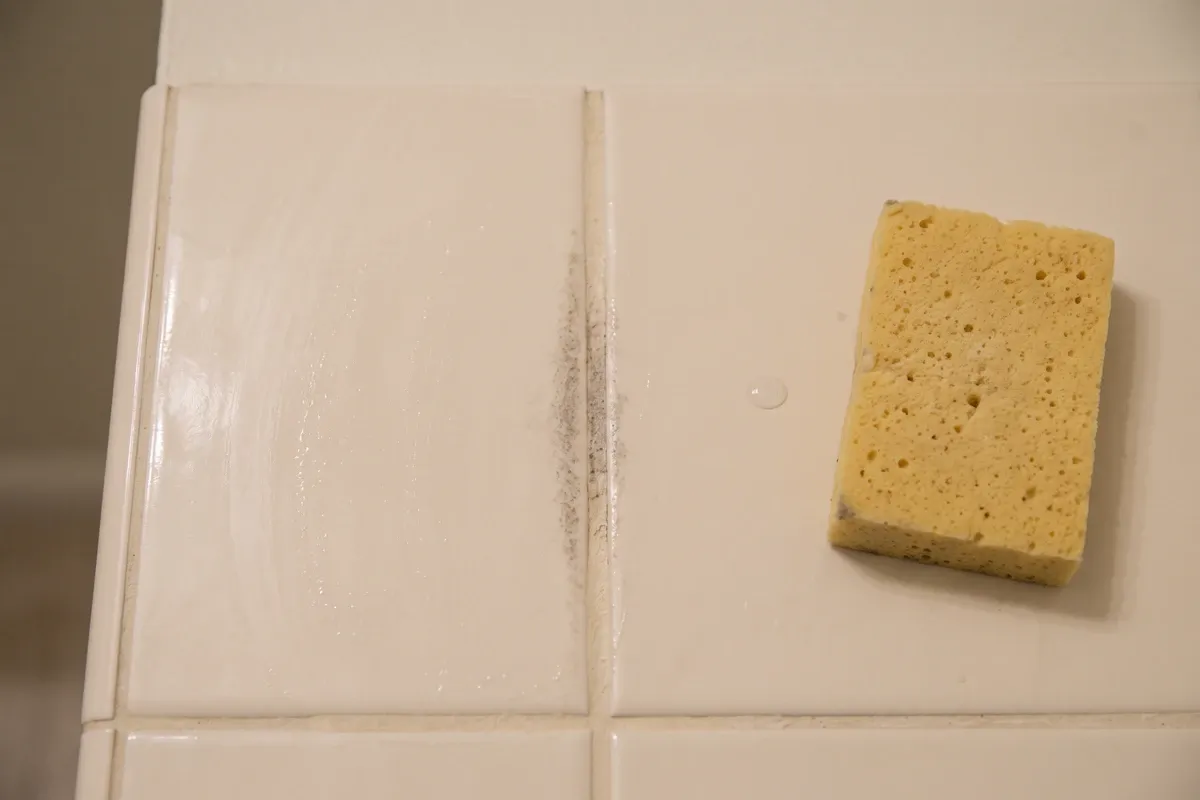
On a non-porous surface (glazed tile, glass, a sealed tub), vinegar sits on top and can contact whatever mold is on that surface directly. Whether it does anything to that mold still comes back to the species question above.
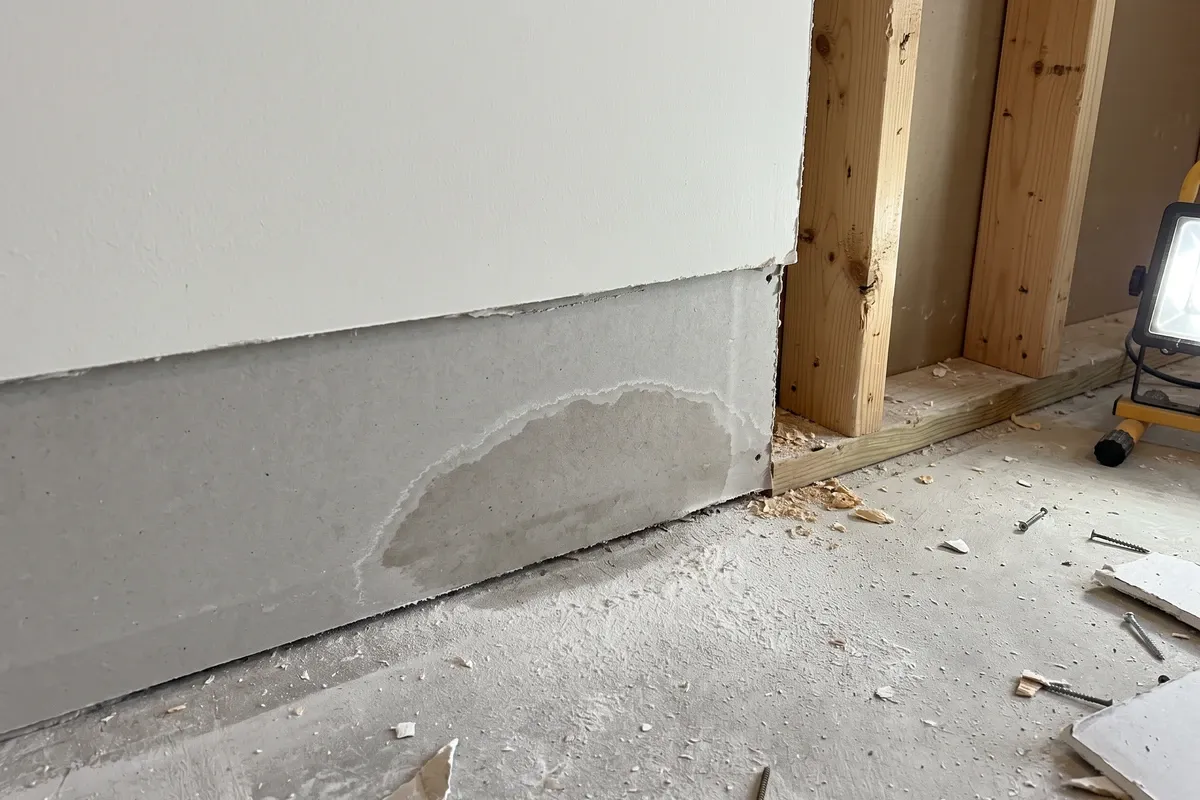
On a porous surface (drywall, unglazed grout, insulation, wood framing), the water in vinegar soaks into the material. That’s the vinegar-specific problem: you are adding roughly 95% water to a surface that is already holding moisture, which is the condition that let mold grow there in the first place. The EPA’s guidance on porous materials is direct: absorbent or porous materials, such as ceiling tiles and carpet, may have to be thrown away if they become moldy. Spraying is not on that list, and adding liquid is the opposite of what the material needs. Framing lumber is the exception to the throw-it-away rule — EPA’s remediation guidance for wood surfaces is cleaning and drying rather than tear-out.
Killing mold is not removing it
Say vinegar does inhibit whatever is growing on your tile. That’s not the end of the job.
The EPA is explicit on this point: “Dead mold may still cause allergic reactions in some people, so it is not enough to simply kill the mold, it must also be removed.” That applies regardless of what killed it — bleach, vinegar, heat, or anything else. A colony that’s been inhibited or killed still needs to be scrubbed off and rinsed away. Spraying and walking away leaves dead mold and its allergenic material sitting on the surface.
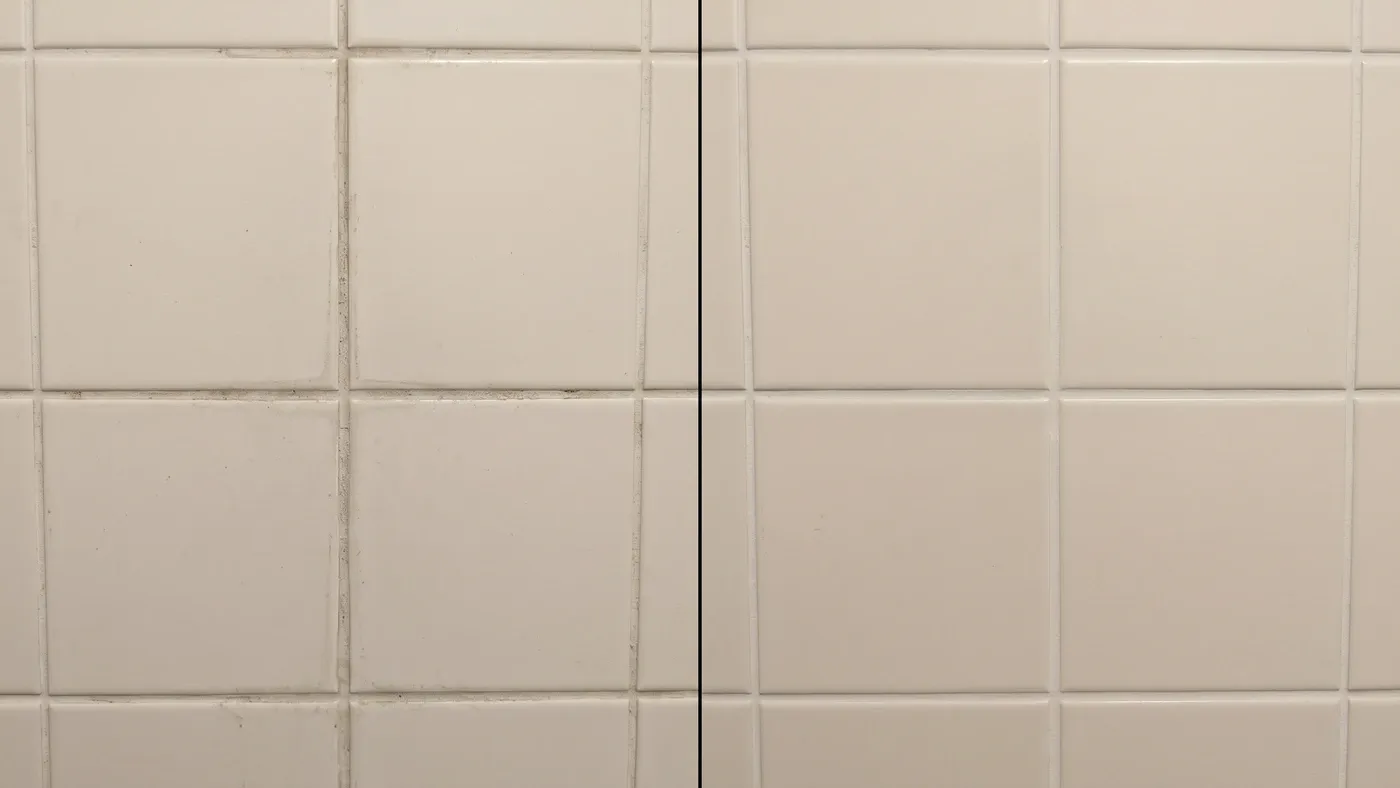
Is vinegar better than bleach for mold?
None of the common household options is a complete fix on its own, and each has a distinct limitation.
Vinegar may inhibit some species on contact but not others, per the testing above, and its water content works against you on porous material.
Bleach is CDC’s named option for hard surfaces (a solution of no more than 1 cup of household laundry bleach per gallon of water), but the EPA states plainly that using a biocide like chlorine bleach “is not recommended as a routine practice during mold cleanup.” On porous surfaces, its water content soaks in the same way vinegar’s does, while the chlorine tends to stay on top — that mechanism is our reading, not EPA guidance. Our guide on whether bleach kills mold walks through that surface-by-surface in more detail.
Detergent and water is what the EPA actually recommends as the routine method for hard-surface mold cleanup, with scrubbing doing most of the real work.
One rule sits above all of this: never combine cleaning products. The Washington State Department of Health is direct about the specific hazard with vinegar: “When chlorine bleach is mixed with an acid, chlorine gas is given off,” and vinegar is listed among the acid-containing household products that trigger it. Chlorine gas exposure, even briefly and at low levels, “almost always irritates the mucous membranes (eyes, throat, and nose), and causes coughing and breathing problems, burning and watery eyes, and a runny nose.” The CDC gives the same warning for bleach mixed with ammonia: “This will produce a poisonous gas.” Use one product, not a home-brewed combination, and ventilate the room either way.
Do not spray vinegar on travertine, marble, or limestone
This is the call most mold-and-vinegar articles miss entirely, and it matters a lot in the Valley specifically, where travertine and other natural stone show up constantly in bathrooms, entryways, and pool decks.
Travertine, marble, and limestone are calcareous stone, meaning their mineral structure is largely calcium carbonate. Acid reacts with calcium carbonate. The Natural Stone Institute’s own care guidance says it plainly: “Products containing lemon, vinegar or other acids may dull or etch calcareous stones,” and that “Calcium Carbonate is sensitive to acidic solutions so mild, non-acidic cleaners are recommended.”
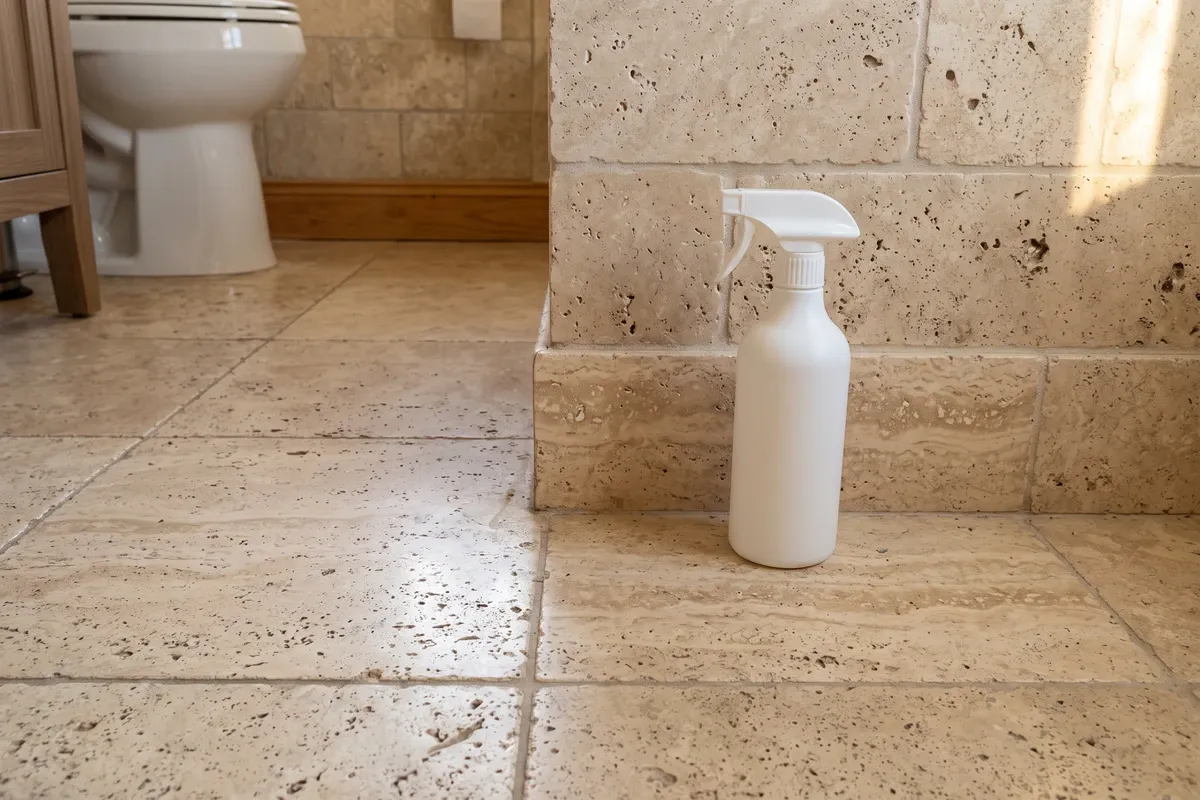
That means the one surface a lot of homeowners most want to spray (a stone shower surround or entry floor with a musty grout line) is a surface vinegar can damage, independent of whatever it does or doesn’t do to the mold. Etching isn’t something you wipe off; the Natural Stone Institute’s advice for an etched area is to contact a stone dealer or professional stone restorer for refinishing or repolishing. If you have travertine, marble, or limestone anywhere near a moisture problem, reach for a mild, non-acidic stone cleaner instead, and let the surface dry fully once it’s clean.
Where vinegar is genuinely useful in a Phoenix home
None of this means vinegar is useless around the house. It has one legitimate, routine role that matters here because of how hard Phoenix air conditioners run: flushing the AC condensate drain line.
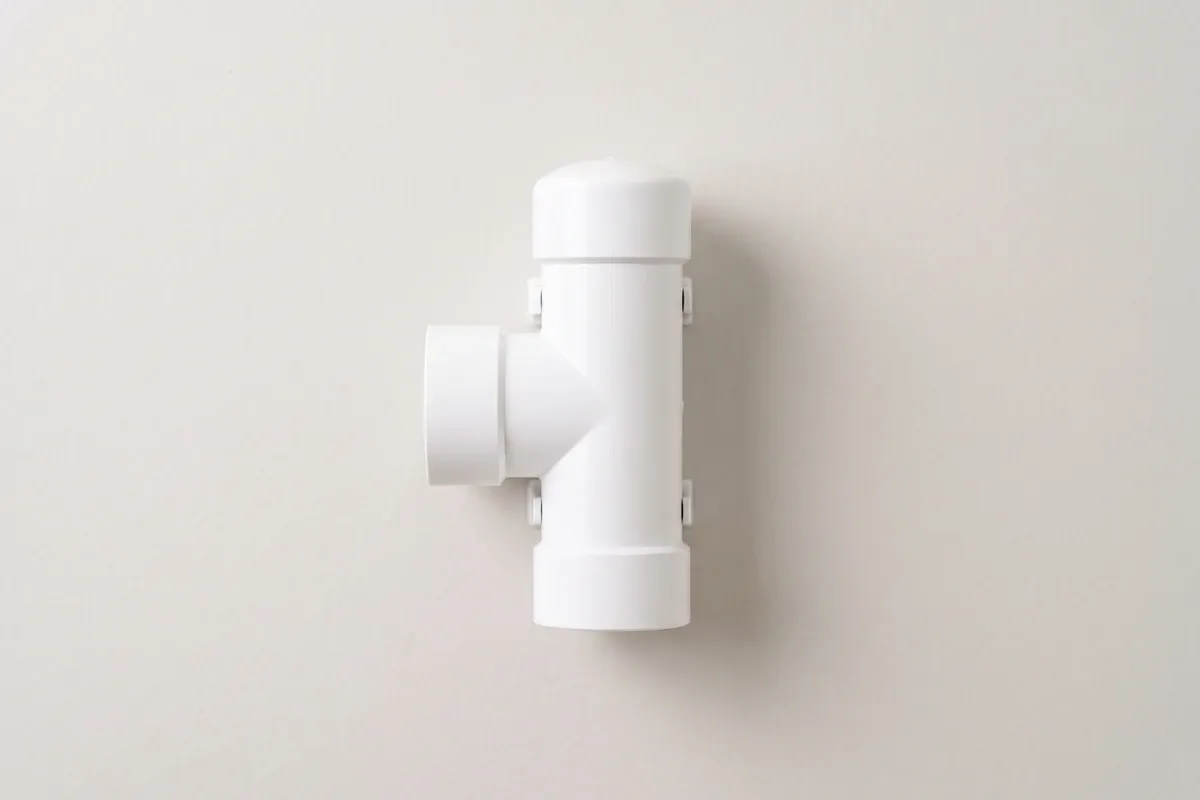
Phoenix air conditioners run hard through the summer, and all that condensate has to drain somewhere. The line gradually builds up biofilm and sediment, and a clogged one is a common hidden water source behind mold in a Phoenix attic or ceiling. Keeping it clear is standard EPA moisture advice: “Keep air conditioning drip pans clean and the drain lines unobstructed and flowing properly.” A common maintenance routine is about half a cup of undiluted white vinegar through the access tee.
Be precise about what this is: preventive HVAC maintenance on a line that isn’t clogged yet, not a mold treatment. It does nothing for mold already established on drywall or insulation after a line has overflowed. Our guide to a clogged AC drain line covers the routine and the warning signs.
Vinegar has one other legitimate household use worth knowing about: the fizz test. A small amount of dilute white vinegar dripped on a white, powdery deposit on concrete or block will fizz if the deposit is a carbonate mineral, which is one common efflorescence on concrete and mortar. Read the result carefully in one direction only: a fizz tells you the deposit is mineral, not mold. No fizz does not confirm mold, because efflorescence is often a sulfate rather than a carbonate, and sulfates dissolve without fizzing. That’s a diagnostic use, not a treatment, and it’s covered in our guide to mold on concrete.
When DIY is fine, and when vinegar is a sign of a hidden problem
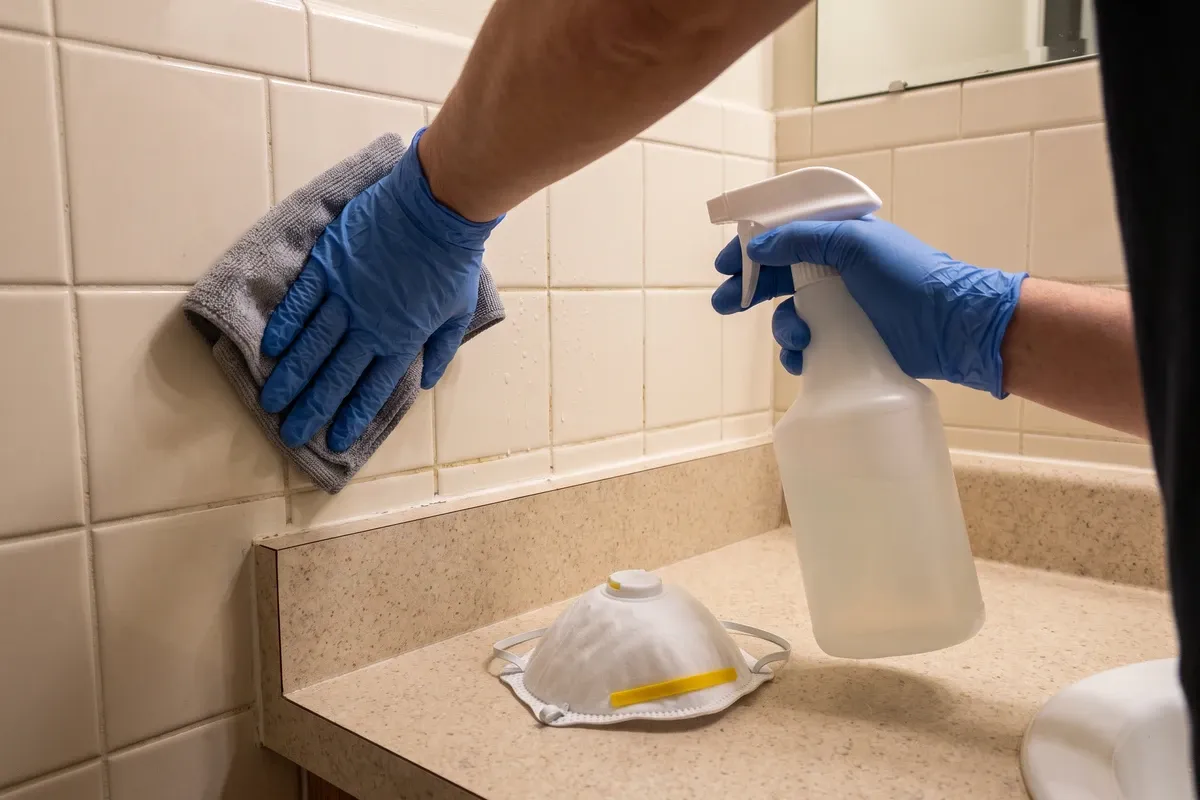
The EPA’s own size guidance is a reasonable starting point for any DIY cleanup (vinegar, bleach, or plain detergent): if the moldy area is less than about 10 square feet, roughly a 3-foot by 3-foot patch, EPA says that in most cases you can handle the job yourself following its cleanup guidelines. For vinegar specifically, add one more condition of our own: a hard, non-porous surface. That means scrubbing hard surfaces with detergent and water, and drying the area completely, since the EPA notes it’s important to dry water-damaged areas and items within 24 to 48 hours to prevent mold growth in the first place.
Where this stops being a spray-bottle problem is when the mold keeps coming back after you clean it, or when you’re finding it somewhere that shouldn’t be wet in the first place. In a Phoenix home, that usually points to one of a small set of causes: a backed-up AC condensate line, a slab leak you can’t see, monsoon-season water finding its way past a roof or window flashing, or drywall that never fully dried out after a pipe burst. Treating the visible mold with vinegar, bleach, or anything else doesn’t touch any of those, and the mold reappears because the water is still getting in.
If you’ve tried cleaning a surface and the staining or musty smell returns within a few weeks, or if the affected area is larger than that 10-square-foot guideline, or if it’s on drywall, wood, or inside a wall or attic rather than on tile, that’s the point to bring in a mold inspection rather than reach for another bottle. An inspection can find the actual moisture source and tell you whether you’re looking at a surface problem or a structural one.
We put the same evidence test to two other shortcuts people repeat: does heat kill mold and does the Arizona sun kill mold. If what you’re facing is mold rooted into drywall rather than sitting on a hard surface, mold behind drywall explains why no spray reaches it, and mold removal covers what the Valley job actually involves. The rest of our Phoenix mold guides run from attics and bathrooms to AC systems and insurance.
Sources
- Rogawansamy S, Gaskin S, Taylor M, Pisaniello D — An evaluation of antifungal agents for the treatment of fungal contamination in indoor air environments, International Journal of Environmental Research and Public Health 2015;12(6). DOI 10.3390/ijerph120606319. The disc-diffusion test of vinegar and other agents against Aspergillus fumigatus and Penicillium chrysogenum.
- U.S. EPA — A Brief Guide to Mold, Moisture and Your Home: dead mold must still be removed; the 10-square-foot DIY guideline; drying water-damaged areas within 24-48 hours; porous materials may need to be discarded.
- U.S. EPA — Should I Use Bleach to Clean Up Mold?: a background level of mold spores typically remains after cleanup; never mix bleach with ammonia-containing cleaners.
- CDC — About Mold: cleanup with household products or a bleach solution; never mix bleach with ammonia or other cleaners.
- Washington State Department of Health — Dangers of Mixing Bleach with Cleaners: mixing chlorine bleach with an acid releases chlorine gas; vinegar named among the acid-containing products.
- Natural Stone Institute — Care & Cleaning: products containing vinegar or other acids may dull or etch calcareous stones; non-acidic cleaners recommended.