Mold in the Lungs: Symptoms, Real Conditions, and When to Seek Care

Mold in the lungs can cause three different kinds of problems: allergy-driven reactions like worsened asthma or allergic bronchopulmonary aspergillosis (ABPA) in people who already have asthma, immune-mediated inflammation like hypersensitivity pneumonitis, or an actual fungal infection like aspergilloma or invasive aspergillosis. Each has distinct symptoms, risk factors, and treatment. Cough, wheeze, and fatigue after suspected mold exposure is a reason to see a doctor — not a reason to search symptoms online and guess. This is not medical advice; it’s a plain-language map of what mainstream medicine documents, so you know which questions to ask.
Symptom-first: what to ask your doctor about
If you’re dealing with respiratory symptoms and a suspected mold exposure, the table below maps common symptoms to the mold-related conditions worth raising by name with your doctor — and how urgently. This isn’t a diagnostic tool; it’s a starting point for a more informed conversation, because naming a specific condition to a physician often opens a different diagnostic pathway than describing symptoms alone.
| Symptom | Conditions to ask your doctor about | Urgency |
|---|---|---|
| Cough that’s persistent, especially if it eases away from home | Mold-triggered asthma, hypersensitivity pneumonitis (HP) | See a doctor if it lasts more than a few weeks |
| Wheeze or chest tightness | Mold-triggered asthma, ABPA (if you have existing asthma) | See a doctor, sooner if you have asthma |
| Progressive breathlessness over weeks to months | Subacute or chronic hypersensitivity pneumonitis | See a doctor promptly — this pattern is often missed |
| Worsening asthma control despite your usual inhaler | ABPA (~2.5% of asthma patients) | See your doctor or pulmonologist |
| Brown or dark mucus plugs | ABPA specifically | See a doctor soon — a specific, nameable sign |
| Fever and chills after a heavy or repeated exposure | Acute hypersensitivity pneumonitis | See a doctor within days |
| Unexplained weight loss with respiratory symptoms | Chronic pulmonary aspergillosis, chronic fibrotic HP | See a doctor promptly |
| Coughing up blood | Aspergilloma, chronic pulmonary aspergillosis | Seek care urgently |
| Breathlessness that’s severe or rapidly worsening, especially if immunocompromised | Invasive aspergillosis | Seek emergency care |
| Facial pain, nasal congestion, or vision changes (not chest symptoms) | Allergic fungal rhinosinusitis (AFRS) — a sinus condition, not a lung one | See an ENT/otolaryngologist |
Hypersensitivity pneumonitis (HP): the immune-driven lung disease
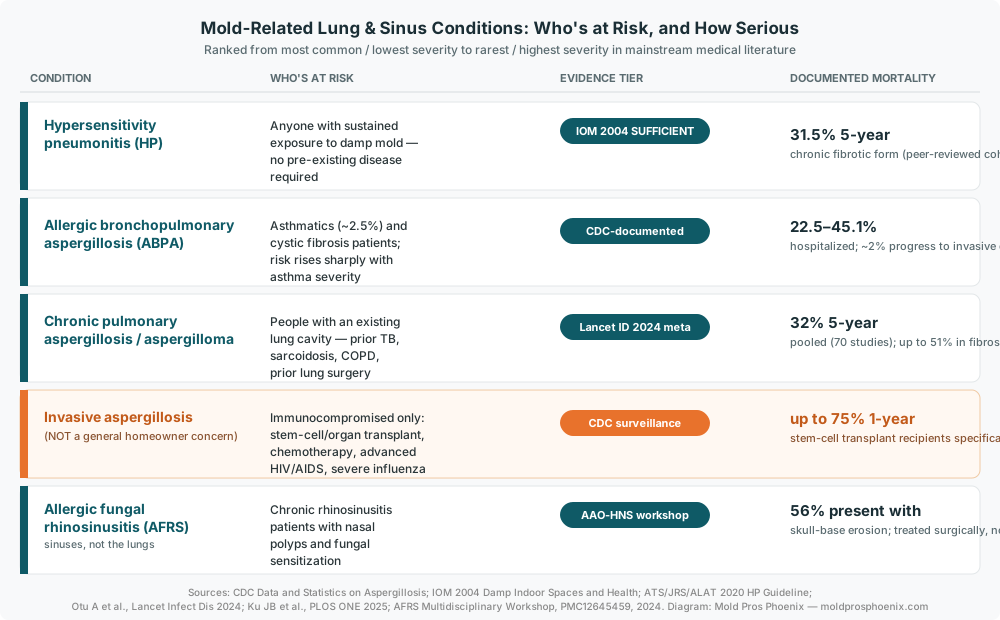
Hypersensitivity pneumonitis is an immune reaction in the lung tissue itself, triggered by repeated inhalation of organic particles including mold spores. It’s recognized by mainstream medicine at the highest evidence tier: the Institute of Medicine’s 2004 report Damp Indoor Spaces and Health found sufficient evidence of an association between mold and bacteria in damp indoor environments and hypersensitivity pneumonitis in susceptible people — the same evidence tier as mold worsening existing asthma. The American Thoracic Society, Japanese Respiratory Society, and Latin American Thoracic Association published a formal joint clinical practice guideline for HP diagnosis in 2020.
What it feels like. Acute HP starts within four to eight hours of a heavy exposure — fever, chills, cough, and shortness of breath that can look like a bad flu or pneumonia. Subacute HP builds over weeks with progressive breathlessness, fatigue, weight loss, and a chronic cough that doesn’t clear with standard treatment — this is the stage most often mistaken for asthma or COPD. Chronic fibrotic HP is what develops when the exposure isn’t identified and removed: irreversible lung scarring, declining lung function, and a documented 31.5% 5-year mortality rate even with treatment, per peer-reviewed cohort data.
Because early HP symptoms mimic asthma and bronchitis so closely, it’s frequently missed in primary care. The key clue physicians look for is whether symptoms improve away from home or work and return when you go back — a pattern worth describing explicitly at your appointment. For a full breakdown of the three clinical stages, diagnostic protocol (including when to ask about a high-resolution CT scan), and Phoenix-specific exposure risks like evaporative cooler pads and AC drain-pan mold, see our hypersensitivity pneumonitis guide.
Allergic bronchopulmonary aspergillosis (ABPA): when asthma won’t behave
ABPA is a hypersensitivity reaction to Aspergillus mold colonizing the airways, and it’s specifically a disease of people who already have asthma or cystic fibrosis. The CDC states that ABPA likely affects 1–15% of cystic fibrosis patients and approximately 2.5% of asthma patients — roughly 4.8 million people worldwide. Risk climbs steeply with asthma severity: peer-reviewed US claims data (2016–2022) found ABPA prevalence of 1.3 per 10,000 in mild asthma versus 70.6 per 10,000 in severe asthma — more than 50 times higher.
What it presents as. Worsening asthma control despite standard inhaler treatment, often with thick brown or dark mucus plugs — a specific, nameable sign. Left unmanaged, ABPA causes bronchiectasis (permanent airway widening and damage) and can progress to pulmonary fibrosis and respiratory failure. In that same US claims cohort, hospitalization occurred in 22.5% to 45.1% of ABPA patients depending on insurance type, and roughly 2% went on to develop invasive aspergillosis.
If you have asthma and notice your control slipping, or you’ve coughed up brown mucus plugs, that’s specific and worth raising by name with your doctor or pulmonologist — ABPA has recognized diagnostic criteria and treatment protocols; it isn’t something to wait out. Documented patient cases of severe asthma flares and respiratory hospitalizations tied to home mold exposure show up repeatedly in mainstream reporting on toxic mold cases — a pattern that underscores why ABPA and asthma-mold interactions deserve a real medical workup, not guesswork.
Chronic pulmonary aspergillosis (CPA) and aspergilloma: infection in an existing lung cavity
CPA and aspergilloma are different from HP and ABPA — they’re actual Aspergillus infections, not just immune overreactions, and they require a specific vulnerability: an existing cavity or damaged area in the lung. The CDC identifies the at-risk population clearly: people with a history of tuberculosis, sarcoidosis, COPD, prior lung cancer, cystic fibrosis, or prior lung surgery. Globally, an estimated 1.2 million people have CPA following tuberculosis, and over 70,000 have it as a sarcoidosis complication.
Onset is slower than acute HP or an ABPA flare — CPA develops over months as Aspergillus colonizes the existing cavity, sometimes forming a fungal ball (aspergilloma) that can be seen on imaging. Symptoms include a chronic cough, fatigue, unexplained weight loss, and — a distinguishing red flag — coughing up blood.
A 2024 Lancet Infectious Diseases systematic review and meta-analysis pooling 70 studies found 32% 5-year mortality across CPA overall. That figure varies significantly by subtype: the chronic fibrosing form carries 51% 5-year mortality, subacute invasive aspergillosis 34%, chronic cavitary disease 23%, and simple aspergilloma alone 11%. If you have any of the underlying lung conditions above and develop a persistent cough, weight loss, or coughing up blood, that combination is worth an urgent conversation with your pulmonologist — CPA is treatable, especially caught early, but it does not resolve on its own.
Invasive aspergillosis: rare, severe, and not a general homeowner concern
Invasive aspergillosis is the most severe form of Aspergillus infection — the fungus spreads directly from the lungs into other parts of the body. It’s important to be precise here: this is not a risk for the general population with typical home mold exposure. The CDC is explicit about who gets it: people with severe granulocytopenia, hematologic malignancies (like AML), solid organ or stem cell transplant recipients, those on high-dose corticosteroids, people with advanced HIV, ICU patients, and people with severe influenza or COVID-19.
Within those specific groups, the outcomes are serious. CDC surveillance and peer-reviewed cohort data document: 41% one-year mortality in solid organ transplant recipients, up to 75% one-year mortality in stem-cell transplant recipients specifically, and mortality rates as high as 95% in COPD patients and 80% in ICU patients who develop it. Hospitalizations for invasive aspergillosis rose roughly 3% per year from 2000–2013, reaching nearly 15,000 cases in 2014 at an estimated cost of $1.2 billion.
We’re naming this condition for completeness and honesty — it’s the ceiling of how severe mold-related lung disease can get in medical literature — but it is squarely a concern for people who are already significantly immunocompromised, managed by infectious disease and oncology specialists, not something a healthy homeowner with a musty attic needs to worry about developing.
Allergic fungal rhinosinusitis (AFRS): when it feels like your lungs but it’s actually your sinuses
This one deserves its own section because patients often describe AFRS symptoms as “in my chest” or “affecting my breathing” when the disease is actually in the sinuses, not the lungs. AFRS is a specific, well-documented type of chronic rhinosinusitis with nasal polyps driven by fungal sensitization. A 2024 multidisciplinary workshop paper puts prevalence at roughly 6–7% of chronic rhinosinusitis patients, with regional estimates ranging from 0.2% to 26.7%.
AFRS is not a mild condition. The same paper found AFRS patients were 12.6 times more likely to have bony erosion than non-AFRS chronic rhinosinusitis patients, and up to 56% of AFRS patients present with extensive radiographic evidence of skull-base erosion or extension into the eye socket — with documented vision loss (11.8%), double vision (8.8%), and eye displacement (2.9%) in affected patients. Unlike HP or asthma, medical therapy alone doesn’t treat AFRS effectively — surgery is the foundation of treatment.
The distinguishing symptoms are facial pain or pressure, nasal congestion, loss of smell, and — in advanced cases — vision changes, not a chest cough or wheeze. If your symptoms center on your face and sinuses rather than your chest, an ENT/otolaryngologist, not a pulmonologist, is the right specialist to see.
What to actually do
See a doctor if you have persistent respiratory symptoms and a suspected mold exposure — this guide is meant to help you have a more informed conversation, not to replace one. A few honest, specific things worth doing:
Bring a specific ask, not a vague complaint. “I’ve had a cough for six weeks that seems worse at home” is useful. “Could this be hypersensitivity pneumonitis or ABPA, given my exposure and asthma history?” is more useful — naming a condition can change which tests get ordered.
Describe the pattern, not just the symptom. Does it improve when you’re away from home for a few days? Do you have documented mold, a musty smell, or known water damage? Do you have asthma, a prior lung condition, or a weakened immune system? These details matter more than the symptom alone.
Don’t self-diagnose, and don’t wait out red-flag symptoms. Coughing up blood, rapidly worsening breathlessness, high fever with chills, or unexplained weight loss are not “wait and see” symptoms regardless of the suspected cause.
Run the home side in parallel, with a professional. If you have visible mold, a musty smell you can’t source, or known water damage, a proper mold inspection identifies what’s actually growing and where — separate from, but complementary to, your medical evaluation. Fixing a source you can’t see doesn’t help if you never find it.
Phoenix-specific mold sources worth knowing
Phoenix’s dry outdoor climate doesn’t mean indoor mold risk is low — the moisture sources here are just different and specific to how Valley homes are built:
Attic AC condensate and air handlers. Many Phoenix homes have the AC air handler mounted in the attic. A clogged condensate drain line or a rusted, overflowing drain pan soaks the roof decking and insulation, and if return air draws from that space, spore-laden air can circulate through the whole house every time the system runs — which, in Phoenix, is most of the year.
Monsoon roof leaks. June through September, heavy monsoon storms push water through failed flashing and hairline cracks in flat or low-slope roofing that looked fine in dry weather. Mold can establish on wet roof decking within 24 to 48 hours at Phoenix summer temperatures.
Hidden slab leaks in older homes. A slow leak under a concrete slab foundation can feed mold growth in baseboards and lower walls for months before it’s visible, because concrete releases moisture slowly and the signs — a musty smell, a warm spot on the floor, a rising water bill — are easy to miss.
If you’re in the Phoenix metro and dealing with unexplained respiratory symptoms alongside a known or suspected mold problem, our mold and asthma guide and who is most at risk from mold guide go deeper on the health side. For the fuller evidence landscape — mainstream conditions alongside contested frameworks, documented patient cases, and how the science has evolved — see our reporting on whether mold illness is real, our catalog of documented mold illness cases, and the mold illness scientific timeline.
Free quote for Phoenix mold assessment
If you have a known or suspected mold problem at home and are dealing with respiratory symptoms, the two tracks run in parallel: see a doctor about your symptoms, and get the source in your home properly identified. We handle mold inspection and remediation across the Phoenix metro. Fill out the form below for a free, no-obligation quote — no pressure, no diagnosis, just a clear picture of what’s actually in your home.