How Mold Removal Works in Phoenix: A Homeowner’s Step-by-Step Guide
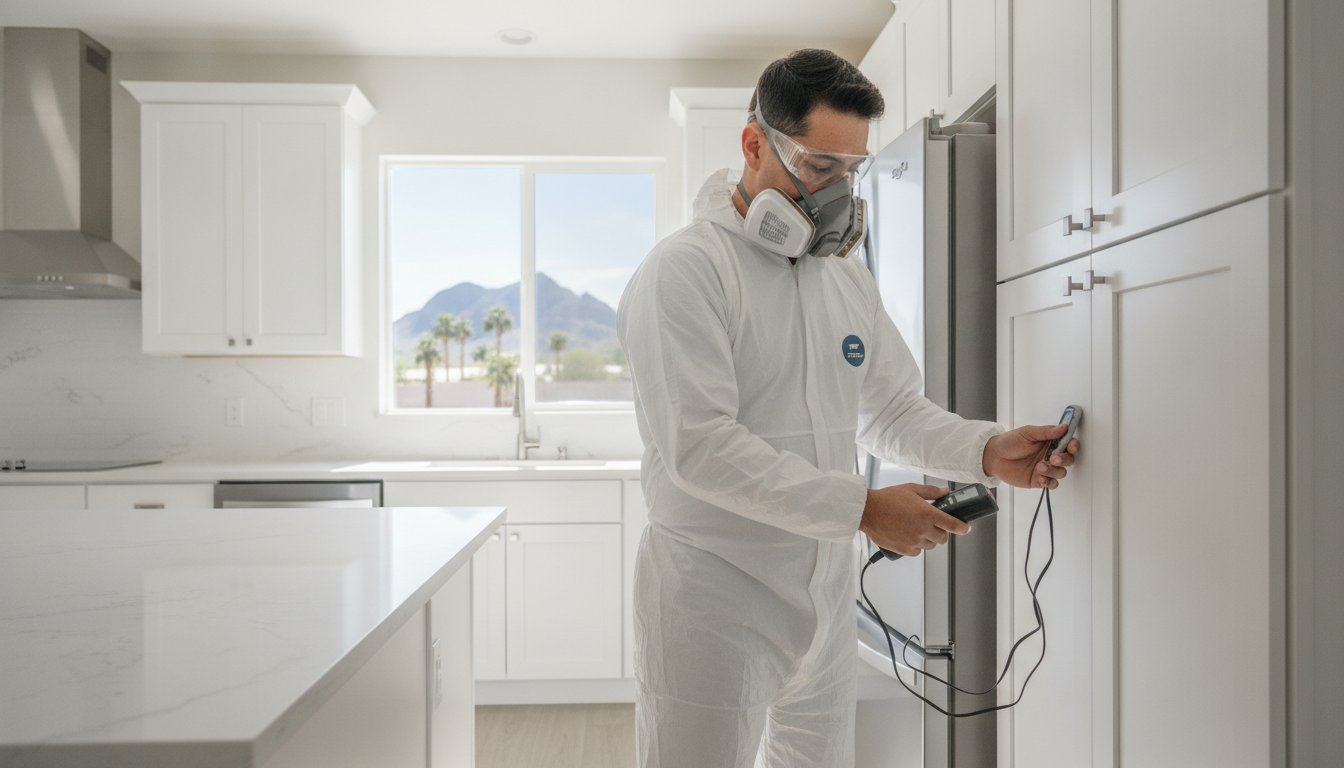
Professional mold remediation in Phoenix starts by finding the moisture source — usually an AC condensate leak or monsoon damage — then cutting out and bagging the contaminated materials. The EPA says you can clean patches under 10 square feet yourself; anything larger needs a pro to protect your health and home value, typically $500 to $6,000 depending on size. Here's how to find a vetted Phoenix crew.
Living in the dry heat of the Sonoran Desert doesn't make your home immune to mold; it just makes the growth harder to find. A dark stain near a baseboard or a musty smell after a July storm is enough to set anyone on edge. The Arizona Department of Health Services warns that mold can affect anyone, but infants and seniors are especially at risk — and on top of the health worry, plenty of homeowners fear getting overcharged by a high-pressure salesman.
You deserve a clear plan without the scare tactics. This guide is an information resource to help you figure out whether you actually need a pro. We'll cover local triggers like slab leaks and "snowbird" homes, and show you how to reach honest local specialists at a fair price in 2026.
Key Takeaways
- Bleach won't kill mold on porous drywall because the water soaks in and feeds the roots while the chlorine stays on the surface.
- Phoenix homes get mold despite the dry desert air because sealed, energy-efficient houses trap moisture from AC condensate clogs, slab leaks, and monsoon roof leaks.
- The EPA's rule of thumb is that you can safely clean a patch under 10 square feet yourself, while anything larger or caused by dirty water needs a pro.
- Arizona homeowners insurance typically pays when the water damage is sudden and accidental, like a burst pipe, but excludes slow, gradual leaks as maintenance.
- Because Arizona doesn't license mold remediation, IICRC certification is the credential to look for when choosing a Phoenix crew.
Understanding Mold Removal in the Arizona Desert
Mold removal is the physical act of eliminating visible fungal growth — scrubbing non-porous surfaces or cutting out porous materials like drywall and carpet. The word is often used interchangeably with remediation, but technically it's just the "clean-up" phase. In the Phoenix metro, a successful job takes more than a surface wipe; it takes a plan to stop the water source for good.
Phoenix averages only 7.2 inches of rain per year, which is exactly why the risk gets underestimated. Because the climate is so arid, many homeowners assume fungus is a Florida problem. But our homes are sealed tight against the 110-degree heat, so when water gets in, it has nowhere to go — and thrives in the dark, cool spaces behind the walls.
The number one moisture culprit in the Valley is your air conditioning system. AC condensate lines clog with dust and sludge; when the line backs up, water overflows into the attic or drips down into a closet. These leaks are slow and hidden, so they cause real growth before you ever spot a stain on the ceiling. That's why a remediation crew usually starts at your HVAC closet or drain pan.
How do monsoons and dust storms cause mold?
Between June and September, monsoon storms bring heavy rain and violent micro-bursts. These storms often exploit small roof vulnerabilities in Mesa and Scottsdale. Even a tiny gap in your shingles can let in enough water to soak your insulation. Desert dust also plays a role. Understanding Indoor Mold involves knowing that spores need food to grow. Dust is organic matter. When it mixes with monsoon moisture, it provides a feast for mold in your attic or crawlspace.
What are the common mold species in Phoenix?
A dark patch is unsettling, but color isn't a reliable diagnostic. Cladosporium, common in Valley homes, shows up as green or black spots. Stachybotrys — the "black mold" that drives most of the fear — is just another species. Skip the "toxic" labels and focus on the moisture. The Arizona Department of Health Services notes that any mold can cause respiratory issues for sensitive groups, so if you have a leak, the type matters far less than getting the water under control.
The Professional Mold Remediation Process: Beyond the Surface
Professional remediation is a methodical, multi-step safety protocol that goes beyond a surface clean-up — it addresses the airborne spores you can't see. A quick wipe-down might erase a stain, but true remediation keeps the fungus from coming back or spreading. It follows strict industry standards (the IICRC S520 reference standard) to protect indoor air quality and your family's health.
The goal is to return your home to a "normal fungal ecology," meaning indoor spore levels at or below what's outside. That takes specialized equipment and discipline, not a magic spray — careful containment and physical extraction.
How do pros find hidden leaks?
In Glendale or Tempe, moisture hides behind drywall where the eye can't see it. Pros use infrared cameras to catch the cold spots — moisture mapping, the use of thermal imaging to flag temperature variances that signal hidden dampness. This matters because you have to stop the water source before any cleanup begins. Leave the leak running and the growth comes right back within 24 to 48 hours.
Why is containment necessary?
Containment stops cross-contamination. Specialists hang 6-mil poly sheeting to isolate the "hot zone" from the rest of the house, then run negative-air machines with HEPA filters. A HEPA 500-class scrubber pulls room air through filtration at roughly 4 to 6 air changes per hour, creating a vacuum that keeps spores from drifting down your hallways. It also shields the HVAC system, which would otherwise become a spore distribution network during the work.
What happens during the cleaning phase?
The method depends on the material. Porous items — drywall, insulation, carpet — get the "cut and remove" treatment and are bagged inside the containment area to prevent spore release. Semi-porous wood beams and studs are wire-brushed and sanded to reach the roots. Following EPA Mold Cleanup Guidance, crews HEPA-vacuum both before and after cleaning to capture microscopic particles.
The final step is Post-Remediation Verification (PRV), the industry's gold standard: an independent tester confirms the area is clean before the barriers come down. If a musty smell has you worried, a professional mold inspection can pinpoint whether there's hidden growth behind the finish work.
DIY vs. Professional Mold Cleanup: When to Call the Pros
You don't need a contractor for every small spot. Per the EPA mold cleanup guidelines, you can usually handle areas under 10 square feet — roughly a 3-foot by 3-foot patch — yourself. Anything larger, or anything caused by contaminated water, is a job for a pro.
The biggest mistake Valley homeowners make is reaching for the bleach. Bleach is mostly water, and on porous drywall the water soaks in while the chlorine stays on the surface, feeding the roots deep in the wall. You're not killing the problem — you're watering the fungus.
DIY also goes wrong when spores get loose. Scrub a dry patch without containment and those spores can ride your AC return straight to every room in the house. If the growth is inside your HVAC system or covers a large area, bringing in a professional isn't optional — the containment and air-scrubbing this takes is not a weekend job.
The Danger of the "Quick Fix"
Painting over a musty stain with "mold-resistant" paint backfires. The fungus keeps eating the drywall paper underneath until the paint bubbles and peels, exposing a far bigger problem. "Fogging" and "ozone" treatments are largely useless as a substitute for removal — you have to physically take out the affected material first.
These shortcuts get expensive during a Scottsdale home sale. Inspectors in 2026 are trained to spot covered-up water damage, and a failed inspection can kill a deal or saddle you with last-minute remediation. A professional mold inspection gives you an honest assessment before you list.
Identifying "Hidden" Mold Indicators
Sometimes you can't see the problem but you can smell it. A persistent musty odor that survives a good cleaning points to hidden growth — call it the "Sniff Test." Trust your nose around AC closets and under kitchen sinks, where slow leaks hide.
Physical symptoms are another tell. Unexplained allergies or respiratory issues among family members in Paradise Valley can be mold-related. Check the usual suspects regularly: behind refrigerators, under bathroom vanities, and around the water heater. The earlier you catch it, the simpler and cheaper the cleanup.
Navigating Costs and Insurance for Mold Removal
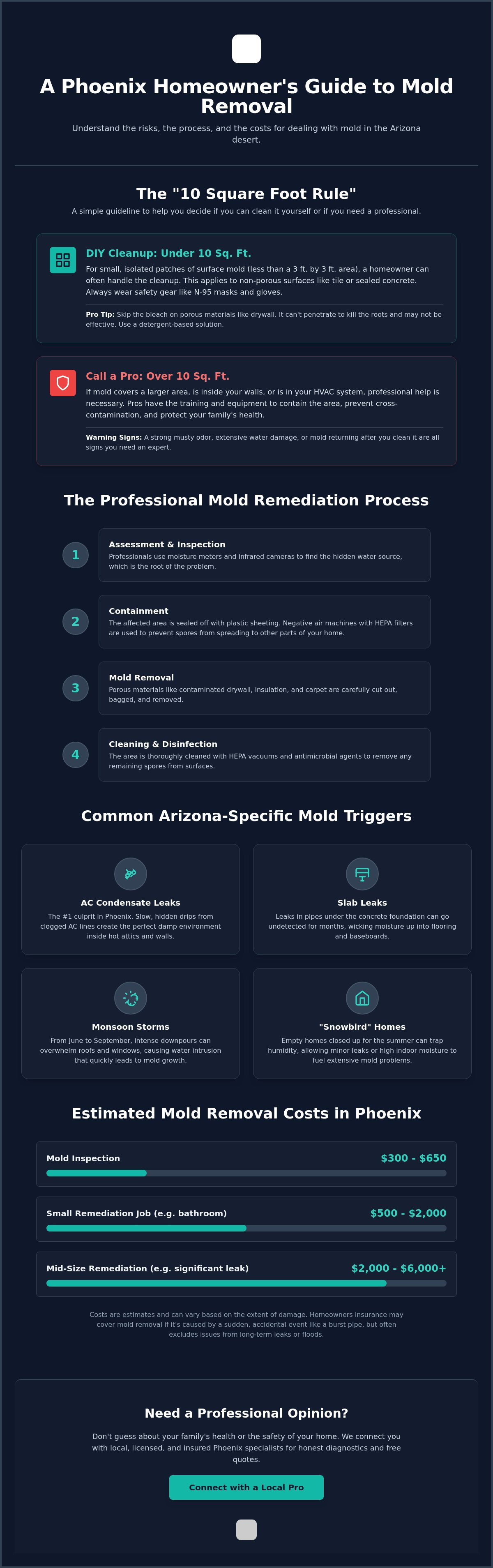
Pricing in the Valley tracks the "Class" and "Category" of the water damage — Class describes how much water and how fast it evaporates, Category describes how clean the source is. A small, localized bathroom cleanup might run $500 to $1,500. Mid-size jobs, like a kitchen with cabinets hit by a sink leak, typically land between $2,000 and $6,000. Large or whole-home work can reach $10,000 to $30,000 or more, depending on the affected area.
Phoenix adjusters look for "sudden and accidental" events. A pipe that bursts while you're at work is a classic covered loss. Gradual issues — a slow window leak, a neglected swamp cooler — usually get excluded as "maintenance items." Staying ahead of your AC condensate lines is far cheaper than an emergency claim. And when a quote lands, demand line-item transparency: a real estimate spells out containment, HEPA air scrubbing, and debris disposal instead of one vague number.
Will My Arizona Homeowners Insurance Pay?
A claim often hinges on the "Date of Loss," so document the damage the moment you find it — clear photos of the moisture source and the growth. Be wary of contractors who offer to "negotiate" your claim or handle all the insurance back-and-forth; only a licensed public adjuster or your insurer's representative can legally settle one. Documenting everything up front keeps you from eating the bill on a covered event.
Evaluating "Free Quotes" vs. Paid Inspections
A professional inspection in the Phoenix metro typically runs $300 to $650. "Free quotes" are common, but they're usually visual estimates built to sell you a service. A paid inspection adds moisture mapping and lab samples for unbiased data. Watch for "lifetime guarantees" or low-ball pricing that seems too good to be true — both tend to hide costs that surface later. A local expert who knows how Valley homes are built beats a faceless national chain every time. Mold Pros Phoenix handles mold removal across the metro with transparent, itemized quotes.
Choosing a Phoenix Mold Specialist
Choosing a reliable specialist in the Valley shouldn't be a guessing game. Arizona doesn't currently require state licensing for mold remediation, which makes IICRC certification the credential that matters — those pros follow strict national standards for safety and containment. Mold Pros Phoenix handles remediation with crews that actually know the desert climate.
Before a contractor enters your Goodyear or Peoria home, ask how they handle desert-specific problems. Do they understand how monsoon moisture gets trapped in attics? Are they familiar with AC condensate line failures? A real local expert gives you straight talk instead of "black mold" scare tactics, plus a clear written plan for how they'll isolate the area and clean the air.
Why Local Experience Matters
Crews that understand how homes are built in Mesa, Scottsdale, and the surrounding metro handle the desert's specific problems — slab leaks and swamp-cooler failures — with the right techniques. Ask for an itemized quote up front so you get a fair estimate without predatory sales pressure.
Your Next Steps to a Mold-Free Home
If you find a leak, act fast to limit the damage. Shut off the water source if it's still running. Don't aim fans at visible mold — that just blows spores into your HVAC system. Keep the area undisturbed until a pro can set up containment. Our online tools help you prep for that consultation and learn the typical price ranges for your project size.
The first step toward a healthy home is simple. Get your free, no-obligation mold removal quote and we'll get back to you with a clear next step — no pressure, no scare tactics.
Protecting Your Home from Desert Mold
Mold in the Valley doesn't have to be a source of dread. Moisture management is what prevents growth, whether the water comes from a monsoon storm or a clogged AC line. Keep the 10 square foot rule in mind before any DIY project. If the job is bigger, or your HVAC system is involved, hiring a pro is the safest path for both your property value and your health.
Our resource helps you move from discovery to a clear-headed solution. Use our free cost calculators and checklists to size up what you're facing. We maintain a referral network of IICRC-standard professionals who deliver transparent, straight-talking service across the Phoenix metro. Don't let a small leak grow into a major expense by waiting too long.
Get a free, no-obligation mold removal quote to get started. You've got a plan now — taking action is the next step to keeping your home safe and dry.
Frequently Asked Questions
Is mold common in a dry climate like Phoenix?
Yes, mold is very common in Phoenix because indoor environments are often humid even when the desert air is dry. Moisture from AC condensate clogs, slab leaks, or monsoon roof leaks gets trapped in sealed, energy-efficient homes. This creates a perfect breeding ground behind walls or in attics where the sun cannot reach it.
How much does mold removal typically cost in Arizona?
The cost for professional mold removal depends on the size of the affected area and the moisture source. Small jobs usually range from $500 to $1,500; while mid-size projects typically fall between $2,000 and $6,000. Large remediation projects can range from $10,000 to over $30,000 depending on the damage.
Can I stay in my house during mold remediation?
You can often stay in your home if the mold is confined to a small area with proper containment. Professionals use plastic sheeting and negative air pressure to keep spores from spreading to other rooms. However, if the HVAC system is contaminated or the mold covers a large portion of the living space, you may need to relocate temporarily for safety.
Why does my Phoenix home smell musty if I don’t see any mold?
A musty smell usually indicates hidden mold growth behind drywall, under flooring, or inside your AC vents. In the Valley, slow leaks from plumbing or AC drain pans are the most frequent causes of invisible mold. If you smell it, the moisture source is likely active and needs a professional inspection to prevent further damage.
Does bleach actually kill black mold on drywall?
No, bleach does not kill mold on porous surfaces like drywall. The water in bleach soaks into the wall and feeds the mold roots, while the chlorine stays on the surface. This often causes the mold to grow back stronger within a few weeks. Physically taking out the affected material is usually the only permanent solution.
How long does the professional mold removal process take?
Most professional projects take between 3 and 7 days to complete. The timeline includes setting up containment, removing damaged materials, cleaning the area, and allowing for structural drying. Final air clearance testing can add an extra day or two to the schedule to ensure the home is safe.
Will my insurance cover mold removal from an AC leak?
Insurance typically covers mold if the water damage was sudden and accidental, like a pipe bursting. If the AC leak was a slow, neglected problem over months or years, the claim might be denied as a maintenance issue. Always document the specific date you found the leak to help your adjuster determine coverage.
What is the difference between a mold inspection and mold testing?
A mold inspection is a visual search for moisture sources and visible growth, often costing between $300 and $650 in the Phoenix area. Mold testing involves taking air or surface samples for lab analysis to identify specific spore types. Testing is most useful after remediation to verify the air has returned to safe levels.