What Does Mold Smell Like?
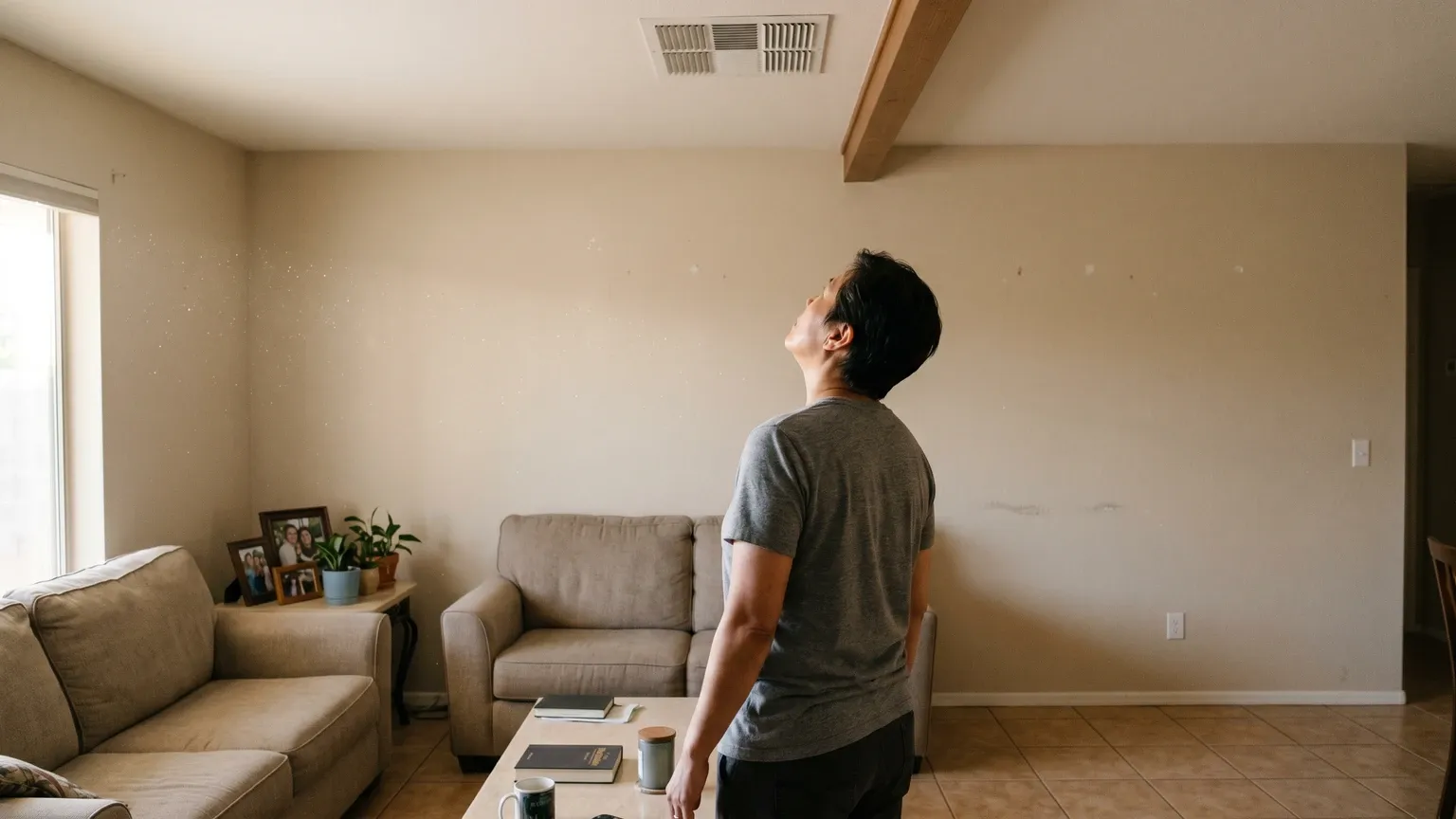
Mold smells musty, earthy, and damp. Most people compare it to wet soil, old books, rotting wood, or a damp basement. That odor comes from microbial volatile organic compounds (mVOCs), gases that actively growing mold releases as it digests wet material. A musty smell with no visible mold often means the growth is hidden.
In Phoenix’s dry climate, that signal is sharper than it would be in a humid state. The desert air outside is too dry to explain a persistent indoor musty odor on its own, so something inside the home is staying wet and feeding mold.
Why mold smells the way it does
The musty, earthy quality is not random. It traces to a handful of specific volatile compounds tied to active mold and the damp conditions it grows in.
The two most recognized are geosmin and 1-octen-3-ol. Geosmin carries the distinct earthy, after-rain “fresh soil” note: it is the same compound behind the smell of wet soil and freshly cut beets, produced mainly by soil microbes that thrive in the same damp conditions as mold, and the human nose detects it at extremely low concentrations. 1-octen-3-ol is the more mold-specific of the two, the mushroom-like, damp, musty note most people associate with mold itself.
Both are microbial VOCs, the gases released by damp, active microbial growth as it digests organic material. The important point for a homeowner is that they come from active growth on wet material. A colony sitting on dry material produces far fewer of them. So the presence of the smell is itself evidence of active growth, which means there is ongoing moisture feeding it somewhere.
This is why a musty smell in a Phoenix home carries more weight than in Houston or Atlanta. In a humid climate, indoor air can produce ambient mustiness from general dampness. In the Valley, where outdoor relative humidity sits around 20 to 30 percent for most of the year, a persistent musty odor traces to a specific, contained moisture source rather than the outdoor air. A contained source can be located and fixed.
What “black mold” smells like (and what smell can and cannot tell you)
People searching for what black mold smells like often hope the odor can identify the species. It cannot.
Mold described colloquially as “black mold” (typically Stachybotrys chartarum) is often reported as having a particularly strong, pungent, musty or rotting odor. That description is real and recognizable to people who have encountered it. But many other mold species produce similar smells. Cladosporium, Aspergillus, Penicillium, and Fusarium can all produce a strong musty or earthy odor depending on the material they are growing on and how active the growth is.
The honest position is this: a strong musty smell tells you there is likely active mold growth somewhere. It does not tell you the species, the color, or the health risk level. Identifying Stachybotrys specifically requires laboratory analysis of a sample. Smell is a signal to act, not a diagnosis.
For a broader look at what makes black mold genuinely dangerous versus overhyped, see the is black mold dangerous guide.
Not every musty smell is mold, and not all mold smells
Two important limits on smell as a diagnostic tool.
On one side: a musty odor does not always mean mold. A dry P-trap in an infrequently used bathroom drain can produce a sewer-adjacent musty smell. Old building materials, certain types of insulation, and stored cardboard can smell musty without active mold. Elevated dust and organic debris in ductwork can produce an earthy smell when the system runs.
On the other side: the absence of a smell does not confirm the absence of mold. Mold that has dried out or gone dormant produces fewer mVOCs. Mold inside wall cavities or under flooring can be contained enough that the odor doesn’t reach your nose at detectable levels. A home with a mold problem in the attic can smell perfectly clean in the living areas, right up until the AC runs and distributes the gases through the ducts.
The practical upshot: smell is one of the most useful early indicators, but it is not the whole picture. If something feels off about your home’s air quality even without a strong smell, a moisture check is worth doing. Our guide on musty smell in the house covers diagnosis and the specific causes behind a persistent musty odor. That is a distinct question from recognizing what mold smells like.
Where the smell hides in a Phoenix home
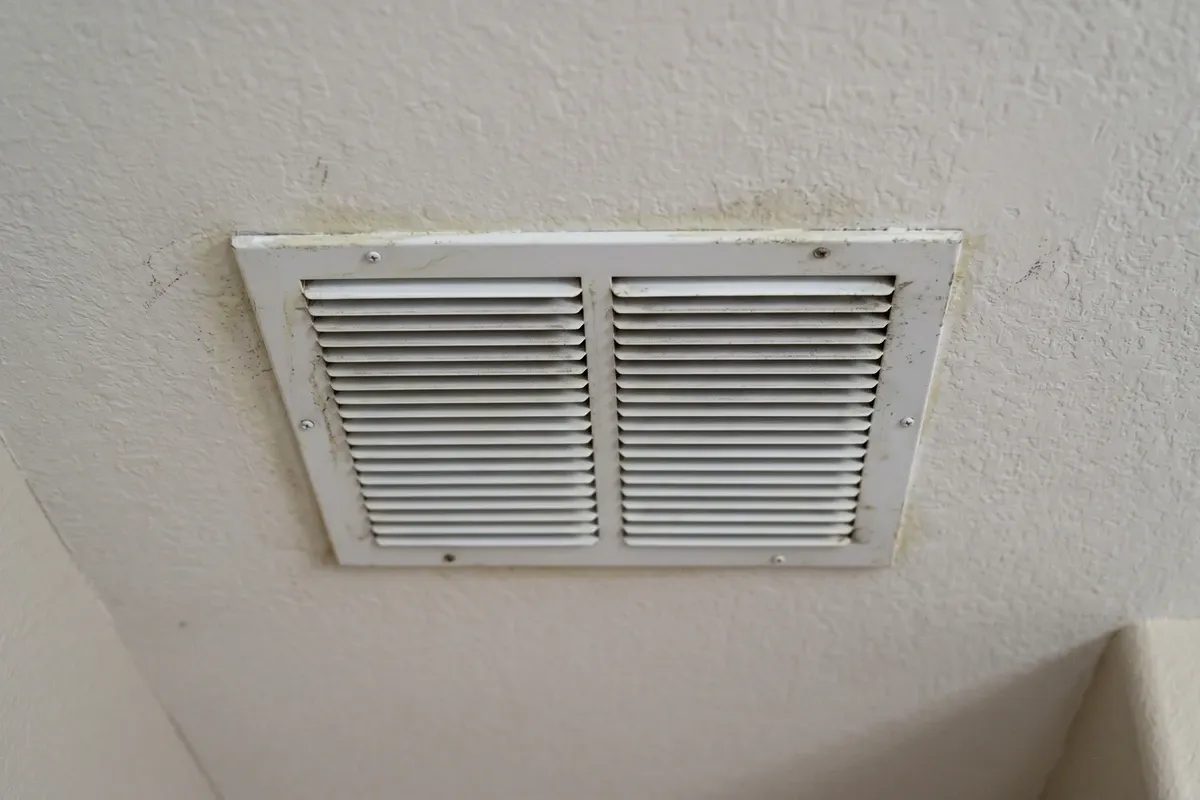
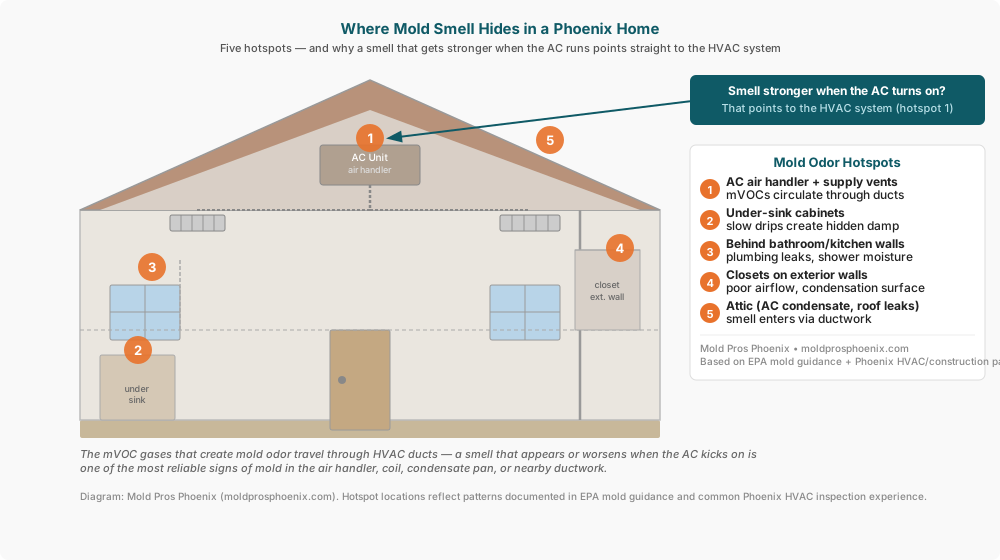
Knowing what mold smells like is only useful if you can connect it to a location. In Phoenix homes, the smell tends to concentrate in a predictable set of places, and one pattern is the single most diagnostic tell the climate produces.
The AC system and supply vents (the Phoenix tell)
A smell that appears or gets noticeably stronger the moment the AC turns on is the most useful single clue a Phoenix homeowner gets.
Here is why it happens: every Phoenix AC system runs an air handler that pulls return air across an evaporator coil to cool it, then pushes conditioned air through supply ducts into every room. If mold is growing on the coil, in the condensate drain pan, on the inside of the air handler cabinet, or anywhere in the duct system, the blower distributes those mVOC gases into the whole house the moment it starts. You smell “everywhere at once,” strongest when the system first kicks on.
The condensate drain pan under the evaporator coil is the most common problem point. As the coil pulls humidity out of the air, condensate drips into the pan and drains out through a PVC line to the exterior. That line clogs with dust and algae over a typical Phoenix cooling season. When it backs up, water fills the pan and overflows onto the air handler cabinet. The standing water in the pan and the wet cabinet grow mold quickly in the summer heat. A rusted-through pan on an older unit produces the same result.
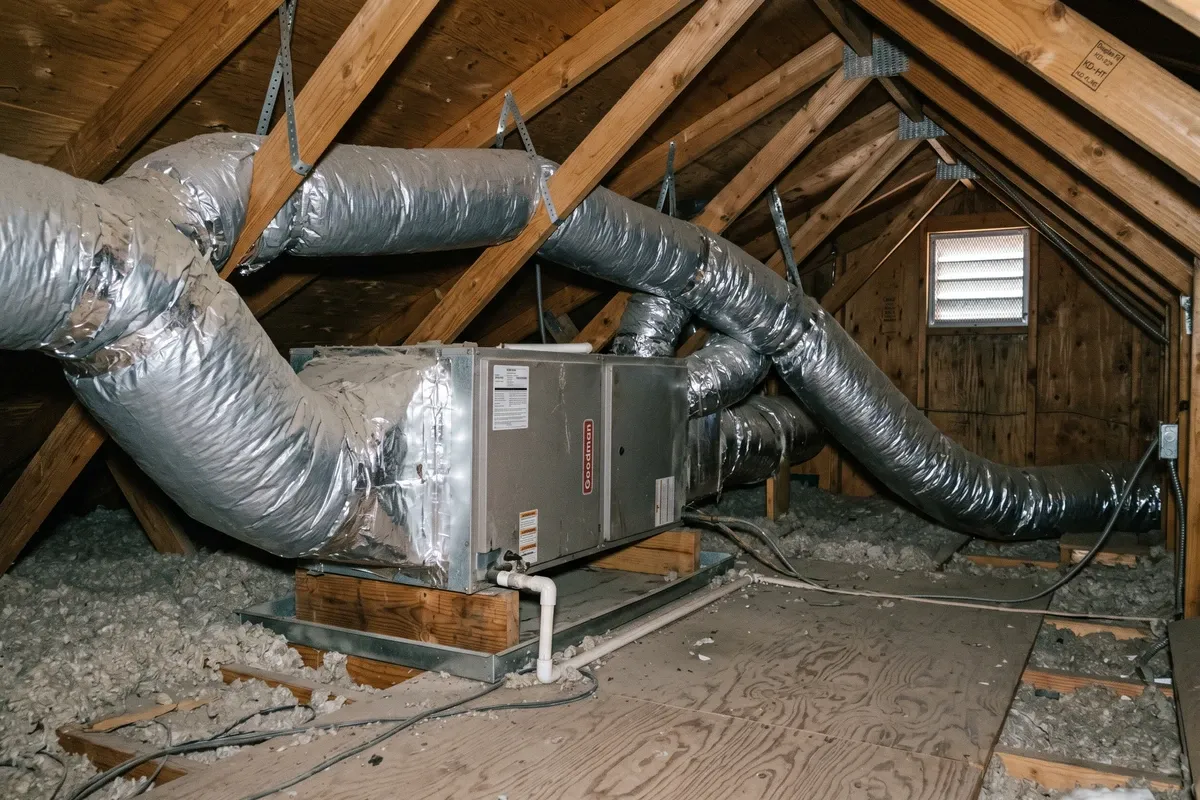
A Phoenix home that smells fine all day and then produces a brief earthy or musty smell for the first few minutes after the AC cycles on is showing you exactly where to look: the indoor air handler, its condensate pan and drain line, and the ductwork near it.
Under-sink cabinets
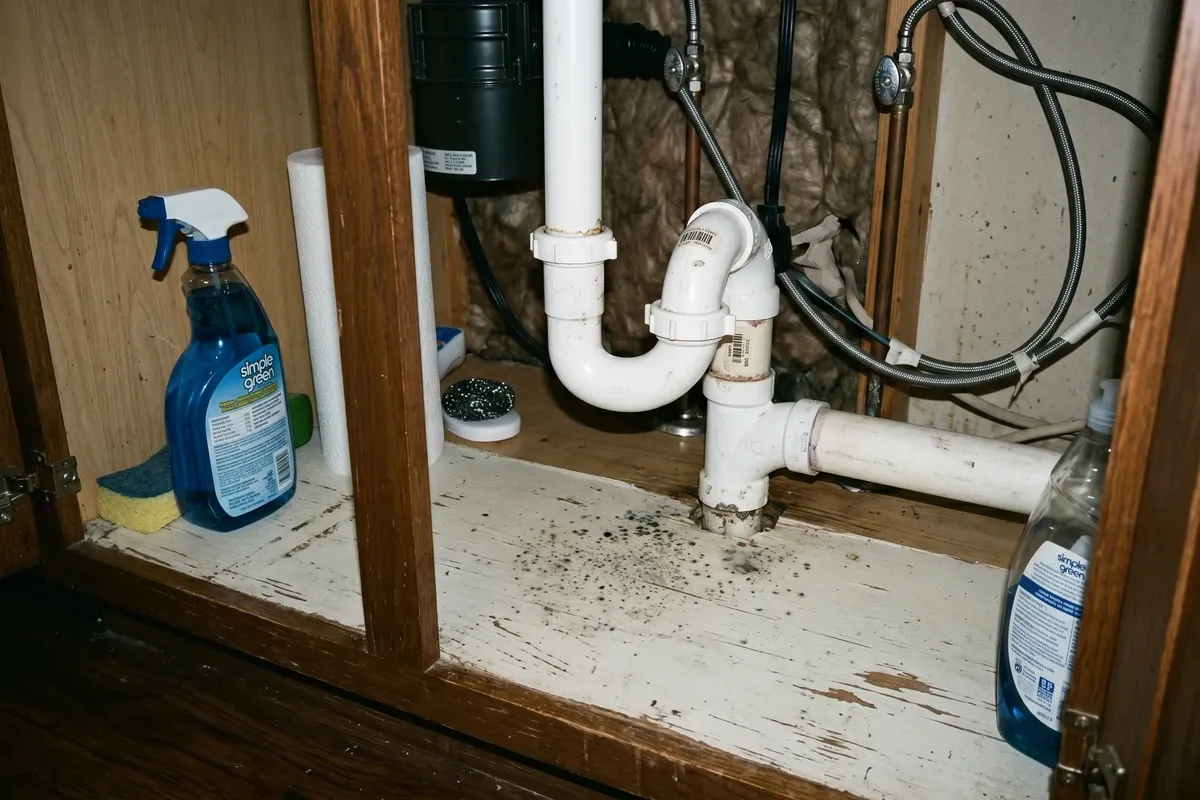
Slow drips from supply lines, drain connections, and the P-trap beneath a kitchen or bathroom sink create chronically damp cabinet interiors. The wood or particleboard bottom of the cabinet stays wet, the drain connections corrode slowly, and in an enclosed space with no airflow the damp is constant. This is one of the most common locations for a homeowner to first notice a musty smell: you open the cabinet and it hits you.
Behind bathroom and kitchen walls
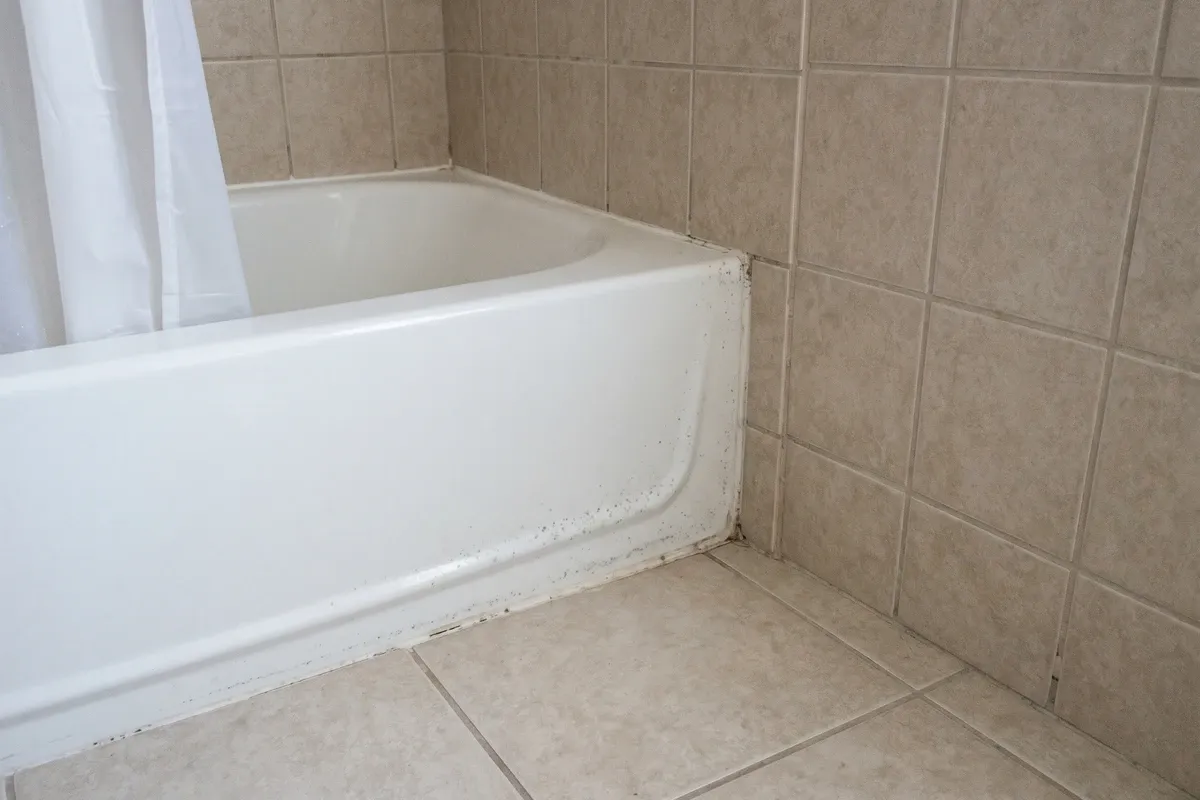
Shower pans that weren’t properly waterproofed at installation, grout failures in tile walls, and slow leaks at supply or drain connections inside the wall cavity all produce the same result: wet framing and drywall inside a finished wall. The mold establishes on the paper facing of the drywall, on the wood framing, and on the insulation behind it.
The smell from behind-wall mold is often localized to one room and may be strongest near electrical outlets, behind the toilet, or close to the floor where the wall meets the floor. It can be faint for weeks (the wall surface contains most of the odor), then increase as the growth spreads or humidity rises.
Closets on exterior walls
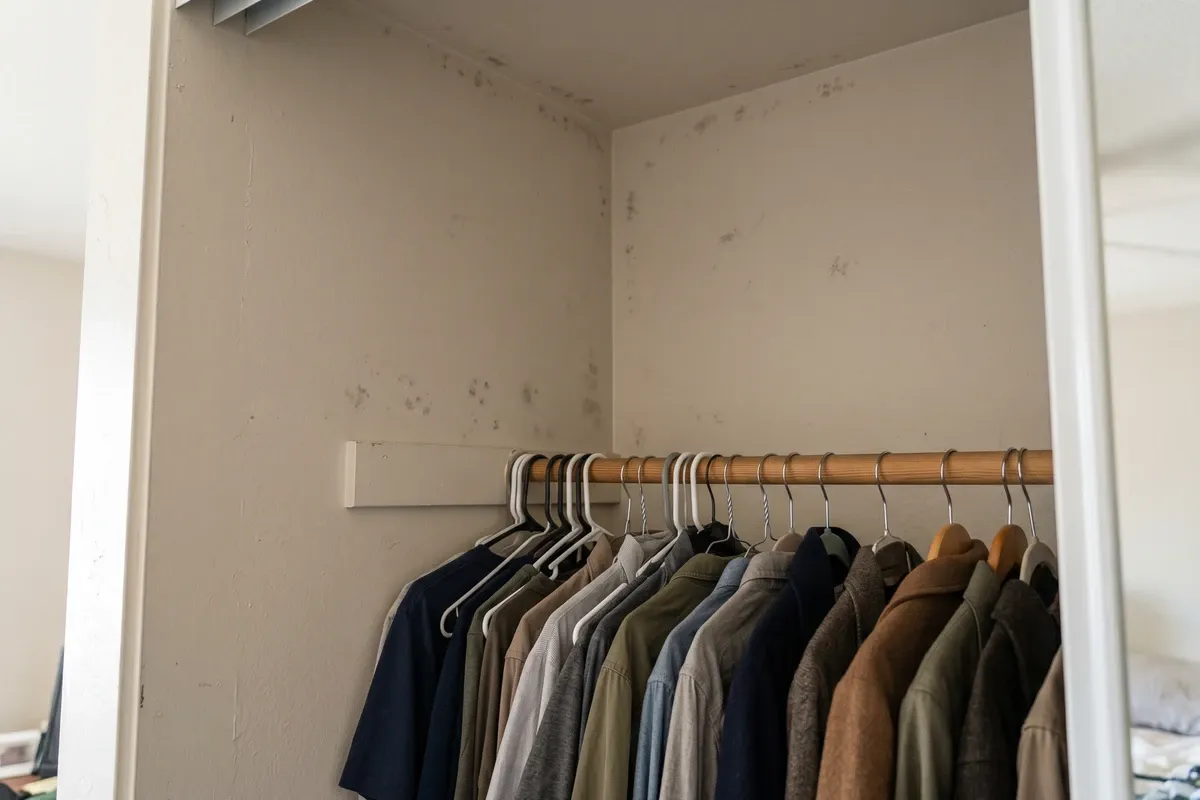
Phoenix homes have exterior walls that face intense afternoon sun and radiate heat. Closets built against exterior walls, particularly north-facing or west-facing ones, can develop a microclimate: the wall surface is warm, the closet air is cooled by the AC, and the temperature differential creates condensation on the coolest surface in the enclosed space.
Add low airflow (closets that stay shut for weeks during summer) and stored organic materials like shoes, leather, and fabric, and you have conditions where mildew establishes quickly. The smell from a closet mold problem is often the first thing noticed when the closet is opened after a stretch of summer.
The attic
Attic mold in Phoenix comes from two main paths: AC condensate overflow from an attic-mounted air handler, and monsoon roof leaks through failed flashing. In both cases the smell reaches the living space the same way: through the duct system when the AC runs.
An attic mold problem may produce no smell at all in the living areas until the system circulates air through it. Once it does, the pattern looks exactly like an HVAC-system problem, which is why a thorough inspection checks both the air handler cabinet and the attic decking around any roof penetrations.
For a full treatment of attic-specific mold causes and how Phoenix construction drives them, the attic mold guide covers the five drivers in detail.
”I can smell it but can’t find it”: the inspection trigger
This is the situation that brings most people to a page like this: the smell is real and persistent, no visible mold turns up anywhere, and nothing changes.
A persistent musty or earthy odor with no visible source is one of the clearest indicators of hidden mold. It is not unusual or surprising. Mold producing enough mVOCs to be clearly smelled can be behind drywall, under flooring, in the air handler cabinet, or in the attic, entirely out of sight, for months before it reaches any visible surface.
In a dry climate, where the outdoor air isn’t generating ambient mustiness, this pattern is a specific signal rather than background noise. It means the growth is contained inside the structure and is actively producing gases. That is exactly what a professional mold inspection is designed to find: moisture behind finished surfaces without opening walls, using a moisture meter and sometimes a thermal camera to locate dampness through drywall and flooring.
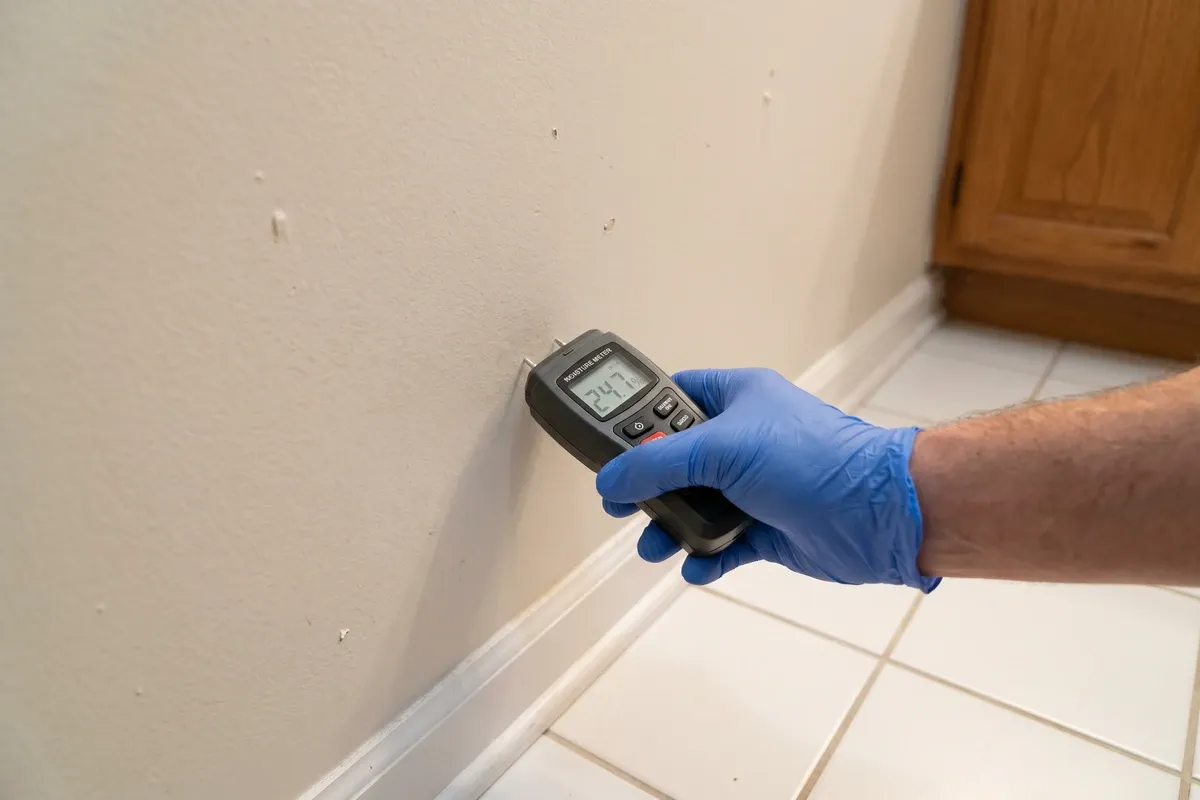
The practical threshold: if you can clearly smell something musty or earthy in your home and a careful walkthrough of the obvious spots (under sinks, around the air handler, in closets) doesn’t reveal a visible source, bring in a moisture meter rather than keep looking by eye. You are not going to see what is behind a wall by looking at its surface.
A note on heightened sensitivity
After enough exposure to mold, some people develop a sensitivity that makes them notice the smell faster and at lower concentrations than others around them. I have experienced this myself: after years of encountering it in and around homes, I can detect a musty or earthy mold odor the moment I walk into a space, and I notice it on clothes and in hair after leaving. My body registers it before I’ve consciously processed what I’m smelling.
This isn’t a party trick; it is relevant context. If you have had a mold exposure history and you notice a smell in a home that others around you dismiss, trust it. The same biochemistry that makes mVOC-sensitive people uncomfortable in a space is what makes the smell such an early warning. More on what mold exposure can feel like over time in the mold sickness guide.
What to do when you smell something
Start with the quick checklist:
- Check when the smell is strongest. Worse when the AC first starts: the air handler and ducts. Worse after rain or during monsoon: roof or wall intrusion. Strongest near the floor in one room: possible slab leak or under-floor moisture. Strongest inside one closet or cabinet: localized damp.
- Open every under-sink cabinet and look for water staining, rust, soft cabinet material, or visible spots.
- Pull up any recent access to the air handler cabinet: look at the condensate drain pan for standing water or rust. Trace the drain line to confirm it exits the home.
- Smell room by room. Close each door behind you and spend a few seconds. Mustiness is typically strongest in the room closest to the source.
- Check ceilings near vents after rain. A new brown ring or bubbling paint within 24 hours of a storm is an early visible lead on a roof leak.
If the smell persists after that walkthrough with no visible source found, it’s time to stop looking with your eyes and use a moisture meter, or bring someone who has one. The guide on musty smell in the house covers the specific sources and the step-by-step find-it process in more detail, including what to do once you locate the moisture.
If you want to understand why Phoenix homes produce mold in a desert climate at all, the mold in the desert guide covers the specific Valley drivers that make it more common than most homeowners assume.
Get a free quote
If you can smell something in your home and can’t find where it’s coming from, a free, no-obligation inspection quote is the fastest way to get an answer. We work across the Phoenix metro on exactly this kind of problem: a smell with no visible source that a moisture inspection turns into a specific location and a clear repair plan. Fill out the form below and we’ll get back to you with a straight answer on next steps.
Sources: EPA: What does mold smell like? (mVOCs can be the source of the musty smell frequently associated with mold growth, and a moldy odor suggests mold is growing and should be investigated); EPA: A Brief Guide to Mold, Moisture, and Your Home (you may suspect hidden mold if a building smells moldy but cannot see the source). Geosmin is the earthy-smelling compound best known from wet soil, produced largely by soil microbes; 1-octen-3-ol is a mold-associated mVOC. Human olfactory sensitivity to geosmin at very low concentrations is well-documented. Mold species identification requires laboratory analysis, not smell.